Thursday, 31 May 2012

Nachrichten über die Militärregierung Venezuelas

Der Caudillo Chávez hat jetzt 3 Millionen Twitter-Follower. Ein anderer Militär, Carlos Mata Figueroa, den Chávez als Kandidat für die Gouverneurstelle des Bundesstaates Nueva Esparta auserkoren hat, hat darum ein Haus an die Frau geschenkt, die diese Follower Nr 3000000 geworden ist. Die Frau ist 22 Jahre alt oder jünger...nun hat sie ein Haus...von Staatsgeldern - nicht von den Chávez-Bonzen- bezahlt. Es gibt ein paar Millionen Menschen, die immer noch auf Sozialwohnungen warten, sie müssen aber länger warten, denn die Militärs bauen trotz Recorderdöleinnahmen weniger Sozialwohnungen jährlich als zu den Zeiten vom Erdöl für $12 pro Fass (d.h. vor 14 Jahren).
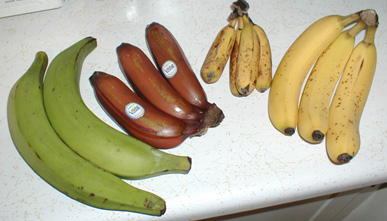
Bananen, von Linke-Anhängern "Linksnationalisten" genannt

In Caracas haben zwei Polizisten der Alcaldía de Caracas - von der Opposition verwaltet- zwei Kokainhändler auf frischer Tat ertappt. Leider waren die Kokainhändler nicht nur Kokainhändler, sondern Beamte der Nationalpolizei CICPC, die von der Militärregierung kontrolliert wird. Die CICPC-Menschen haben zurückgeschossen und andere Kumpel von ihnen haben die zwei Caracas-Polizisten festgenommen.

Diese ist die Regierung, die der in der DDR geborene Professor Michael Zeuske - Berater für den DAAD - in seinen Büchern lobt.

Später werde ich über Zeuske Bücher zur "Geschichte" Venezuelas.


Sunday, 27 May 2012

Syrian children get murdered, Chávez sends diesel to Syrian regime


We hear about the massacre of 32 Syrian children during the latest clashes between the Assad troops and the rebels. And just a few days ago the Chávez regime shipped diesel to that Assad regime badly needed to move their tanks. The Western had applied sanctions to Syria and Chávez helps his pal to circumvent such sanctions.

The Chávez military regime has already sent three diesel shipments to the Syrian forces. A fourth one is planned.
Picture taken in Venezuela in 2006. Chávez next to Assad. "Breaking the Blockage. Venezuela  is to be respected!"

Will Brazil say nothing? Colombia? No, because they have a wonderful trade surplus with the Chávez regime.

And on the other side, we have this: US troops killed yet again another peaceful family...collateral damage, like many thousand of other cases in the last few years.

People never learn.

It's cheap, give me two: Venezuelans in El Imperio

Venezuelans were among the top visitors to the US in 2011, which is not surprising at all.

On this chart you can see the top visitors to the United States for last year. Sources come from here and here. I reordered them by tourist per inhabitant. That is: I divided the number of tourists from country X by the population of said country X.

More than half the Canadians went to the US in 2011. That is not astonishing, considering that most Canadians live less than 70 kilometres from the USA border and they can freeze to death if they travel rather to the north. Mexicans are less likely to visit their pals but almost every second Mexican city visit his gringo neighbours last year. Britons love their former colony and Australians are also have an intense relationship with the USA, so they are also among the most loyal visitors to that country. Then you see the rich Dutch, the also very rich Japanese, the still wealthy South Koreans, French, Germans...and Venezuelans.

Venezuelans are more likely to visit the US than Brazilians, even if Brazilians have a higher income per capita than Venezuelans. You can say Brazil looks rather to the South and you will have a point there. Brazilians inundated Argentina. But Brazil has also kept stronger links to Europe throughout the decades. Brazil's population hubs are mostly very far to the South. Venezuela's bigger cities all face to the Caribbean. I reckon Venezuela's government ain't happy with that.
The current Venezuelan regime imposed a strict currency control back in 2003 and it has become tighter: a Venezuelan citizen can only get so much in foreign currency per year for tourism. She has to prove her expenses by showing every single purchase bill if requested. This and many other things in Venezuela's subsidized economy have led to a huge black market. Venezuelans - the privileged revolutionaries or majunches alike - keep buying dollars and euros in that black market because they don't know when the bubble will burst but they do know it will. That is why many Venezuelan tourists also use their trip to the US to open a US account or to take with them as many dollars as they can to their old US accounts.

With a fraction of what is in Venezuelans' account in the US we could easily pay for a thousand new schools in Venezuela.

One of Chávez's honchos, former Acción Democrática, former Causa Radical politician and now PSUV leader Aristóbulo Isturiz once said the Chávez government couldn't do without the currency control because "it would fall right away". And sure it would...even if the country does need to do it...it is this currency control that keeps a powerful elite - left and right - becoming immensely rich at the cost of María González with her 6 kids in Maturín or Guanare.


Saturday, 26 May 2012

Southern Portuguesa

Portuguesa is one of our Llanos states. Portuguesa, obviously, literally means Portuguese (woman) and the first location in that region to get the name was the Portuguesa River. Legend tells us that river was named after a Portuguese lady drowned there during the Conquista. From history we know some of the first Europeans in the area were indeed Portuguese coming with the Spanish flow of conquistadores and settlers.
Before them the very first Europeans to see the place were the German Welser and their Spanish soldiers, who ventured into this area around 1530...and were very sorry to do so. It is a tough terrain with tropical diseases galore and the troops died like flies. The region is an extremely hot area, flooded during the rainy season and sun-baked in the dry months. There were few native Americans here compared to  other regions like the coast or the Andes. The ones living here were mostly Guamos and some other groups, mostly hunter-gatherers: the Llanos back then not being the best place for agriculture.

The Southernmost municipalities there are Papelón and Guanarito. 


Both municipios together make up about 33000 of the 17 million voters Venezuela had back in 2010. The combined area is around the size of Norfolk but with less than a tenth of Norfolk's population - the density is 6 and 11 pop/km2 for each municipality. This area is Llanos 100%: flat as it goes, with a lot of rivers - the Portuguesa being the one with the strongest flow. All rivers flow towards the Orinoco, one way or the other. 

Most of the land is owned by the State or by a few landowners. A lot of small farmers live in state land with  no property rights - sort of feudal style but with the right to move. 

Capibaras, excellent swimmers and tasty...Spaniards declared they were fish so that they could eat them on Friday and Eastern time
Collared peccary, looks like a wild boar but it belongs to a different genus
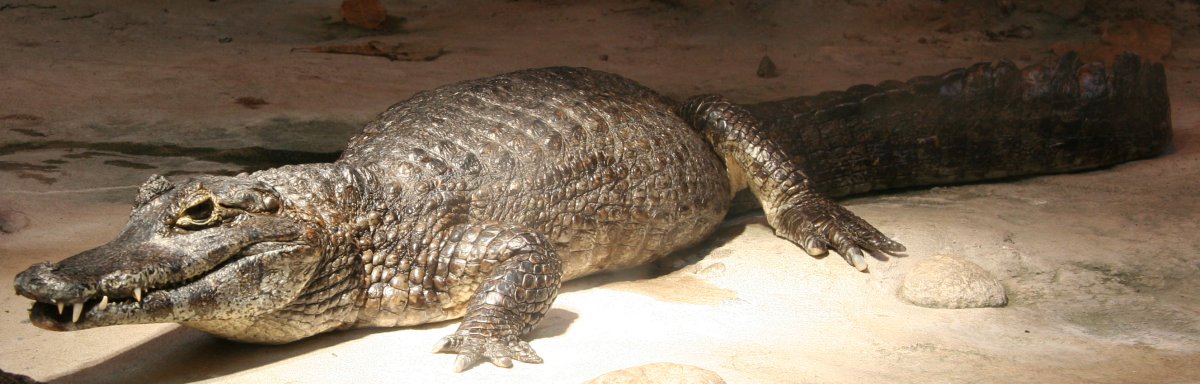
This is a cayman, a different genus from the gringo alligators and much so from the Nile crocodile

In the last parliament elections in 2010, candidates for the Chávez party got around 64.76% against 31.54% for the MUD in the first municipality and 63.88% to 32.89% in the second one. Portuguesa in general in one of the most pro-Chávez states of Venezuela. You won't find people there reading national newspapers but Últimas Noticias. Internet coverage is well below the 39% that is supposed to be the national penetration. Very few in Southern Portuguesa have access to radio or cable TV, so they won't hear any criticism on their radios or TV sets.

In the 2008 elections the candidate to the post of mayor for the MUD did not even get second or third place in Papelón, just fourth, with 3.9% of the votes. In Guanarito the candidate for the Chávez party won with 65.75% and the opposition didn't do as badly, just very bad, even if in this case it was split between different candidates. The old parties that used to dominate the area there, AD and COPEI, are  represented by dinosaurs and new parties such as PJ and UNT haven't got a presence there. The national  representatives of those parties hadn't learnt how to send customized messages to such regions. They still don't understand those regions need to hear about their specific projects for Guanarito, for Papelón, not for "Venezuela". This is curious: the new opposition parties are very keen on decentralisation but they haven't spent the time to customize their messages for each region. To do that they need knowledge about those regions. Right now they send a central message, one that is way too abstract for those regions.

This April the major of Guanarito, Villalba, was jailed for corruption. Some people in the region said the PSUV got very nervous with the level of corruption there but Villalba is just small fish. Almost no one elsewhere in Venezuela knows about this.

Friday, 25 May 2012

Das immer überraschende Venezuela


Die Gefängnisse in Venezuela sind im Jahr 14 der sogennanten "Revolution" in erbärmlicherer Lage als je zuvor.  Nun erfahren wir, dass die Gefangenen der Penitenciaria General im Bundesstaat Guárico gestern 40 Bewacher entfürten und für ihre Freilassung Motorräder, alkoholische Getränke und eine elektrische Anlage verlangten und bekamen. Die Gefangenen wollen die Motorräder benutzen, um in den Anlagen Rallyes zu organisieren.

In Venezuela gibt es wirklich keine Justizvollzugsanstalten und das seit dem 16. Jahrhundert nicht, wie der gute alte Alexander von Humboldt schon erzählte. Alle Gefangenen werden zusammengepfercht, es sei denn, sie haben viel Geld.

Das ist weiter so im 14. Jahr der Chávez-Regierung. Tatsächlich ist die Überbevölkerung in den Gefängnissen schlimmer als in den vierzig Jahren, in denen Zivilisten das Land regierten und das obwohl der Erdölpreis und darum auch die Einkommen des Landes so hoch wie nie zuvor sind.


Wednesday, 23 May 2012

Verbrechen und Militär in Venezuela


Die Unruhen im Gefängnis La Plata, in Caracas, kamen zu Ende. Die Ministerin für Justizvollzugsangelegenheiten (sic), Iris Varela, hat mit den Gefangenen einen Deal gemacht. Die Details kennen wir nicht. Nach vielen Tagen Schiesserei kam es zu Ruhe und die Menschen wurden zu anderen Gefängnissen -die auch gerammelt voll sind - abtransportiert. Ein Unbeteiligter in einem Gebäude in der Umgebung war bei dieser Schiesserei getötet worden, einfach Pech.

Nun durfte die Guardia Civil, die in Venezuela auch Gefängnisse überwacht, in die Anlagen hineinkommen. Angeblich fanden sie gar keine Waffen, auch wenn sie sich mit den Menschen drinnen seit Wochen einen heftigen Schusswechsel geliefert hatten. Sie fanden 9 verbrannte Leichen. Anscheinend wurden die Abwesenheit dieser Ermordeten während des Gefangentransports nicht bemerkt. Die CICPC, die Zivilpolizei, wollte auch hineingehen und die Sache untersuchen. Die Militärs haben das aber nicht zugelassen.

Seit Jahrzehnten werden hunderte Menschen in Venezuelas Gefängnisse umgebracht. Die Zahl der Toten hat sich aber, wie ausserhalb dieser Anlagen, vervielfacht. Die Militärs sollen diese Gefangene überwachen, diese Gebäude sind aber voll Waffen. Es handelt sich nicht bloss um Messer. Es handelt sich um Maschinengewehre allerart, um jede Menge Granaten, um Schusswaffen für jeden Geschmack. Kokain und alle anderen Drogen kommen dazu. Und die Bewacher verdienen dabei.

Nun kommt der Caudillo Chávez und sagt, es gäbe ein neues Programm, eine neue Mission, A Toda Vida, Venezuela. Ich weiss nicht, wie man das übersetzen soll. "Voll am Leben, Venezuela"? Vielleicht. Diese Mission soll eine Verwandlung der Gefängnisse mit sich bringen...wir sind im Jahr 14 der sogenannten Bolivarischen Revolution. Es gibt Wahlen im Oktober in meinem Land.

Daniel schreibt mehr darüber auf Englisch, u.a. hier.


Tuesday, 22 May 2012

Wovon lebt ein Lehrer in Venezuela?


Ein Dozent mit 5 Jahren Erfahrung verdient in Venezuela ungefähr 3000 Bolívares pro Monat. Damit kann eine Familie von 5 Personen etwa 85% ihrer Nahrungsmittel einkaufen.

Ein Ehepaar von zwei Dozenten wäre gar nicht in der Lage, nur mit ihren Jobs drei Kinder und sich selbst zu ernähren, geschweige denn noch dazu eine Miete für eine Wohnung zu zahlen.

Schullehrer hatten es vor Chávez nicht leicht. Ihr Lebensniveau war aber nicht so niedrig wie jetzt.
Venezolaner haben ein Hühnchen zu rüpfen mit dem Caudillo

Wenn Chávez weniger in Waffen ausgeben würde, könnte der Staat Lehrer besser entlohnen.