Showing posts with label my tips. Show all posts

Saturday, 30 March 2013

El Comandante según Carroll


El libro "Comandante, Hugo Chávez's Venezuela", de Rory Carroll, presenta un nuevo cuadro del personaje más polémico que haya tenido el país en mucho tiempo.

Carroll logra explicar de manera muy hábil muchos aspectos de la realidad venezolana que no han sido tocados por otros analistas. El libro se compone de doce capítulos. Entre los capítulos se hallan "Hello, President", "Defectors", "Survival of the Fittest", "The Devil's Exrement", "The Storydellter", "Decay" y "The Illusionist". Lo más resaltante es cómo el  periodista irlandés hilvana una historia que, sin seguir una estricta secuencia cronológica, lleva al lector a imaginar cómo tantos millones de venezolanos pasaron de la euforia a la decepción, al rechazo, a la resignación o al fanatismo más acérrimo por Hugo Chávez. Otro de los puntos claves es cómo Carroll explicó el estado de descomposición permanente en que se halla el país.

Lo mejor

Se ve claramente que Carroll hizo una buena labor investigativa. No solo hizo lo posible e imposible para hablar con los grandes "boliburgueses" y "escuálidos", no solo recogió confesiones interesantes de los personajes menores de la corte bolivariana, sino que fue hasta los confines de Venezuela para recoger las vivencias de la mayoría venezolana. Afortunadamente, Carroll se tomó la molestia de explicar de manera sencilla algunos aspectos enrevesados de la economía y corrupción: cosas como FONDEN y la mafia de CADIVI. Esto no es nada fácil de hacer si el lector es el público en general y más aun si es extranjero.

Carroll dijo en una oportunidad que probablemente yo conocería todo lo que estaba en este libro. Debo decir que erró: pese a ser venezolano, pese a tener a un montón de amigos y familiares por todo el país, pese a bloguear sobre Venezuela, aprendí unas cuantas cosas. En mi caso pude leer varias cosas que desconocía sobre Giordani. También me enteré de unos cuantos chismes sobre Miraflores. En otras ocasiones leí cosas que conocía a la perfección, pero que Carroll recreó de una manera que lograron mantener mi interés.

Me quedó en la mente una frase que el periodista usó para hablar sobre la reescritura que hace el chavismo de nuestra historia:

"It was no coincidence that Chávez, who remembered everything, remembered a nation that remembered nothing".
 
Podría seguir largo y tendido describiendo las cosas que más me gustaron del libro, pero como lo recomiendo, es mejor que lo adquieran Ustedes mismos. Ahora veamos...

Puntos menos positivos

Hay un par de cosas que me parece quedaron cortas. 

Cuando mencionó a los detractores de Chávez, me quedé esperando un poco más. Me sorprendió que Carroll, por ejemplo, no mencionara  cosas como el desplante que hizo Olavarría a Chávez en el congreso en 1999.

Carroll se refirió a la gente del Este de Caracas primariamente como descendientes de criollos que temían a los habitantes de los barrios, que serían ante todo descendientes de los esclavos. Si bien es muy claro que los más ricos y más críticos al chavismo tienden a ser más blancos y los más pobres y más chavistos tienden a tener un color más oscuro, la historia es un poco más complicada de lo que se deja entrever en esas líneas, como en otros libros.  

La palabra criollo tiene un par de significados. Originalmente se usaba para referirse a los blancos nacidos en América (llamémosle a eso sentido "a"). Actualmente se usa en general para cualquiera que haya nacido en Venezuela. Se habla incluso de "huevos de gallinas criollas". Llamemos a eso sentido "b". En algunos casos se habla de "criollo" para referirse a todo aquel que no pertenezca a las etnias amerindias que aun tenemos y que forman apenas un 2% de la población. Ese es el sentido "c".

Evidentemente, la mezcla con criollos y esclavos o descendientes de indígenas está presente - en grados diferentes - en todas partes. Pocos son los descendientes de los Amos del Valle que tienen un papel relevante en el este de Caracas actualmente: gente como Leopoldo López y Capriles, que serían parientes lejanos de Bolívar, aunque son emblemáticos para algunos, no son precisamente el promedio de las clases B y A. Algo que se ha olvidado vez tras vez es que los llaneros de otros tiempos - gente ya bastante mezclada - habían reemplazado y se habían mezclado con los "amos del Valle" de otrora. Ante todo, lo que se olvida en este cuento es que Venezuela recibió cientos de miles de inmigrantes de Europa a partir de la Segunda Guerra Mundial. Una gran cantidad de estos inmigrantes y sus inmigrantes, mezclados con el resto de los venezolanos, conforman una gran parte de la clase alta venezolana. Una amiga nacida en Portugal y que llegó a Venezuela de bebé le decía a su padre hace un tiempo: "coño, papá, tú eres el único portu que no hizo real en este país". 

La historia de cómo estos inmigrantes y sus descendientes han pasado a prosperar mucho más que otros habitantes de Venezuela podría ser motivo para escribir un par de libros más. El que se no se mencione este elemento tan importante de la realidad venezolana es un problema. Esa gente sería "criolla" en el sentido "b" o "c", pero Chávez y cualquier habitante de los barrios es tan criollo segun dichos sentidos.

Al final, los extranjeros - y muchos venezolanos - siguen creyendo en la historia de blancos de la Colonia contra pardos e indios. Considero que las maneras por las que cientos de miles de inmigrantes y sus descendientes pasaron a tener más que la mayoría deben ser analizadas para entender parte de la historia moderna del país. Está claro que estos inmigrantes recibieron un trato preferencial en ciertos círculos, pero esto apenas puede explicar su desarrollo. Sus ventajas comparativas están incluso más allá de una mejor educación formal en comparación con la de el venezolano promedio con tatarabuelos nacidos en Venezuela. Como descendiente de esclavos, de indígenas y europeos, creo que aquí quedó corto el libro, aunque también tengo que decir que hasta ahora no he visto ningún otro libro que explique más allá de los clichés el desarrollo e integración de este grupos de inmigrantes que comprende una gran parte de nuestra población urbana.

Hubo un par de imprecisiones.

El tema de la educación se trató, en mi opinión, demasiado a la ligera. Carroll mencionó los programas de becas y de alfabetización sin entrar en detalles, sin tratar de ver, como sí lo hizo con otros temas, el alcance que habían tenido.

El chavismo, muy al contrario de revoluciones verdaderas, como la que se produjo en Rusia a partir de 1917, no ha tenido un impacto positivo en el nivel educativo de Venezuela. Es más: salvo contadas excepciones, los esfuerzos en educación se han convertido en una fenomenal farsa, una farsa que no solo nos está costando mucho tiempo y dinero,  sino que nos costará muchas desilusiones y conflictos en las próximas décadas.

Aquí presento un gráfico sobre la evolución del analfabetismo en el país (las leyendas están en alemán, pero se entienden: alfabetización en Venezuela por un lado y % de personas que pueden leer y escribir por el otro):


Como alguien que viene del sistema de educación pública de Venezuela pre-Chávez, como nieto de analfabetos, como hijo de profesores en instituciones públicas, puedo decir que los programas en el área educativa han sido probablemente el mayor fraude del chavismo.  No hablemos de los miles de estudiantes de "medicina integral" que no saben absolutamente nada de anatomía. Esperemos que no nos toquen nunca.

En conclusión

El libro es excelente. Aparte de su valor informativo, está escrito en un inglés muy bueno, con un vocabulario muy precioso y un ritmo que hace que uno no pueda dejarlo a un lado.

Puedo recomendarlo.


Saturday, 15 December 2012

Wednesday, 7 November 2012

Sunday, 25 December 2011

Venezuela in 1830-1835 (updated)

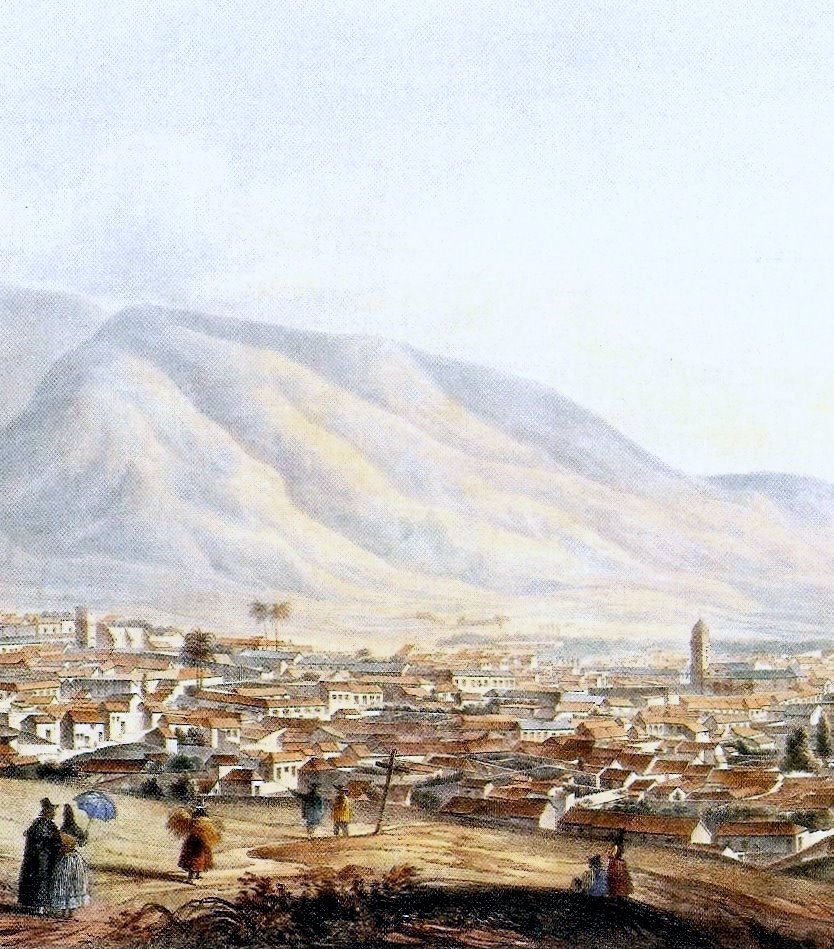
If you want to take a look at what Venezuela was almost 200 years ago, at least in the eyes of an Englishman, you can google and download for free "Reminiscences of South America, from two and a half years' residence in Venezuela" by John Hawkshaw.

It's fun to read specially chapter X and XII. Pages 168-172, 218-219, 222-223 are particularly interesting.

This was Caracas back then

Friday, 11 November 2011

Simón Bolívar, schon wieder...aber wie!

Am Wochenende habe ich Norbert Rehrmanns Biographie über Simón Bolívar gelesen. Endlich konnte ich ein wirklich vernünftiges Buch auf Deutsch über das Leben, Werk und Einfluss des venezolanischen Caudillos lesen. Leider ist Prof. Rehrmann frühzeitig gestorben. Ich hätte gern ihm einen Danke-schön-Brief schreiben wollen.
Bolívar liess Manuel Piar umbringen, um sich als Armeeführer zu  behaupten

Das Buch ist einfach sehr gut geschrieben, ohne Klisches, ohne Mannerismen. Rehrmann stellt sich die richtigen Fragen, er stellt nicht nur seine Position vor, sondern präsentiert die der anderen, die ganz anders denken. Seine Analyse ist scharf und weit entfernt von Dogmen. Er erklärt uns, wie Marx und Madariaga, aber auch alle bekannten Mitgestalter des Bolívarkults zu ihren jeweiligen Positionen zu dieser Figur gekommen sind.

Er beschreibt kurz und bündig, wie sich das Bolívarkult entwickelte und noch entwickelt...wie sich die Figur des venezolanischen Militärs in der Heimat, in Lateinamerika, aber auch in Deutschland seit Humboldts Zeiten über die Hitlerzeit bis jetzt entwickelt hat.

Ein Leser bei Amazon.de kritisierte Rehrmanns Position zur Hagiographie Bolívars, weil dieser angeblich die Rolle der USA "ausblendet" und nicht in Betracht zieht, dass die USA auch lateinamerikanische Caudillos als Gäste bei sich gehabt hat. Dieser Leser hat anscheinend Venezuelas Entwicklung gar nicht verstanden und rechtfertigt alles, was in Lateinamerika geschieht - auch das Chávez-Regime- mit der von uns wohlbekannten Einmischung der USA-Amerikaner in Lateinamerika. Er versteht nicht, dass das eben als Ausrede vieler "Linksnationalisten" (um die Worten des Chávez-Sympathisanten und DDR-Professors Zeuske zu benutzen) verwendet wird.

Wenn Ihr Venezuelas Geschichte besser kennenlernen wollt, müsst Ihr das Buch lesen. 


Thursday, 29 September 2011

Just some groovy music


It's not from Venezuela, but from Senegal: Baobab. The Senegalese music was greatly influenced by Caribbean music (mainly Cuban, but not only), which in turn was the product of African music with an European touch.

I had the privilege to talk to a couple of these musicians. They are not just brilliant but also extremely friendly.

Tuesday, 8 March 2011

Middle East and some insight

More on Fisk here...long interview, but it is worth watching it if you are interested in the Middle East or what journalism should be.

Great pity the Americas have little of this.

Sunday, 6 March 2011

Good journalism


Yesterday I had the opportunity to listen to one of my favourtie journalists: Robert Fisk. It is amazing the difference between his reporting and what I read from other English sources about the Middle East. 

Some of the ingredients for his work are these:
1) He interviews both sides of a story (or all he can when there are more sides) and reproduces the information and arguments given by them. And he gives background information from both sides. He does not give 50% of the time for one side and 50% for the other group as BBC pretends -pretends- to give in the Palestine-Israel conflict (in reality you will see considerably more references to the Israeli view on almost any article). As he says, he is not reporting about the construction of some road through a forest and the pros and cons but about brutal wars and complex conflicts, where one could stick to the 50/50 rule. He tries to report above all about the facts and conditions of those suffering the most while listing the arguments of the other side, not just their acts.
2) He knows history well. I repeat: he knows history well. It is not "history since we arrived there" or "history according to our school books", but history as also told by the different sides and history that goes beyond the time the story became "hot topic". This is very much unlike "star journalists" from the top mainstream news channels that go from one place to the other without having a clue about how the different places evolved, about the reasons behind that development. 

3) Unlike many journalists from the English speaking world, he goes to talk to the small people everywhere. That does not mean "the translator at the office", "the guys going for information at our embassy" or "the small employee from that government". He talks to the people who do not necessarily speak English, who are not to be found in the capital city of the country he visits.


4) He does not think writing down what the "anonymous governmental sources" or "government spokespersons" say should be the main task of a journalist.
If you want to read an excellent book about the Middle East, try the Great War for Civilisation. It is a huge book, but you can read the chapter you want independently from the others.
Very interestingly, Robert Fisk has a completely different background from German journalist Scholl-Latour. Still, a lot of his impressions about the Middle East are the same. That is no surprise: like Scholl-Latour, Fisk has managed to remain very independent, he has a solid understanding of regional and world history and he thinks journalists do have to go to places and report what they see, not what PR masters or the guys just next to them tell them to say.

Friday, 24 September 2010

Blogging from Venezuela's Gran Sabana


If you speak Spanish, I want to recommend you Las Crónicas de la Frontera, a blog about life in the Gran Sabana. Its blogger, a lady with the musical name of Morelia Morillo, is a journalist who worked for El Universal until she decided to follow her love in the Southern Guayana region. Her writing is excellent. The blog is about life of real people in a sometimes forgotten but mesmerizing corner of Venezuela.

And if you don't speak Spanish: what are you waiting for to start learning it? (eyes rolling)

Monday, 20 April 2009

Música


Here I added a couple more titles to the music I like (two Venezuelan songs, one Greek)

Monday, 23 February 2009

Just history


Howard Zinn is a well known US American historian. I don't share his views on some parts of history but I do agree with his general approach and most of his views. Here you have an interesting speech of his.

Now the Chavez National Assembly also wants to rewrite history...once again (link in Spanish). They will try to see who else they can discover as "anti-imperialist fighter". I have no problem with that as long as they call thieves thieves and the bandits bandits, whatever the political creed. I wonder if they would be interested in inviting people who do not consider themselves pro-Chavez to a live debate. I wonder if they would welcome an open discussion with lots of professional historians.

Sunday, 11 January 2009

Understanding Venezuela through the United States


This book is not about Venezuela, it is about one of Venezuela's big neighbours . Still, if you want to understand a little bit about Venezuela, it would not hurt to read this. The United States has been influencing one way or the other the rest of the Americas ever since it became an independent nation. Howard Zinn presents different views about how it came to be and how it has acted ever since.

Unfortunately, in Venezuela we tend to have a lot of people who are either extremely sympathetic with everything that comes from the USA, in every aspect, without any nuance, without any critical view, or completely against anything coming from there (or pretending to be).

This book helps us a new understanding of the history of a country with many of the best universities in the world as well as one of the worst results for OECD countries in the PISA programme, a country with many Nobel prizes and where over half the population still are creationists, a country where many a European capitalist would be considered a Marxist (never mind most US citizens really have no idea about what Marxism is).

This book, combined with this book and this one, present some interesting ideas about why Venezuela, Europe and the US have developed (or not) in the way they have and why the people in those respective regions think the way they do.

I haven't read much decent on history of Venezuela in English so far and very little of it in Spanish. You can read some interesting things about what we had in Venezuela in 1789-1810 from Alexander von Humboldt's writings:
1 (look for "printing") and 2. A programme from BBC on Humboldt here.
I will point at other works in the future.

Monday, 3 November 2008

Spanish blog

I have been very busy so I haven't been able to update my Spanish blog, but I will do so
next weekend with some updates about the elections plus some personal ideas about what to do to get Venezuela on the road towards sustainable development.

Sunday, 20 July 2008

To read

I am going off for a couple of days, I will be back at the end of the week.

I recommend you to check what Daniel Duquenal wrote on the electoral situation in Venezuela. Go here.

Tuesday, 6 May 2008

Music I like


For a change, here I put some information about some of the music I like.
I will be updating this from time to time.

African

Baobab: A very old orchestra.
Clip 1

Boubakar Traoré is a Mali genius. I have been to a concert and it was one of the best concerts I have ever seen. Simply amazing! I find his life also very inspiring.
Clip 1

Souad Massi is an Algerian French singer.
Clip 1
Clip 2

Toumani Diabaté is another Malian bloke. Excellent. I love the sound of the kora.
Clip 1 (check after minute 6 for music)

Youssou N'dour is one of the best known Senegalese musicians.
Clip 1

Asian

Noa from Israel
Clip 1

European

Bach
Clip 1
The Chaconne played here by Menuhin. Menuhin said once when he was a child he thought that if he could go to the Sistine Chapel and managed to play well enough this piece of music, God would decide to take away all evil from the world. I can imagine the child trying to play that piece better and better.

Bi2
Belorussian group, cool.
Clip 1

Brel
A Fleming who could describe very well Belgium, many French think he is French!
Clip 1

Capercaillie
Karen has an angelic voice. Music from the Hebrides.
Clip 1

Corelli
Clip 1
Good for focusing.

Peter Fox (Germany): Cool musician from Berlin
Haus am See

2RaumWohnung (Germany): Another pop group in Berlin
Elain und ich

Schubert (Germany)
The Erlkönig (not the best interpretation, but what I found in Youtube), a piece Schubert composed based on one of Goethe's poems.

Vysotsky

Clip 1
Well, the Russian bard is a real myth and there are good reasons for that.

Greek Byzantine chant
Clip 1: This is heaven, Easter music

North America

Armstrong
I have to go one day to New Orleans... Clip 1: Funny clip

Felix Leclerc
From one of the countries I like the most, Felix Leclerc: Clip 1

South America

Chico Buarque
Clip 1
Clip 2 It is easy to imagine the morena de Angola described in this song.

Alirio Díaz from Venezuela
Clip 1

Melódicos from Venezuela
Clip 1
Clip 2

Yordano from Venezuela
Clip 1 Madera Fina

To be continued...

Thursday, 7 February 2008

Books I recommend


Here some books I like and I consider very insightful. I will later comment them.

Collapse: how societies choose to fail or survive

by Jared Diamond

Ideas, a history from Fire to Freudby Peter Watson

This is an amazing book and not just "another history book". It discusses not the wars and kings and treaties but rather the greatest ideas and inventions and how they shaped the world in the last 30000 years.


It does a good attempt to cover the ideas originating from many other places than the West and it offers a lot of insights about why the cultures we have today evolved the way they did.

The author is still a little bit too focused on Europe, but not as much as many others I have read.

The End of Lineby Charles Clover

I firstly saw this book and said: what an awful cover! Perhaps the cover was not that bad after all, as I decided to browse it to see what was behind a picture of fish and chips and then I read on it a comment about the impossibility of eating fish in the same way after reading this book. So I perused further and became hooked by the book. It is about overfishing, but it is about more than that: it is about sustainable development and how the different industries and governments act in such a pigeon-minded way.

The sea is much more important than what many people think. This book is absolutely fascinating and it is true: I love fish but I cannot eat it the same way as I used to do after having read this book. I also see in a more suspicious ways the EU declarations about fish quotas.

The Life of Mahatma Ghandiby Louis Fischer

Pi in the Sky
by Barrow
This is a beautiful book about mathematics, its importance, its relationship with nature and mankind.
Sure you are joking, Mr. Feynmanby Feynman
I would give this book as a present to lots of school children in Venezuela.
We really need blokes like that.
Commandante: Hugo Chávez's Venezuela
by Rory Carroll
Excellent introduction to the life of the caudillo who took Venezuela into autocracy