Showing posts with label history of Venezuela. Show all posts

Sunday, 14 May 2017

The Chavista elite abroad


Venezuela was for most of its history a country of immigrants. Two periods stand up as big exceptions to this. The first was the war of independence and the second the long economic collapse that started to be felt in the nineties of the XX century and that is reaching increasingly terrible levels at this very moment.

Now there are Venezuelan communities in almost every country on Earth, something someone would nave found hard to believe 30 years ago. An awful lot of highly qualified Venezuelans live from Canada to Norway, from Argentina to Australia. Venezuelans are also emigrating by plane or bus and even in boats, like desperate Cubans, trying to reach Aruba, Curaçao and Bonaire.

But there are the other Venezuelans, the ones who have become very rich in the so-called Bolivarian revolution. When most Venezuelans have no access to dollars, the socialist boligarchs travel abroad in all luxury.

Venezuelans have decided to bug them. We could recently see on social media how the daughter of communist minister Rodriguez is approached by other Venezuelans in Bonti beach, Australia, and asked whether she doesn't feel something for what is happening in our country. The former defense minister gets caught in a restaurant in France and gets booed. Another former minister of Chavez has to get out of a restaurant in Doral, Florida, after Venezuelans recognise him and shout at him 'thief, get out'.

Bear in mind this: Venezuela has a foreign currency control that only promotes corruption.
If you are Venezuelan and you live in Venezuela you can only afford to travel abroad if you are richer than 99.5% of the population or someone abroad finances you.

Let''s see where boligarchs have been spotted abroad:

Former defence minister eating out in Paris, her children study there

Former minister Vázquez Orellana eating out in Miami

A well-known singer tweeted that the daughter of current defence minister Vladimir Padrino was spending some money in a posh area of Madrid

If you know of other cases, please let me know, preferably with a good url.

Saturday, 5 March 2016

My founding fathers and mothers


Yesterday I read this post about the Bolívar cult by Mónica Correa. I liked it a lot, although I disagree with the details about when the cult started. Correa, like many other Venezuelans, consinders the personality cult around Bolívar started really when Guzmán Blanco came to power. As German historian Norbert Rehrmann and others indicated, it was rather Bolívar himself who initiated the mental cult.

Then it was Antonio José Páez who re-started the cult in the early forties of the XIX century, when the world price for coffee - Venezuela's main export back then- plummeted and popular unrest threatened Venezuela's stability. Páez needed a big event to gain popularity.

You should read this decree by Páez to understand how he initiated the cult to this figure.

Many Venezuelans now would find it hard to believe Antonio José Páez would have been the actual promoter of the Bolívar cult. Venezuelans were taught from early on about the very real conflicts that separated Bolívar and Páez once Bolivar focused on his idea of governing the Gran Colombia. The thing is that what happened between Bolívar and Páez didn't prevent the latter to use the myth of the former in order to gain popularity. That is how he brought Bolívar's bones to Caracas from Colombia, how he tried to call Caracas Bolivar (at the end people would rename Angostura Bolívar, but that happened a bit later), how he organised Bolivar cult ceremonies in every Plaza Mayor of Venezuela then - those Plazas Mayores are now called Plazas Bolivar. Páez was also the one who reverted a law that had been introduced in order to stop the cult of the caudillo in congress. Páez was the one who started bringing marble statues of Bolívar from Europe.

The post's comments ended up revolving around the idea of "founding fathers". I thought about that as well and I wondered why it was that I never had such a fixation with the military men that ruled my country. The reason, I realised was that my founding fathers - and mothers - were very different from what I got at school.

My founding fathers and mothers were Spanish settlers from the XVI to the XIX century fleeing poverty in Spain. My founding fathers and mothers were the native Americans who lived for so long before around the then beautiful Valencia Lake, people who produced those petroglyphs and who cooked those arepas and wove those cotton clothes we hardly know about. My founding fathers and mothers were the black slaves who came from Western Africa with nothing but chains and humour and music and energy and probably many other things in their minds that we are no longer aware of because that is how history works.

My founding fathers and mothers were my great-grandparents and grandparents who worked very hard in their humble conucos,  their small land plots, to grow corn, beans, tomatoes and cotton, to raise chickens and pigs to feed their family and others.

My founding fathers and mothers were those who taught so many children to read and write, to count, who helped young adults to think analytically about economic issues, who introduced modern health practices in Venezuelan villages that until then were in conditions similar to those of Europe's Middle Ages.

If there was the need for any other kind of "founding fathers", my father and mother brought me to public talks of scientists Fernández Morán and Jacinto Convit and showed me - I was so lucky - the theatre work of poet Aquiles Nazoa. My sisters even took part in Nazoa's children theatre group.

My own founding father and mother taught me the magic of producing food and making something technical work.

My founding parents were actual doers, not military men.

I am convinced we can reshape what kind of myths and role models we need. Other countries have done so.

Wednesday, 18 June 2014

The Monk's Memoirs

Rafael Trujillo, Dominican Republic's dictator until 1961, shaped the mind of Giordani, who then influenced Venezuela for so long
Jorge Giordani, a communist born in the Dominican Republic who became one of the closest allies of Hugo Chávez, was finally sacked yesterday. He wrote a long letter in Aporrea. There he tries to tell the story of his life, the struggles he had, his relationship with Chávez and how his downfall went during Maduro's term.

Several things become more clear than ever:

1) the guy was a real believer, a fanatic
2) the guy confirms a bit of the struggles going on within the regime
3) the guy was strongly moved by his childhood traumas with the cruel dictatorship of Rafael Trujillo in the Dominican Republic.

It is kind of scary to think Venezuela wasted billions of dollars and corruption, always present, blossomed to ever higher levels precisely because of the power such a real fanatic - not a cold profiteer like Diosdado Cabello - could have for so many years. The ignorance Giordani had about economic and historical issues was just staggering and yet he was the key person to design Chávez's wrecked economic policies, policies that were completely unsustainable and that only fostered more corruption.

It is ironic that Giordani would be so traumatized by his childhood - the dictatorship of Trujillo and the stance his parents had - that he would end up destroying so much of Venezuela, a country that so openly opposed Trujillo.

Stay tuned. Different boligarchs will try to defend themselves after this. Corruption will go on, although the regime might become more pragmatic, which could make some adjustments for its own survival - at least for a bit-.


Ps. if you want to learn a bit about dictator Trujillo, you can read Vargas Llosa's masterpiece, The Feast of the Goat.

Friday, 16 May 2014

Venezuelan exports to Colombia and the dialogue (updated)

Exports from Venezuela to Colombia in millions of dollars
It is not always easy to find reliable data on Venezuela's trade with the rest of the world these days. That is why I (and many others) have to use sources from the trade partners. Venezuelan government sites these days are more about obfuscation than about information.


Colombians keep nice, easily readable data. Here you can see the exports from Venezuela to Colombia since 1994. Remember: the caudillo Chávez came to power in early 1999. From 2009 to 2010 Venezuela went into recession because oil prices got to a local minimum - less than in 2004-2008 but still a lot more than in the 1990-1998 period. If the Venezuelan government hadn't kept the currency heavily over-valued and if it had been less aggressive against private producers, we would have had a good time exporting. Instead, exports haven't recovered.

We are good for the UNASUR countries in as much as we buy and don't sell.

Below you can see Colombia's imports not only from Venezuela but from Colombia's other major partners. I put it in logarithmic scale. Still, you can see how Venezuela goes from being the second country from which Colombia imported to ninth. Venezuelan producers are exporting less and less to the neighbouring country. Colombia can improve its trade balance and Venezuela depends more and more on oil exports to the "Empire" and China.

Do you think the UNASUR group will be an efficient moderator in any hypothetical dialogue between the Venezuelan opposition and the regime? Mind: the trade imbalance with Brazil is much more dramatic. More about that next week.


Imports to Colombia ($ millions), logarithmic scale. Click to get a more decent view


Thursday, 15 May 2014

Low and great expectations for health in Latin America


I produced the chart above based on the latest data from the WHO. It shows life expectancy in 1992 and 2012. Back in 1990 Cuba was still the prima dona of Latin America. As you can see now, Colombia has caught up and Chile has clearly beaten Cuba.

Countries like Peru and Bolivia are doing well. Mexico is improving more slowly and yet it has caught up with Venezuela. Peru has caught with Venezuela and, as you could see from Colombia: it really beat Venezuela in spite of not having the oil Venezuela has.

The only country in this series that is converging with Venezuela - at least until 2012 - was Argentina.

Venezuela has squandered a lot of money. Yes, life expectancy has improved, like elsewhere in the region, but it hasn't improved as it should.


Sunday, 23 February 2014

Venezuela Europa in der ZEIT


Die deutsche Journalistin Alexandra Endres hat mich am Freitag interviewt. Hier können Sie das mal lesen. Ich habe auch einen Kommentar danach hinzugefügt. Es war eine gute Gelegenheit, um ein bisschen über die Lage dort zu erklären. Ich habe aber festgestellt: es ist eine Herausforderung, Hintergrundinformationen über den Fall Venezuela bei einem einzelnen Gespräch zu übermitteln, denn vieles hat mit einer etwas komplizierte Wirtschafts- und Sozialgeschichte zu tun, was normale Leser nicht so gern lesen wollen. Während des Interviews hat es auf meiner Seite sehr stark und lange gehagelt, es war manchmal schwer wegen der Hagelkörner gegen die Fenster den anderen zu hören. Aber es hat im großen und ganzen geklappt.


Es wäre vielleicht interessant, wenn die Deutschen eine Debatte zwischen einem regierungstreuen Venezolaner und einem Oppositionellen sehen würden. Das können wir in venezolanischen Medien leider nicht.

Danke an Frau Endres, dass sie über Venezuela berichtet.

Thursday, 4 April 2013

National Geographic and my Venezuelan genes


Today I received quite a lot of information from National Geographic's Genographic Project. Here I put the initial results for the autosomal analysis. I will explain the data in the following days.


  • 34% Mediterranean
  • 22% Native American
  • 21% Northern European
  • 12% Southwest Asian
  • 8% Sub-Saharan African
  • 3% North-East Asian


Tuesday, 5 March 2013

The caudillo fixation in Venezuela


Many historians, curiously, claim that the personality cult of Bolívar was initiated by president Guzmán Blanco. In reality the personality cult around the caudillo from Caracas was started by Bolívar himself, as Ducodray and other more impartial witnesses of the time tells us. Bolívar managed to create a whole myth around himself from the very start, before he had even done anything - declaring himself Libertador and all while he was on the run, declaring himself a fighter when he betrayed other people to save his own skin, and managed to get for himself the merits of thousands of other people - the European mercenarias, Piar, etc. But it was Páez who got things really rolling in 1842, 12 years after Bolívar's death, when he brought Bolívar's skeleton back from Colombia to Caracas. Páez declared a long period of morning, managed to get through congress a set of laws for the cult of Bolívar, fought back those deputies who still wanted to prevent such a cult - there were still many people who remembered the real Bolívar -. Páez went as far as proposing to change the name of Caracas to Bolívar. He didn't succeed there but Angostura was later named after our first caudillo...and then a thousand other places. Of course, with Guzmán Blanco came another level of personality cult, but the base was already established at the end of Páez's time.

Páez actually used that cult in order to distract Venezuelans from more pressing issues of his time: worldwide prices for coffee, our monoculture of that time, were low and there were tough economic times.

Venezuela will see in the following days another round of personality cult, this time around a caudillo who managed to re-invent history and economics by claiming it was not the oil boom but his working that brought so many petrodollars to the country and who managed to portray himself as Bolívar Reincarnated. Every Venezuelan military who aspires to something thinks he will be the next Bolívar.

Very unfortunately, few people will know about those "details". Venezuelans as a whole, whether Chavistas or not, will be repeating the vices of our past once more, making some of those habits stronger, forgetting a couple.

Very little has changed in Venezuela. The military are still a caste apart, a group that has excelled in the farce of pretending to be Venezuela's Liberators.


Monday, 4 February 2013

Chavismo celebrating a murderous act

Today, the military regime in Venezuela celebrates the failed but bloody coup its leaders carried out 4 February 1992. Back then Hugo Chávez and his fellow military chaps carried out an attack against a democratically elected government. The coup mongers used the Caracazo, the violent repression of rioters three years earlier, as an excuse for their murderous coup.


The excuse was silly, of course, as
1) the government of Carlos Andrés Pérez was due to end in 1994 anyway and Carlos Andrés Pérez could not be re-elected (that was what the constitution back then required, as anywhere else where there is a presidential system)
2) that government was democratically elected and although it had incurred in human right violations, 3 years had passed and it was not as if the bloody military action prevented or stopped anything. If anything the military should have demanded an investigation. They didn't want as 
3) they knew the killers were among their lot: the ones who perpetrated the human violations of the Caracazo were not just Carlos Andrés Pérez and a handful of generals but a lot of military close to Chávez
4) the Chávez government has refused to enable an independent investigation of what happened in 1989
5) the Chávez government claims there were up to 5000 dead in 1989 and yet there is no list of missing people that goes much over the 270 officially reported dead.

We have a government of psychopaths.  This is the government people from the Far Left and the dogs of war abroad support. They are not a bit better than the Far Right.

We will remember.


Sunday, 30 December 2012

Rory Carroll and the Comandante

Rory Carroll, a journalist from The Guardian, came to Venezuela in 2006. He had been working in Iraq for some time until he got kidnapped by Shiah militiamen. Before Iraq he was correspondent in several European countries, in the Middle East, in Afghanistan, in Pakistan and for many years in Africa. He probably thought Venezuela would be easier to report about. He was in for some surprises. He had just come to the region where the myth of El Dorado was born.

Shortly after his arrival, Rory went to an Aló Presidente, one of those shows where Chávez would be talking for hours and hours. Unexpectedly, Rory became the centre of attention on national TV for an hour or so: Chávez wanted a question from him. Rory asked what he thought was a simple question and he got a hell of a Chávez answer.
A different view on Venezuela

Quite a lot of people, whether left or right, have no interest whatsoever in learning about how things are in a given place but how things fit in their scheme of ideas. The Guardian is a left newspaper or rather tends to be on the left and thus there were quite some readers shocked by what Rory was reporting. But criticism also came from the right - a lot. Rory had to deal with the great challenge of explaining Venezuela in the times of Chávez. On one side there are the right-winged fundamentalists or just embittered Chávez haters. On the other side there is the legio-n of people who wanted by all means to see Chávez as the saviour that would finally come from the oppressed nations. 

One of the most difficult parts about explaining Venezuela is that you do have to explain a lot of economic stuff and most people do not give a damn about that. Most people, in fact, have a very short attention span, specially in politics. I believe he did an excellent job. He went to places all around Venezuela. He listened to both sides. To all sides. He analysed lots of material, including stuff most journalists don't want to deal with. This year Rory moved to the States to report mostly but not exclusively about our gringo neighbours. 

Fortunately, he has just written a book about Venezuela under Chávez. The book will come out of press next March. If you want to have a better understanding of what Venezuela has been about, go for it.


Wednesday, 28 November 2012

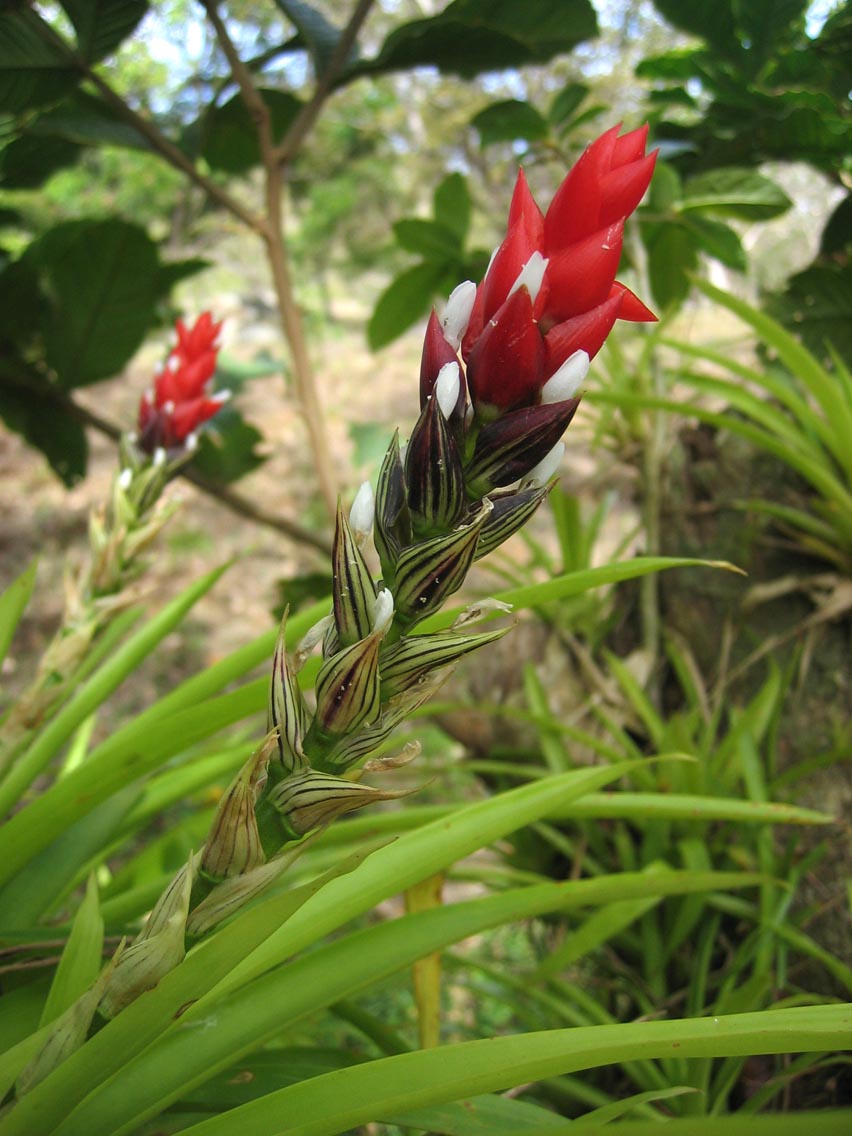
Red and white stripes

The Guzmania monostachia is endogenous to Venezuela. The whole genus, Guzmania, got its name form a Spanish scientist who did research in Northern South America a few years before the whole civil war broke out which would ultimately lead to the independence.

Thursday, 22 November 2012

The caudillo's absence and Venezuelans' logic

Hugo Chávez hasn't tweeted since 1 November. Is he resting? This is becoming a record now.

Giordani mentions petrol prices are way too low. Does he have plans?

Chávez has repeatedly mentioned petrol is heavily subsidized but he hasn't had the courage to raise prices just yet. Recently I had a "conversation" with a Chavista. She told me petrol comes from oil and as Venezuela has oil galore, people have the right to get it for (almost) nothing. Apparently, she didn't pay attention during chemistry classes at school. Let me tell you: in Venezuela we were supposed to learn at school much more about oil processing than in many other countries.

Jose Tadeo Monagas: one of the most unpopular presidents of Venezuela, a state is called after him

Monday, 8 October 2012

Abstention and political shortsightedness


I find it depressing how even historians joining the wagon of Venezuela analysts tend to select rather limited time frames when they want to measure up the development of anything. Now they mostly choose the period 1998 to 2011, as if everything that came before Chávez could be subsumed under 1998.

In some cases we may do well by comparing literacy levels or murder rates at least for a century. In some cases we may want to try to get key data about industril production for a few decades at the very least.

In the case of abstention, we should look at the time frame 1958 until now.

I just took the data found at the CNE and started to plot it.

Take a look.
Abstention almost seems to evolve inversely proportional to Venezuela's Alpha & Omega, oil prices.

But I will go deeper into this. That is not what it is all about.

Saturday, 22 September 2012

Benzin, um darin zu baden

Viel billiger als Mineralwasser: Benzin

Die SDZ schreibt über Benzin in Venezuela. Der Artikel ist gut, allerdings etwas ungenau. Da wird zum Beispiel gesagt, dass schon lange kein Präsident sich mehr getraut hat, den Benzinpreis zu erhöhen. Das ist nicht ganz korrekt: Rafael Caldera hat die Benzinpreise im Jahr 1996 erhöht und nach Caldera haben wir nur einen Präsidenten gehabt: den ehemaligen Putschist Hugo Chávez. 

Chávez ist derjenige, der keine Cojones hat und zwar weil er weiss, dass einer der Treibfaktoren der Gewalttagen beim Caracazos die Benzinpreisserhöhung unter Carlos Andrés Pérez 1989 war. Damals haben die Linksextremisten die ohne Vorbereitungen angemeldeten Sparmassnahmen von Pérez ausgenutzt, um eine Konfrontation mit den angriffslustigen Militärs und Polizisten zu suchen und Plünderungen zu provozieren.

Meine Stadt hat über 1.2 Millionen Menschen. Sie hat nur eine richtige öffentliche Bibliothek und die ist so gross, wie die Bibliothek eines kleinen Dorfes in Andalusien. Das Geld, das zur Zeit für die Subvention von Benzin ausgegeben wird und vor allem den Besserverdiennden dient, könnte für tausend Bibliotheken eingesetzt werden. Die Venezolaner haben aber andere Prioritäten.


Saturday, 18 August 2012

Venezuela, feudales Land


Seit vielen Jahren gibt es Zank zwischen Henrique Salas Feo, dem Gouverneur Carabobos, und Enzo Scarano, Bürgermeister von San Diego. Der Streit eskaliert jetzt. Um dies alles zu verstehen, müssen wir ein bisschen über Venezuela erklären.


Caudillismo ist eines der typischen Merkmale der lateinamerikanischen Wirklichkeit. In Venezuela ist das nicht anders. Präsidentielle Regierungssysteme haben die Macht des Militärfûhrers, später manchmal des vom Militär geduldeten Zivilführer verstärkt.  Lange Zeit durften Venezolaner nur den Präsidenten und die Abgeordneten wählen, wenn überhaupt. Ab 1958 durften sie das völlig demokratisch tun. Ab 1988 durfen sie auch für Gouverneure und Bürgermeister stimmen. Das hat ein bisschen Konkurrenz verschafft, aber nicht viel. Fast alle mittel- bis hochrangigen Angestellte sowie viele einfachen Mitarbeiter bei Bundesstaaten und Gemeinden werden von der jeweiligen Regierung angeheuert. Da die Regierungen die wichtigsten Arbeitgeber in einem Petroland sind, ist Klientelismus programmiert. Als Chávez an die Macht kam, began er, so schnell wie möglich die im Jahr 1988 eingeleitete Dezentralisierung zu demontieren. Er nahm immer wieder Kompetenzen von den Regionen weg...am Ende durch ein berüchtigtest Ermächtigungsgesetz. So ist die Lage der Gouverneure und Bürgermeister nun schwerer denn je. Trotztdem könnte es besser sein...wenn sie nicht so feudal denken würden.

Die Oppositionsführer insbesondere in Carabobo haben die typische feudalistische Einstellung. Sie sind etwas besser als die Chávez-Bonzen aber nur so viel.

Die venezolanische Opposition hatte sich im Jahr 2010 geeinigt, eine einzige Liste für alle Wahlen zu stellen. In manchen Regionen würde man dafür Vorwahlen organisieren...in anderen, wo "die Präferenz für eine Partei deutlich liegt" nicht. Das Problem ist, dass diese Präferenz auf Klientelismus pur basiert, auf die Wahlen auf einem bestimmten Zeitpunkt in der Vergangenheit und auf die Tatsache, dass man in Venezuela einfach für den Kandidat der Opposition seine Stimme gibt, nicht für eine Partei. Dies führt dazu, dass sich der Kandidat der Opposition in dieser oder jener Region verewigt und keine Chance für andere Kandidaten der Opposition gibt.

Carabobo hat ein Gouverneur der Opposition an der Macht. Man hat ihn vor allem gewählt, weil man den Chávez-Kandidat auf keinen Fall wollte...aber eher nur darum. Der Gouverneur, Salas Feo, ist der Sohn eines früheren Gouverneurs, Salas Römer. Salas Römer hatte eine Frau der Familie Feo geheiratet. Unter den Feos gab es seit dem 19. Jahrhundert hochrangige Politiker in Carabobo.

Der Gouverneur von Naguanagua, eine Stadt, die nördliche von Valencia liegt und seit langem mit Valencia zusammengewachsen ist, ist der Cousin von Salas. Der alte Salas Römer hatte seine Partei, Proyecto Venezuela, Ende der Achziger gegründet, als seine frühere Partei, COPEI, ihn nicht als Kandidat für Carabobo stellen wollte. Nun wollen die Salas-Feo so weit es geht alle Stellen im Bundesland haben. Das ist ihr Feudalgebiet. In der Gemeinde San Diego ist aber seit Jahren eine neue Persönlichkeit erschienen: Enzo Scarano. Enzo Scarano ist ein Unternehmer und genauso wie die Salas hat er auch eine sehr starke feudale Einstellung und auch wie sie will er seine Familie an der Macht - so oder so - sehen.

Proyeto Venezuela wollte nun für die Lokalwahlen von Dezember nicht genügend Kandidaten der Enzo-Scarano-"Partei" für die gemeinsamen Listen für alle Gemeinden und vor allem für die Bundesstaatsversammlung akzeptieren. 

Enzo Scarano hat seine eigene Partei, "Cuentas Claras", und er will, dass mehr von seinen "Leuten" bei den Kandidaten sehen und er protestiert nun immer lauter. 
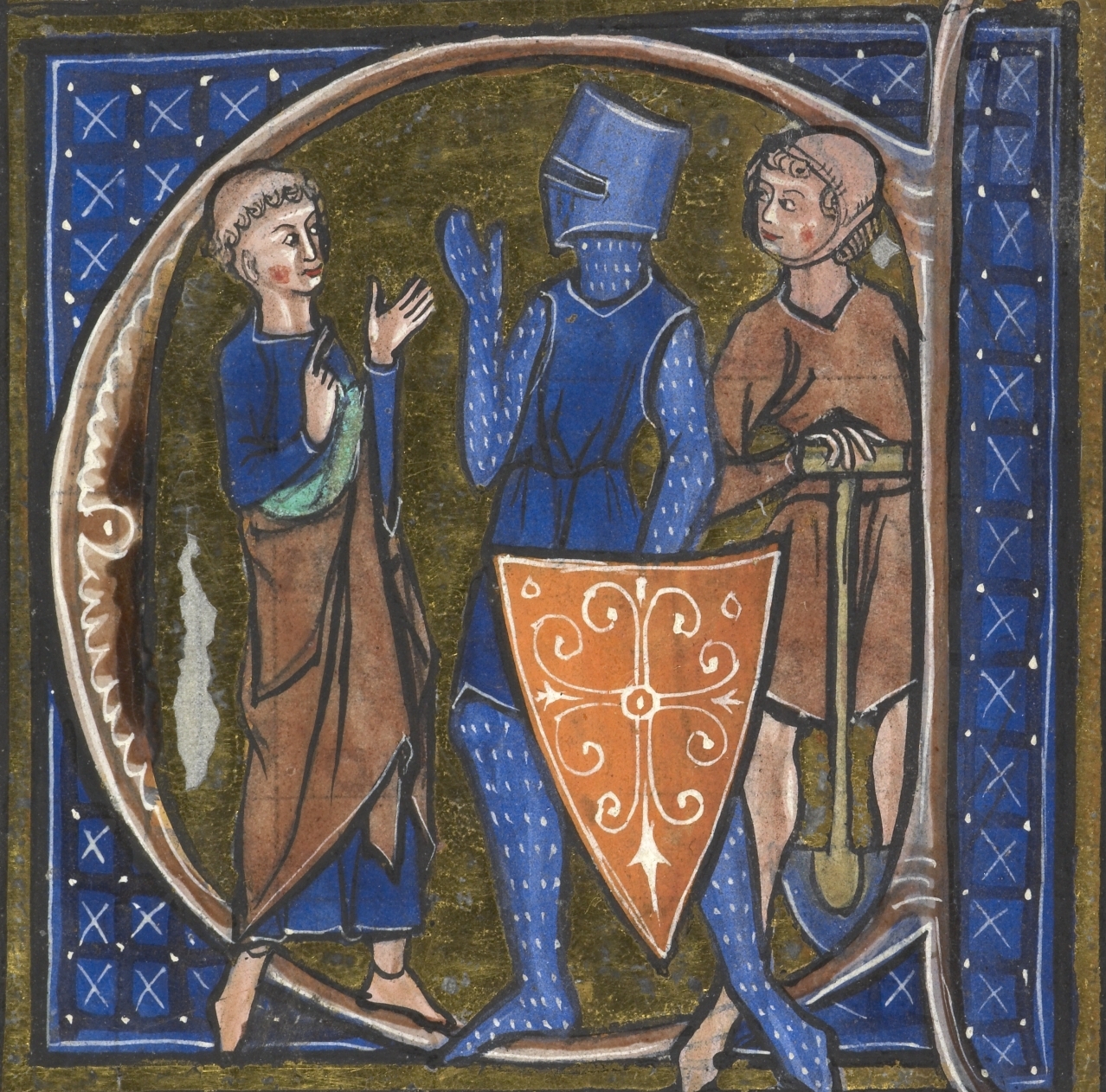
Die mittelalterlichen Klassen der Priester, Ritter und Bauer sind in Venezuela durch die Klassen der Militärs, Importeure, Staatsdiener und Strassenverkäufer ersetzt worden. Alles andere: dasselbe im Rot oder Blau.

Im Jahr 2008 hat die Opposition die Stelle des Bürgermeisters für Valencia verloren, wiel Salas seine eigene Kandidatin zum Rennen schickte, während alle anderen einen anderen Kandidat, Cocchiolla, hatten. Und so hat der Kandidat der Chavistas, Parras, gewonnen. Alle anderen Parteien waren sauer auf Salas. 

Nun haben sie sich damit abgefunden und sind zu einem Kompromiss gekommen: Salas lässt sie den Bürgermeister Valencias wählen und er darf zuerst die Kandidaten in allen anderen Regionen Carabobos mit Ausnahme von San Diego auswählen. Alle sind damit einverstanden bis auf Enzo Scarano. Scarano ist aber auch wichtig, weil er in seiner Gegend populär ist und die Gemeinde San Diego ganz für ihn stimmt. Und so haben wir nun die Gefahr, dass wir schon wieder zwei Oppositionslisten für die Regionalwahlen vom Monat Dezember haben. Und das hat damit zu tun, dass Parteien in Venezuela einfach feudale Konstruktionen sind, die nur dafür bestimmt waren, bestimmte Caudillos zu vertreten.

Wenn ein Journalist öffentlich Salas oder Scarano bei einem Interview einige Fragen stellen dürfte, würde ich gern als erstes diese Frage hören: welcher ist der programmatische Unterschied zwischen Proyecto Venezuela und Cuentas Claras, von den Menschen mal abgesehen?

Ihr könnt sicher sein: beide würden zuerst verblüfft und erschrocken aussehen.

Monday, 11 June 2012

Latin American heads of state and power

It is a pity we never hear the discussion about parliamentarian versus presidential democracies when "experts" talk about re-elections in Latin America. Parliamentarian democracies are completely different from presidential democracies and these differences are essential if people want to understand why there have been term limits for presidential systems, specially for very strong presidential forms. The US allowed indefinite re-election until Roosevelt, but even then a US president had more limited powers than a president in other countries.

It is incredible so many sycophants of "left nationalist" presidents say that the possibility of indefinite re-elections in Germany, Spain or Britain are a reason to allow that in Venezuela, with a completely different - strongly presidential - system.

Here you have the chart of Latin American heads of state and, rounded down, their time in power.


Today Venezuela's military caudillo will register as a candidate for re-election once more. He has been in power since early 1999, more than any  other head of state in Latin America.


Thursday, 7 June 2012

Venezuela's murder in perspective

Some people are discovering the wheel about crime in Venezuela. I have written previously a little bit about the topic. Here I wanted to add one extra reference. 

Venezuelans and some foreign historians have a problem in understanding long-time developments. Some Venezuelans with authoritarian tendencies tend to become nostalgic about Pérez Jiménez's dictatorship because of low crime levels back then. I am not sure about how "normal violent crime" was then: even if I have heard elderly in my family talking about how safe it was at night, how people would not lock their doors, I have no data. Of course, Pérez Jiménez did get  a lot of people tortured and murdered - a lot of them socialists, even if not all. The self-styled "socialist" Chávez, who has publicly shown his admiration for Pérez Jiménez, got elected, among other reasons, because some silly people thought he would bring back that "peaceful time". 

In some history books supporting Chávez we read as one of the boldest criticisms that "Chávez probably hasn't been able to manage the crime issue". They say crime levels before Chávez had dramatically increased. Was it so? How was the general development, really? 

I haven't been able to find murder rates for many periods of time, but I found some numbers about crime in 1911-1913. If you read Spanish, you can take a look at the document here, specially at the bottom. I translate a fragment:

Until the sixties, the murder rate and the amount of wounded were considerably higher in rural areas and they kept being very high until the seventies (Gómez Grillo, 1979). From then on, violent crime has dropped in the rural areas to increase in the urban ones. 

That is interesting.

I also have detailed information from 1995 on. My guess is that crime got to a historical minimum in the seventies, started to rise considerably in the early nineties and was going to stabilize about the time our current caudillo got elected. As soon as I can, I will try to find some hard data for the sixties and seventies. And then we can start bringing up a few more hypothesis and possible solutions.


Sunday, 29 April 2012

Kaufkraft in Venezuela: was die Linke nicht weiss

Die Kaufkraft der Venezolaner war zwischen 1950 und 1978 am höchsten. Deswegen haben viele Venezolaner Chávez beim ersten Mal gewählt: sie dachten, er würde entweder den Wohlstand UND Sicherheit zurückbringen, die sie während der Herrschaft des Diktators Pérez Jiménez - ein Idol des Chávez- erlebten oder den Wohlstand der Zivilregierungen von 1973-1976. Der Wissenschaftler Miguel Angel Santos vom Wirtschaftszentrum IESA hat jetzt jede Menge Daten analysiert und ist zum Schluss gekommen, dass die durschnittliche Kaufkraft des Venezolaners im Jahr 2011 die von 1966 entsprach. Das sagt uns El Universal heute. Die Produktivität der Venezolaner, sagt uns Santos, ist einfach so niedrig wie nie zuvor. Es wird nicht mehr in Kapitalanlagen investiert.

Venezolaner von heute sind nur so produktiv wie damals, trotz allerlei Maschinen , Verfahren und Kenntnisse im allgemeinen, die seit 50 Jahren eingeführt wurden

Die Ökonomen haben mehrere Erklärungen für den Produktivitätsschwund. Politische Entscheidungen spielen dabei eine grosse Rolle: Gesetze wurden nicht respektiert, Eigentumsrechte wurde verletzt, der Arbeitsmarkt geriet auch in Ungleichgewicht.

Mehrere Analysten nennen mehrere konkretere Faktoren. Die Währung wurde zB aus populistischen Gründen immer wieder überbewertet - so wie jetzt-. Zuschüsse wurden bedingungslos vergeben. Preiskontrollen wurden allzu oft eingeführt. Administrative Kontrollen wurden zu Last, gleichzeitig wurden Steuerausnahmen für politische Kunden ständig eingeführt. Die zunehmende Abhängigkeit vom Erdöleinkommen und die Schwankungen des Erdölpreises haben dazu geführt, dass die Regierungen extrem kurzfristig dachten und die Zusammenarbeit zwischen Politik und Wirtschaft einfach verschwand. 


Es gibt einige Faktoren, die ich vermisse. Sie erwähnen kaum die Tatsache, dass sie immer weniger in Humankapital investiert haben - nicht, dass es jetzt besser wäre, ganz im Gegenteil - russische Waffen sind prioritär. Im Artikel wird auch nicht darauf eingegangen, wie die Entwicklung eines Dienstleistungssektors so negativ sein kann. Der Tertiärsektor ist ja überall gewachsen. Was die Wissenschaftler - oder zumindest die Journalisten von El Universal - nicht sagen, ist, dass in Westeuropa, in den Vereinigten Staaten oder in China der  Sekundärsektor trotz zunehmender Bedeutung des Dienstleistungssektors immer effizienter wurde. Sie sagen auch nicht, dass der Tertiärsektor in Venezuela eine ganz andere Dimension hat als in Europa oder in Nordamerika. Sie sagen auch nicht, wieso Venezuela eine solche Abhängigkeit vom Erdöl entwickeln konnte, während die Norweger sich streng an Massnahmen hielten, die diese Erdöleinnahmen zur nachhaltigen Entwicklung einsetzten. Wieso, wieso?

Irgendwie habe ich also mehr Fleisch im Artikel erwartet...interessante Fakten gab es schon. Hoffentlich hat unsere zukünftige Regierung einige Ideen, um diesen Trend umzukehren.


Die Prognosen sind düster: zwischen 2007 und 2010 ist die  private Investition um 43.6% gesunken. Ich bin sicher, was die Chávez-Anhänger sagen werden: das geschieht, weil die Reichen ihre Münze horden.

Tuesday, 6 March 2012

Salaries in Venezuela of Gómez (1)

Here you have the yearly salaries of some jobs in Venezuela of 1920. Back then dictator Juan Vicente Gómez ruled, a military who promoted the Bolívar cult half as madly as military Bolívar.

Salaries in 1920. Click to enlarge
The German author back then was shocked at the huge differences in salaries between ministers and generals and judges and all the rest.

The data comes from Otto Bürger's Venezuela, ein Führer durch das Land (Führer went it hadn't the meaning it has today, the book being published in 1922)

Saturday, 4 February 2012

Ein Tag wie heute vor zwantig Jahren

Vor 20 Jahren hat eine Gruppe Militärs einen Putsch in Venezuela versucht. Ich war damals ein junger Student und ich wohnte in einer heruntergekommenen WG in der Nähe eines ihres Zieles, in San Bernardino. Ich hatte einige Monate davor mit einem guten Freund über die Gefahr eines solchen Putsches diskutiert. Wir beide befürchteten, dass ein Putsch bald kommen würde. Wir beide wussten, wie Venezuela, das vom Erdöl so abhängige Land, unter den damaligen Bedingungen reagieren würde und wie die Militärs ihre Chance daran sehen würden. 

Es war keine Überraschung für mich und dennoch war es sehr schmerzhaft zu sehen, was das alles  mit sich brachte: die Gewalt, die Tote, die Verunsicherung. Einige Monate später haben andere Chávez-Kumpel einen zweiten Putschversuch verübt, mit mehr Toten. Weil das Volk nicht mitmachen wollte, wollten sie das Volk angreifen. Noch heute könnten wir in Youtube sehen, wie einer der Militärs, Arne Chacón, im Fernsehen anderen Militärs sagte, man müsse den Aufstand gegen die Korruption unterstützen. Dieser Arne Chacón, deren Bruder noch ein leitender Chávez-Leiter ist, wurde von 1999 bis 2009 Milliardär. 

Wie Gandi sagte: Gewalt kann nur mehr Gewalt provozieren. 

Und heute sind diese Militärs an der Macht. Sie wurden demokratisch gewählt, wie viele andere Autokraten vor ihnen. Sie haben mehrfach Wahlen gewonnen, was bestimmte "linksgerichte" Europäer anscheinend als Beweis für absolute Demokratie sehen. Ein deutscher Historiker, Michael Zeuske, selbst Sohn eines marxistischen DDR-Historikers, schrieb im Jahr 2006 in einem Buch, Venezuela sei das "freieste Land" der Welt. Er hat bis dato die Gewalt des Chavismus und die Korruption immer relativiert, wie so viele anderen, die einfach nur sehen wollen, was in ihren Köpfen steht.

In Wirklichkeit sind diese Militärs keine Demokraten. Sie waren es nie und sie haben nur die  Mechanismen benutzt, die eine kaum entwickelte Demokratie ihnen darbot. Die Deutschen, die von der Weimarer Republik wissen, kennen dies verstehen.

Und jetzt sind Venezuelas Richter völlig dem Hugo Chávez unterordnet. Der Wahlrat ist im wesentlichen von Chávez-Anhängern dominiert. Es gibt einige Sendungen, die "frei" alles mögliche über Chávez sagen können, sie können aber nur eine Minderheit erreichen - nicht die Leute in Guacara oder Punto Fijo, Maturín oder El Tocuyo, die keine Internetverbindung oder Kabel haben. Kaum jemand ausserhalb der drei wichtigsten Städte liest El Universal oder El Nacional, genauso wie wenig Leute in Russland Novaja Gazeta lesen.

Das Erdölgeld, das laut Verfassung unter sehr klaren Bedindungen zu den Regionalverwaltungen geschickt werden muss, wird zum grossen Teil umgeleitet, so dass Chávez höchstpersönlich Almosen verteilt, seine Leute billige chinesische Kühlschränke verkaufen - es gibt eine sehr strenge Währungskontrolle- und die Militärs den Rest benutzt. Die Lokalregierungen, die von der Opposition verwaltet werden, haben kaum Geld. 

Venezuela hat dank Hugo Chávez im Jahr 2011 mehr Geld für die Waffeneinfuhr ausgegeben als jedes andere lateinamerikanische Land, einschliesslich Mexiko und Brasilien. Venezuela ist für Russland im Moment ein viel wichtiger Partner als Syrien. Wir werden uns nicht wundern, wenn Russland die Chávez-Regierung bis zum Ende verteidigen wird.

Und heute feiern die Militärs ihren blutigen Putschversuch. 

Chávez ist immer noch populär mit einem Teil der Bevölkerung. Das geschieht aber, während der Erdölpreis fast zehnmal höher liegt, als zu den Zeiten vor Chávez Amtsantritt. Die Militärs haben zur Zeit viel mehr Geld als Carlos Andrés Pérez in den Siebziger Jahren. Und das ist nur Dank Nachfrage, denn Venezuela kann zur Zeit nicht mal entscheiden, mehr Erdöl zu produzieren, so schlecht geht es mit dem Staatserdölgesellschaft, PDVSA.


Heute gibt die jetzige Militärregierung Venezuelas  jede Menge Geld aus, um ihren blutigen Putschversuch gegen eine demokratische Regierung zu feiern. Die Regierung, gegen die Chávez reagierte, war korrupt und für Menschenrechtsverletzungen verantwortlich. Die jetztige Regierung ist aber umso korrupter und die Militärs, die an der Macht sind, sind dieselben, die schon damals die Menschenrechtsverletzungen verübt haben. Als Beispiel gelten Róger Cordero Lara, Abgeordneter der Chávez-Partei, und Rodríguez Chacín, ehemaliger Chávez-Minister und immer noch eine leitende Figur. Beide nahmen an Massakern der "Cuarta República" teil...genauso wie viele Militärs, die sich als Revoluzer porträtieren. 

Die Regierung will die Putschversuche als eine "bürgerlich-militäre" Aktion verkaufen. Von Bürgern hatten diese Verbrechen nichts zu tun. Diejenigen, die daran beteiligt waren, waren Militärs und linksextreme Guerrilleros. Das Volk sah nur mit Angst zu. Sie wollten Carlos Andrés Pérez nicht. Sie wollten aber keine Militärs.

Paradoxerweise feiern jetzt ehemalige Guerrilleros und ihre Verfolger zusammen, dass sie "die Oligarchie" besiegt haben...und die Oligarchie sind die anderen, alle anderen. Macht schweißt zusammen.

Wie lange werden sie aber an der Macht bleiben können, wenn der Erdölpreis nicht schnell genug weiter steigt? Das werden wir in den nächsten zwei Jahren sehen.