Saturday, 31 December 2011

Ideas for Venezuela: what about transparency? The Access to Information Act


Take a look at this BBC article on the Access to Information Act. That legislation will enshrine in the Brazilian constitution the right of citizens to request information from public officials on their administration and to receive prompt response. The article also contains some references to new movements that promote transparency elsewhere, particularly in the EU.

As Edward Eastwick, an English visitor to dilapidated Venezuela during the aftermath of the Federal War wrote, the main problem in my country is not the lack of law but the absolute disregard of it. Back then a Venezuelan told him the reasons and the possible solutions to overcome that mess: education and more education. And yet we keep talking about education today and things haven't changed. Education became a senseless mantra. Education improved somewhat in the XX century, but it became diluted. Old habits never died: education for most people became more rote learning than ever, non-actionable data to be wasted after a few years. And people just got used to think Venezuela is what it is: corruption and dependency on oil is here to stay.

How can we overcome this? Is it possible at all or will Venezuela become more and more the failed state living off oil until the next energy age?

The Chávez government, we have seen this already, is absolutely reluctant to allow Venezuela to take part in transparency mechanisms such as the PISA programme on education measurement. The military caudillo in power is resolute to avoid any public debate - when Peruvian writer challenged him to a debate, Chávez said he, Chávez, "was just a soldier", later to say he would only participate in a debate if his "intellectuals" - sycophants like Britto García, and others also take part in it - i.e. he would stand behind them.

What can the democratic movement do?

Venezuela's resources for the military regime and its honchos

  • We need to keep challenging the caudillo time after time to have an open, fair series of debates between him and the elected candidate from February's elections - no parallel monologues.
  • We need to distribute information across the secondary cities of Venezuela about how other countries implement transparency measures and what they are doing right now to improve transparency and accountability.
  • We have to distribute information about how the government is misusing the unprecedented petrodollar stream (not even the seventies come close to it). This last part is a hard task. You cannot just go on a TV channel that can only be watched by 30% of the population and start throwing numbers at people. You need to go to them and explain things in a very visual way.

Those are some of the things we need to do next year.

And I wish you a successful 2012 to you all!


Friday, 30 December 2011

Venezuelan genes continued

A couple of months ago a new paper on population genetics on Venezuela appeared: "A Melting Pot of Multicontinental mtDNA Lineages in Admixed Venezuelans", by Gómez Caraballo et alia. The work has very fascinating insights into our genetic structure. Still, I have some questions about the general method.
You get these mitochondria from your mum alone

Scientists used data from Caracas and Pueblo Llano mainly to determine how the native American component was reflected in both groups. The assumption was that new flows of immigrants to Caracas had displaced the Amerindian element there whereas this element would be much stronger in the countryside. Pueblo Llano is a very isolated village in the lowlands of the otherwise very mountainous Mérida state. 

I have reported in a couple of previous posts how we Venezuelans are mostly European from the "extreme" paternal side (father's father's father's...) and "mostly" native American from the "maternal" side (mother's mother's mother's), with African American on both sides as well (but less so in general). This study didn't show otherwise, but it focused on the native American part. This is all relative: you can have an African American mtDNA and your mother can look very European and you can have an European Y haplogroup and your dad looks more African or native American (the last one being much less the case in Venezuela, as male Indians were basically out-bred).

Of the 199 samples from Pueblo Llano 177 persons had native American, 8 African American (4%) and 14 European (6%) haplogroups. The native American component in Pueblo Llano is stronger than in Caracas. This is not surprising. The African American component in Pueblo Llano was much smaller than in Caracas, where 20% had African haplotypes. This is not surprising either, we from history: there were more African slaves close to and in Caracas than in the Llanos or Andean regions.

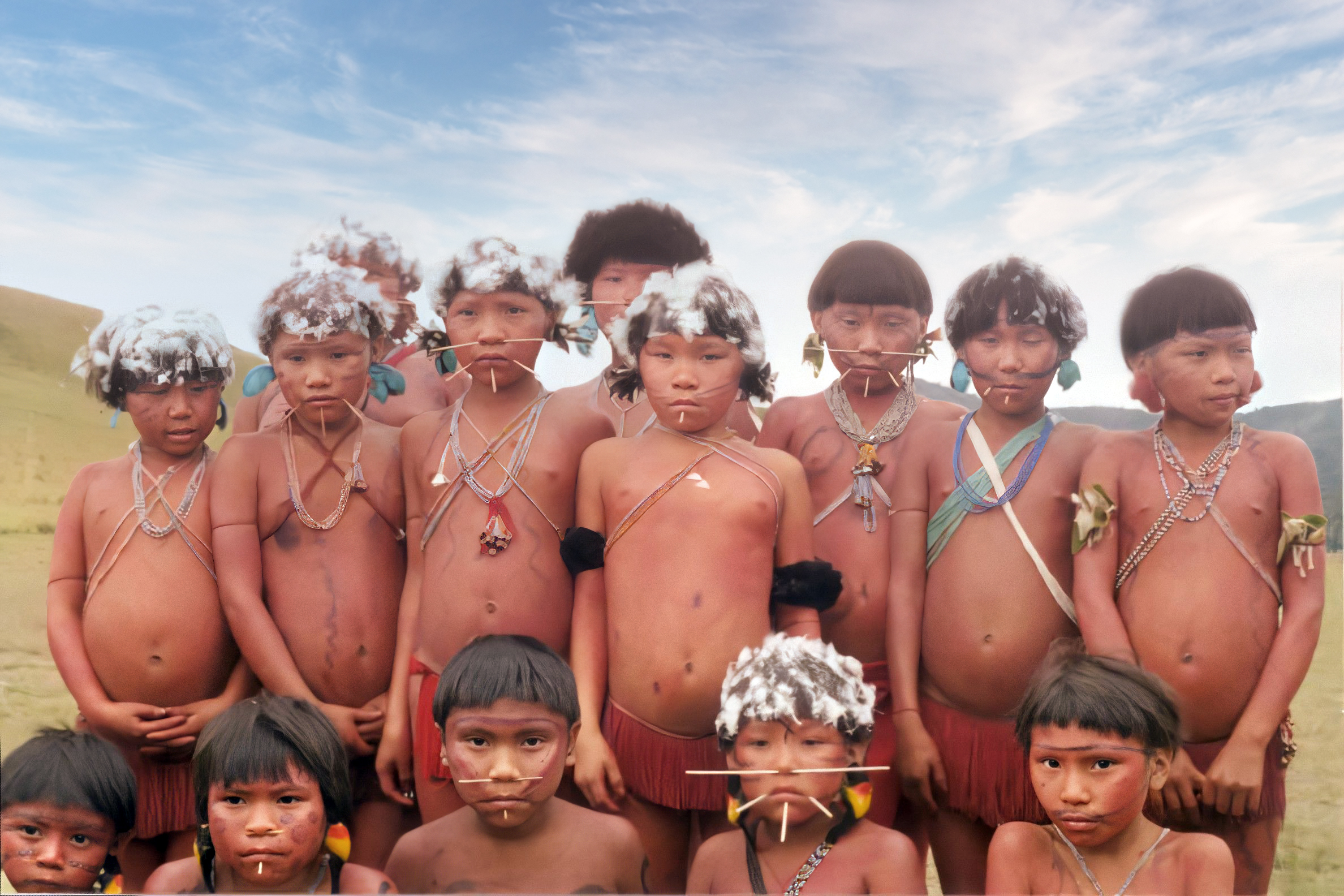
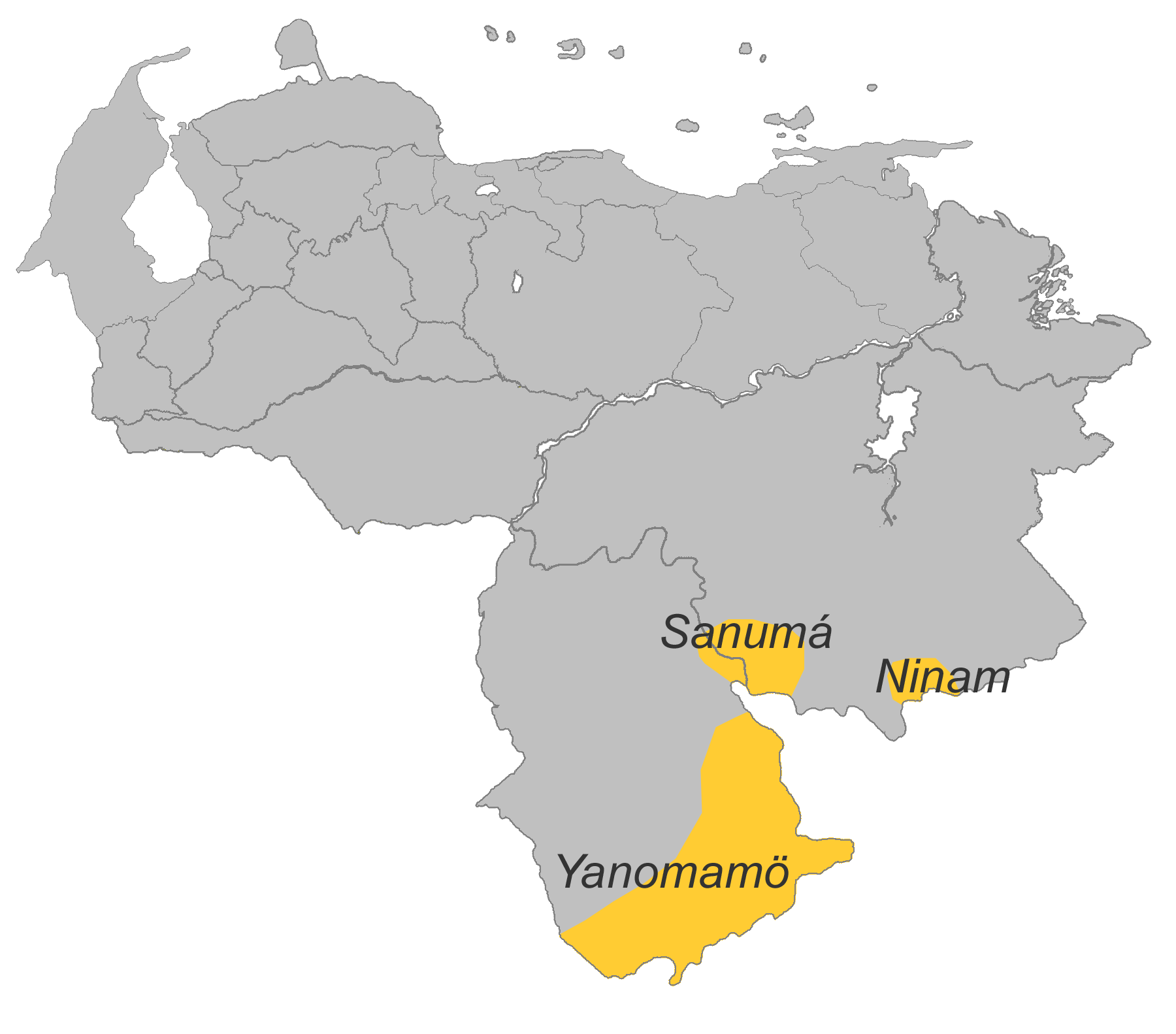
There are more interesting things: they discovered new haplotypes of the native American A and B mtDNA haplogroups. They also confirmed the A2 clade is predominant in the Pueblo Llano area, just as in Caracas...but unlike in two studies carried out on the Yanomamö. The Yanomamö Indians have a completely different language from Caribs, who still inhabit some tiny regions in South Eastern and Eastern Venezuela and who occupied central and most of Northern central Venezuela when the Europeans arrived in 1498 and Arawaks, who still live in some areas in the Amazonas state as well as in Northwestern Zulia and who also occupied some other areas around current Coro. Their language is also quite different from that of the now extinct Timoto-Cuicas, who inhabited most of the Merida area but who rapidly merged with the Spanish settlers.

There is one item I don't find very academic. They write "native American mtDNA component is by far the most prevalent in present day urban Venezuelans (80%), whereas it is much more frequent in Pueblo Llano ( 90%) than in Caracas ( 65%)." The native American component as reflected by mtDNA is indeed clearly prevalent, but "urban Venezuela" cannot be deduced by simply by calculating the mean from the largest city in Venezuela by far and an extremely isolated area that is much smaller than the average Venezuelan town in the interior. Most Venezuelans (about 70% of the total population) live in cities with more than 100 000 inhabitants but less than one million. The population dynamics from the Eastern side of Mérida and the Western side and central valleys are also completely different from the dynamics in Bejuma or Margarita (even considering Margarita inhabitants with all grandparents born in the island). So: I think a more systematic approach needs to be taken in the future to determine "average populations".

Still, this study discovered a couple of new branches in the A and B maternal haplogroups. There is some material that adds to existing databases and that will help us in the future to establish possible migration routes for pre-Colombian South America. 

It would be great, among other things, to find the closest matches to the Yanomamö within the Americas and to carry out genetic studies on the Carib groups Pemon and Yekwana to see how distant they are, both by mtDNA and Y chromosome sequences. It could be also very interesting to examine further other groups, like the Arutani Sape, if it is not too late.


Thursday, 29 December 2011

Chavicide timeline

In an effort to put a little bit of perspective to Venezuela's magic history, I decided to update the record of presumed attempts of assassination against the current president, Hugo Chávez. This is not an easy task. Mr Chávez has been in power since February 1999 and newspapers in Venezuela are not very systematic, to put it mildy, about keeping track of things. Still, I was able to find the major landmarks by trivial Internet search.

The red ovals show when the government in Venezuela or the one in Cuba announced about a major attempt against the life of Hugo Chávez. So far, no one has been jailed and I don't recall having seen any proof, but who am I to judge against the wind? 

I wrote in Spanish a reference to news articles about each of those announcements here.

The green lines show 1) when the bones of idolized Simón Bolívar were exhumed (July 2010) to find out if US president Andrew Jackson or his accomplices killed Bolívar all the way back in 1830 and 2) when results were announced (July 2011). These results were inconclusive - to say the least -, something Chávez did not like.

The last major announcement of a presumed assassination attempt against Chávez ("magnicidios") was last December and we had a couple of months of relative silence. Then the big drama came when Chávez announced he had cancer, then how he was fighting it and how he had completely recovered. Yesterday, though, the president hinted that cancer may have to do with a US plot against him and some of his president-friends who also have cancer.

Wednesday, 28 December 2011

Cancer in South America (updated)

Chávez announced in the middle of this year that he had cancer (sort of announced it). The former head of state of Brazil, Lula, announced in October that he had throat cancer. The president of Paraguay went to hospital the same month because he was diagnosed with non-Hodgkin's lymphoma. Now we hear the president of Argentina has thyroid cancer.

What is it? Coincidence?

Now I get the news, with delay, that Chávez hinted the United States of America is behind it all

Now we know what we are going to hear in the next 10 months.

The price of life in Venezuela


The ONG Observatorio Venezolano de Violencia informs us there were about 19336 murders in Venezuela in 2011. That means a murder rate of about 66 murders per 100 000 inhabitants. It is about 38 in Colombia and 2 in Chile now. In 1998 Venezuelans were shocked at the murder rate they had: 19 x 100 000. Now half of them got completely used to it: they resent it, but they see is as Scots see the weather. Whereas East German professor Zeuske relativizes the increase in the murder rate (more on that in another post), right now Venezuela's got the highest murder rate in South America by far and that was not the case before Chávez. There was an increase in violence already after 1983, but that rate was still similar to the rate during the Gómez times, over 80 years ago (from about 10 to 19), and much lower than in other Latin American countries back then.

When Chávez announced he had cancer, he changed his slogan from "Fatherland, socialism or death" to "To live living" (sic). He kept tweeting "We will live, we will live" and similar things and his followers started to repeat his words like parrots. What they didn't notice: it's about his life.

What's the matter? What is quite special in Venezuela, as Kronick reports, is that the murder rate is not affecting Chávez in the polls: the poor, who are the most affected by violent crime, do not relate that crime with Chávez. I will go over the different hypothesis people have given to this phenomenon in a new post, next year. One of the key issues: risk perception.


Monday, 26 December 2011

Venezuela bleeding and the military caste buying more weapons

I stumbled upon a new article in the Russian press about the weapons industry in this year. A Russian magazine in that sector, ЦАМТО, produced some interesting statistics on the business of killing tools.

It lists the nations that spent the most in weapon imports in 2011. The top ten arms importers were the following:

  1. India
  2. United Arab Emirates
  3. Australia
  4. Saudi Arabia
  5. South Korea
  6. Iraq
  7. USA (which is also the main exporter)
  8. Venezuela
  9. Turkey and
  10. Pakistan

    Top weapons' importers


    Above you can see a chart showing the amounts in million dollars. Venezuela, for instance, is sending $2,33 billion abroad in weapons. As the Russian news agency RIA says, Venezuela actually got into more than 4 billion dollars debt with Russia this year for weapons, so I assume part of the money will be technically spent next year.

    Some Chávez apologists try to justify this all saying military expenses get a bigger share of the national budget in the US than in Venezuela. I am not sure about that anymore. Most of the imports for this year are in the form of a debt to Russia that will probably be paid, as before, by means of the FONDEN, the Venezuelan Fund for Development or Chávez's Personal Piggy Bank, redirected through different obscure mechanisms. The budget for defence in Venezuela is thus just a part of what the government spends for the military caste and its amigos. 49,9% of shares in Moznabank, a bank to be used in buying weapons, was paid with money from FONDEN, as the Central Bank of the Russian Federation stated.


    Next year Venezuela's "explicit" defence budget is going to epresent 6.5% of the national budget, much more than this year. Some high ranking Chávez officials are very happy...and so is former KGB and Putin's pal Igor Sechin, who has seen to it a lot of the defence deals between Venezuela and Russia become a reality.


    The money for weapons is sent completely to other countries and does not generate investment in other technologies (not like the DARPA programme in the USA or similar programmes in Europe or China, Israel or Brazil).

    Venezuela should be spending that money in biologists and physicians, in farmers and police agents, in electronic engineers and in setting up research centres, in building real houses and real roads. It is instead spending it in the military structures that claim to be "revolutionary" and are just there to guarantee that Chávez clan remains in power.

    People anywhere have the right to criticise the US government for all its spending in defence -and I am one of those who do that, but we, Venezuelans, should be more than mad at our government, which is getting the country further away from sustainable development. 

    Igor Sechin, former KGB and now key man in the weapons business with Venezuela

    Big Brother or Fat Brother, same thing

    Our military caudillo, Hugo Chávez, sent a message of Merry Christmas to all Venezuelans with a mobile phone, whether they wanted or not, whether they had a service with the state phone company or not.

    On the right you can see the message:

    "Each December, during this time, we victoriously celebrate our unstoppable march to the Good And Beautiful Fatherland...
    full of happiness and justice and social equality.
    Merry Christmas, comrades. Hugo Chávez".

    Just creepy. There is no rule of law, there is no separation of powers. There is Hugo. As for happiness, take a look here. As for justice, go here,  here and here. As for social equality, take a look at the same links as for justice and this and this.


    Hat off to Ernex for the snapshot.