Thursday, 29 September 2011

Ist der venezolanische Caudillo todkrank? (denn die Toten reiten schnell)

Meiner Meinung nach: es ist völlig egal. Ihr könnt Daniels Meinung hier lesen. Ich bin mit ihm völlig einverstanden. Seit 1999 hörten wir zumindest 3 mal im Jahr, dass es Mordanschläge gegen Chávez ("magnicidio") geben soll. Da diese Meldungen so langweilig wurden, benutzt man jetzt die echte oder imaginäre Krankheit des Caudillos, um Mitleid hervorzurufen.

Das ganze ist eine Seifenoper, wie so üblich in Venezuela.

Die Militärregierung hat nun die Reederei, die die Fähre zwischen Margarita und dem Festland betreibt, enteignet. Warum? Die Regierung behauptet, man hätte Kundenbeschwerde bekommen. Was ist wirklich geschehen? Wahrscheinlich wollen die Militärs eine bessere Kontrolle der Insel. Wieso nur?

Just some groovy music


It's not from Venezuela, but from Senegal: Baobab. The Senegalese music was greatly influenced by Caribbean music (mainly Cuban, but not only), which in turn was the product of African music with an European touch.

I had the privilege to talk to a couple of these musicians. They are not just brilliant but also extremely friendly.

Sunday, 25 September 2011

Caracas or Venezuela, 5 thousand or 17 thousand murders, whatever

Updated

Here you see a BBC video on Caracas' crime. The BBC journalist Jonathan Dimbleby (which I wrongly took for Will Grant) goes around with the Caracas policemen in one of their night patrols.

At the beginning of the video Dimbleby says there has been over 17000 murders in Caracas last year. In reality the number should be for all of Venezuela. This blog has a lot of posts about crime. I know the level of violence and lawlessness in Venezuela just horrible. Still, I find it is a real pity a journalist from such an organisation as BBC juggles in such a careless way with numbers.

If you want to see a more careful report on crime in Venezuela, you can check out an old post by Rory Carroll, who did deliver a good picture and a more in-depth analysis. Rory used the low range (14000 plus) but he correctly refers to the country, to the city, to ratios and to the fact stats in Venezuela are usually a mess. Perhaps the journalists from the BBC could learn a bit from him.

Ps. I still find it annoying they don't send a BBC journalist who speaks some Spanish. After all, Spanish is the second or third most widely spoken language on Earth...and it is not as if Spanish were so hard to learn for someone whose mother tongue is also Indo-European.


Saturday, 24 September 2011

Venezuela at the end of 2011

The situation

Venezuela is not getting the money it should get from the the oil industry because PDVSA is in bad shape, corruption keeps growing and the president, who rules Venezuela as if it were his personal farm, is ill...or terminaly ill, or faking to be ill, depending on whom you ask.

We read that Akhmadinejad is not coming to Venezuela because Chávez is too ill (his chancellor, Maduro, said it is "waiting a few weeks for the completion of the healing programme".

The country is experiences protests everywhere. People protest and often don't know what their ultimate plan is. They want the State to help. Sometimes they want security, which is very much their right. Sometimes they want help in social housing, which is very much fair. Sometimes they want houses for free, which is not stupid and can only be possible in a place where most follow a cargo cult. Sometimes they want the government to improve their conditions that deteriorated after some of them asked the government to privatize their companies. Sometimes they are fed up of the way in which health services are collapsing. A lot are angry because blackouts and general electricity shortages are our daily bread. People close streets everywhere, burn tyres, make a lot of noise and the ones who suffer the most are other civilians. The mood is bad. The honchos in power are fine.

Daniel wrote about how the government wants now to limit profit in Venezuela to 10% while that same government is overpaying Nicaraguan and Iranian and Chinese exporters for political reasons. Inflation is almost 30%.The IMF predicts GDP growth of 2.7% and the Venezuelan government annouced that as a big achievement, but that is only because most people don't know how to interpret GDP growth. Venezuela has a population growth that is almost 2%, it has had over 15% more revenues due to higher oil prices since 2010, it is the slowest growing country in South America. You can't compare 2.7% of Venezuela with 1% for Germany.


The Forecast

What can you expect in the coming three months?

A lot depends on Chávez's real or perceived health status. Beyond that, we can expect the following:
1) the Chávez honchos are again increasing the personality cult around Chávez. This will reach even more mental levels in the coming months.
2) more money will flow from Fonden and other state resources to the Chávez campaign.
3) the regime will put more efforts on trying to use Leopoldo López to divide the alternative forces.

At the same time we will see an increase in the competition between the different pre-candidates for the opposition. If this is carried out in a fair manner, it could benefit democracy in Venezuela. If not, obviously, we will have more military government to come.

Expect Russia and China to meddle more and more in Venezuela's affairs. Venezuela means too easy money for them. The Chinese can become more flexible when it comes to accepting a regime change. The Russians know they will lose one of their best buyer of weapons. As the CEO of Rosobonexport, Anatolii Isaikin, declared, Venezuela was one of the five countries on which the Russian merchants of war count, together with huge China, India plus Algeria and Vietnam.

I take this picture from Miguel's post...here you see Venezuelan chancellor in a "mass" organized in Mannhattan to pray for the caudillo's health

Monday, 19 September 2011

Education for Venezuela, the Miranda model

I have to say Henrique Capriles' efforts on education are starting to pay off. Whereas the military government in Venezuela is focusing on buying weapons, Capriles, who is a candidate for the 2012 presidential elections and current governor of Miranda, has been concentrating on improving schools in his region. It hasn't been an easy job, specially as the national government has been sabotaging all it can.

I have been personally involved in promoting the PISA programme in Venezuela. The Chávez government has ignored repeated calls to bring Venezuela to PISA as this would bring quite some transparency to Venezuela. It has been a frustrating thing to try to convince Chávez functionaries about allowing an open debate and research on education quality. The Miranda government, on the other hand, decided to meet the challenge and let pupils from Miranda take part in this international evaluation programme, just as most other American countries and other nations are doing.

Very soon we will get the results for Miranda's pupils. I imagine the initial results will be poor, but this is no surprise as Venezuelans' school levels were among the lowest in Latin America in 1998. The very low education levels in Venezuela were one of the main reasons, together with the oil price cycle, why the military came back to rule Venezuela in the first place. But now there is a new development. Very soon we will see how the central Venezuelan region of Miranda compares with the rest of the world...and we can build upon that and very soon all Venezuelan pupils will also join the PISA project.

Sunday, 18 September 2011

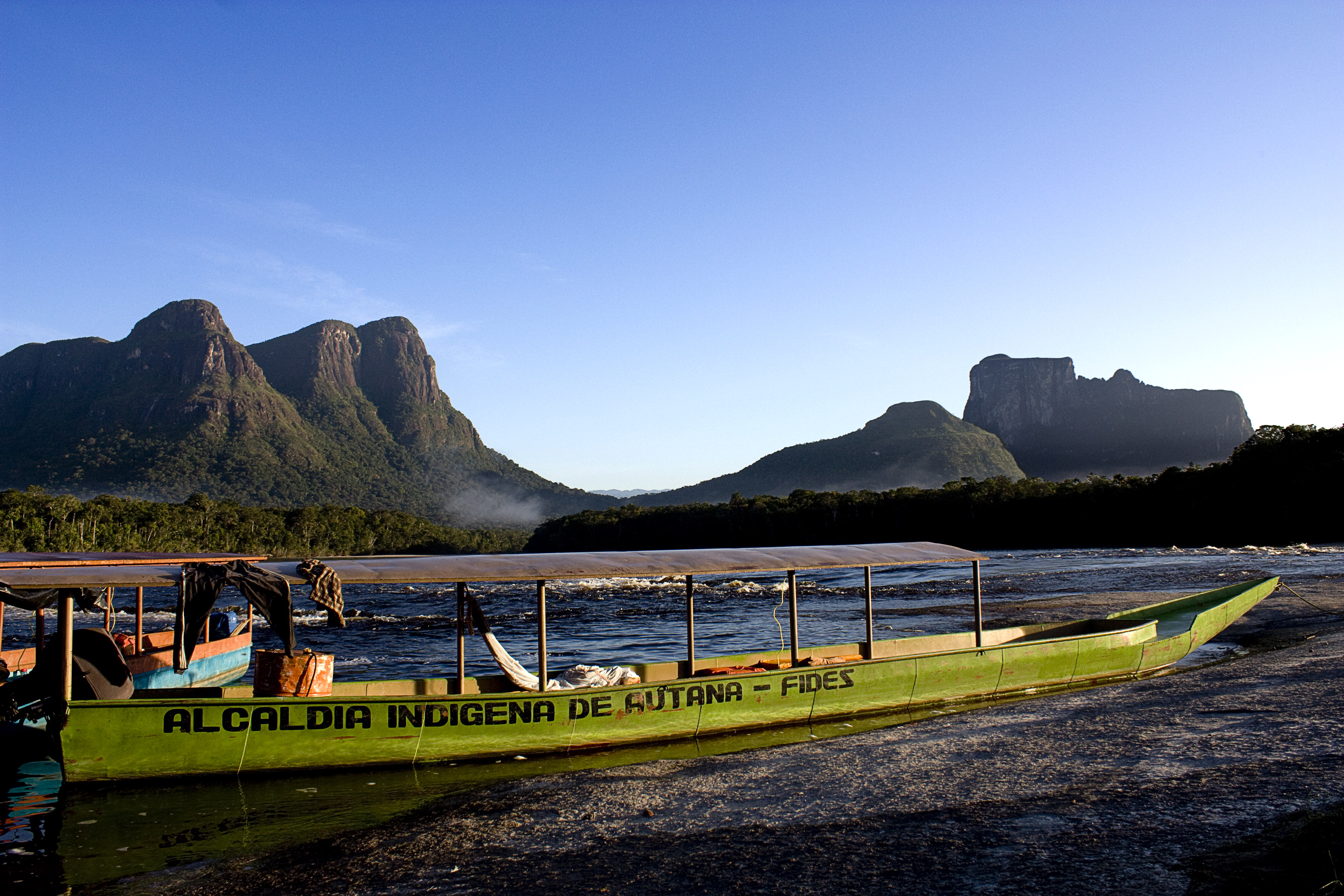
The Mountain of Life

In the Northwestern part of Amazonas State, not far from the Orinoco, you can visit the Autana mountain or Mountain of Life. The mountain is made up mostly of horizontal sandstone shields, mixed with karst, which is quite a strange thing, as karst shows up mostly in limestone formations.

The Autana rises only 1250 metres above sea level, but it looks pretty impressive as the jungle around is rather flat. This is the beginning of the amazing Guayana shield, which stretches for hundreds and hundreds of kilometres towards the East. To the West and North, going over the Orinoco, you have lands that belong to the Llanos. 


The Piaroas are some of the main native American groups still living in this area. They speak a language that is completely unrelated to any other language but one.

Friday, 16 September 2011

Der Interamerikanische Gerichtshof für Menschenrechte und Venezuela


Der Lateinamerikanische Gerichtshof für Menschenrechte hat sein Urteil bekannt gemacht: die Chávez-Regierung darf Leopoldo López seine politischen Rechte nicht mehr entziehen. Leopoldo López darf bei den 2012-Wahlen kandidieren - wenn die Chávez-Regierung internationale Menschenrechtsnormen respektiert. Schon davor hatte die Chávez-Regierung und die Richter des von ihr abhängigen Obergerichtshofs erklärt, dass sie darauf pfeiffen. Es stellt sich die Frage, ob sich Chavistas wirklich weiter isolieren wollen.