Monday, 23 July 2012

The Freaky Bird

The Zamuro Rey or King Vulture lives in most of South America and a bit of Central America. Like other vultures, it uses columns of warm air to gain altitude. If you don't know what those warm air columns are, you can go to Venezuela and see for yourself.

By the way, if you want to learn fascinating things about birds, you have to get yourself this video where David Attenborough explains a thing or two.

Sunday, 22 July 2012

Some naked numbers on education in Venezuela

El Universal finally published some results on the PISA programme in Miranda. That Northern-Central state of Miranda is the only region in Venezuela that is taking part in a scheme for open evaluation of quality in education. The central government, led by the military Chávez and his Boligarcs, is opposed to such programme because they argue "Cubans are our counsellors", so that's enough. Never mind that Cuba's often praised educational system has long stopped being compared to others. 


Kudos to Miranda, specially to Juan Maragall and Henrique Capriles. They decided to introduce some transparency to their administration and see how pupils in their region really compare to the rest of the world. That is something Chavismo would not dare to do. Results in Miranda showed how bad pupils score compared to others. Even though the ones tested in Miranda did better than Brazilian or Argentinian pupils as a whole, they did worse than Chileans or Costa Ricans, not to mentioned those of OECD countries. And mind: those pupils are not completely representative of Venezuela as private schools were over-represented in the sample. Last but not least, and this is something the article doesn't say,  academic levels in places such as the Llanos in Central Venezuela tend to be way lower than what we see in Miranda. That has been the case since time immemorial. That's how most military now in power have a strong Llanos background.

Here you see a chart I produced some months ago based on a German book from 1920 by a certain Otto Bürger. That book is a magnificent snapshot of Venezuela during Gómez's time. I decided to show how many inhabitants each state had per pupil. Barinas (West in red) had one pupil for every 105 inhabitants. Delta Amacuro had 113. Amazonas, in the very South, didn't even make it for the statistics back then (it was not a state and its population was very small - mostly native Americans in the jungle back then- but still they could have mentioned it). Miranda had 48 inhabitants for each pupil you would find. I am absolutely sure relative differences still persist. That's part of Venezuela's reality and that is why we can't still talk about a Venezuela but about several Venezuelan regions.


A large part of schools in Miranda are actually controlled by the central government, so the regional government of Miranda could not include them for this test: the national government would never accept that. Instead, it took some public schools it does control and a lot of private schools that could join in willingly. And of course: there is a huge difference between public and private schools in Venezuela.

I went to public schools for most of the time and only took two years of private schooling at the end. I could see quite some difference. My brothers and sisters went all the way through public -free- schools but they are older. My parents went to public - free - schools. Since the seventies standards kept going down the drain and most people who could afford it started to send their children to private schools. The tendency has worsened...which is quite telling about what a farce this so-called "socialist" revolution has become. Of course, Boligarcs will only say that now, under "Bolivarian socialism", more people can afford private schools. My foot.

Public school standards have kept going down the drain for decades, but more so since Chávez came to power. Private institutions are not very good either and their standards also kept going down but not as dramatically.

And that is one of the reasons why the Chávez government does not want to let Venezuela take part in the PISA programme.

I hope Miranda can include more public schools in the next PISA round. Actually, I really hope Capriles wins the elections and can thus let the whole of Venezuela take part in the PISA programme.


Saturday, 21 July 2012

Santos' love for Venezuelan petrodollars


If you still wonder why Colombia's president Santos has become such a good mate with Venezuela's military caudillo, you just have to take a look at the following chart of Venezuelan-Colombian trade.

This is the Venezuelan view


One can get the data from, among other sources, Colombia's governmental sites..


The drop you see around 2008 came when former president Uribe had Reyes, a FARC honcho, killed. Chávez went bonkers and decided to "freeze" relations back then. Colombia's economy resented it and when Santos got elected, he decided to play it safe.

That's why it's not only Lula who is in love with the caudillo's petrodollars. Latin American fraternity and democracy? Sure.

Ps. It is a pity Venezuela's opposition is not using this kind of information time after time. The only one I know that is keeping track of numbers all the time is Primero de Justicia's Julio Borges. Unfortunately, he tends to show the numbers in a rather monotonous way - no visualisation, just recitation and the odd chart. Most Venezuelans have poor maths skills but they will always understand and above all remember everything better if you show them a simple chart and give them the right reference story. I hope Borges and the whole PJ team use this kind of data in a proper way to reach as many people as possible. They should do this not via Globovisión talks but by targeting the other 70%. How? One way is to start spreading leaflets in the buses of Maturín, Punto Fijo, Los Guayos, Acarigua, Caracas.


Murder attempts against Chávez AGAIN!

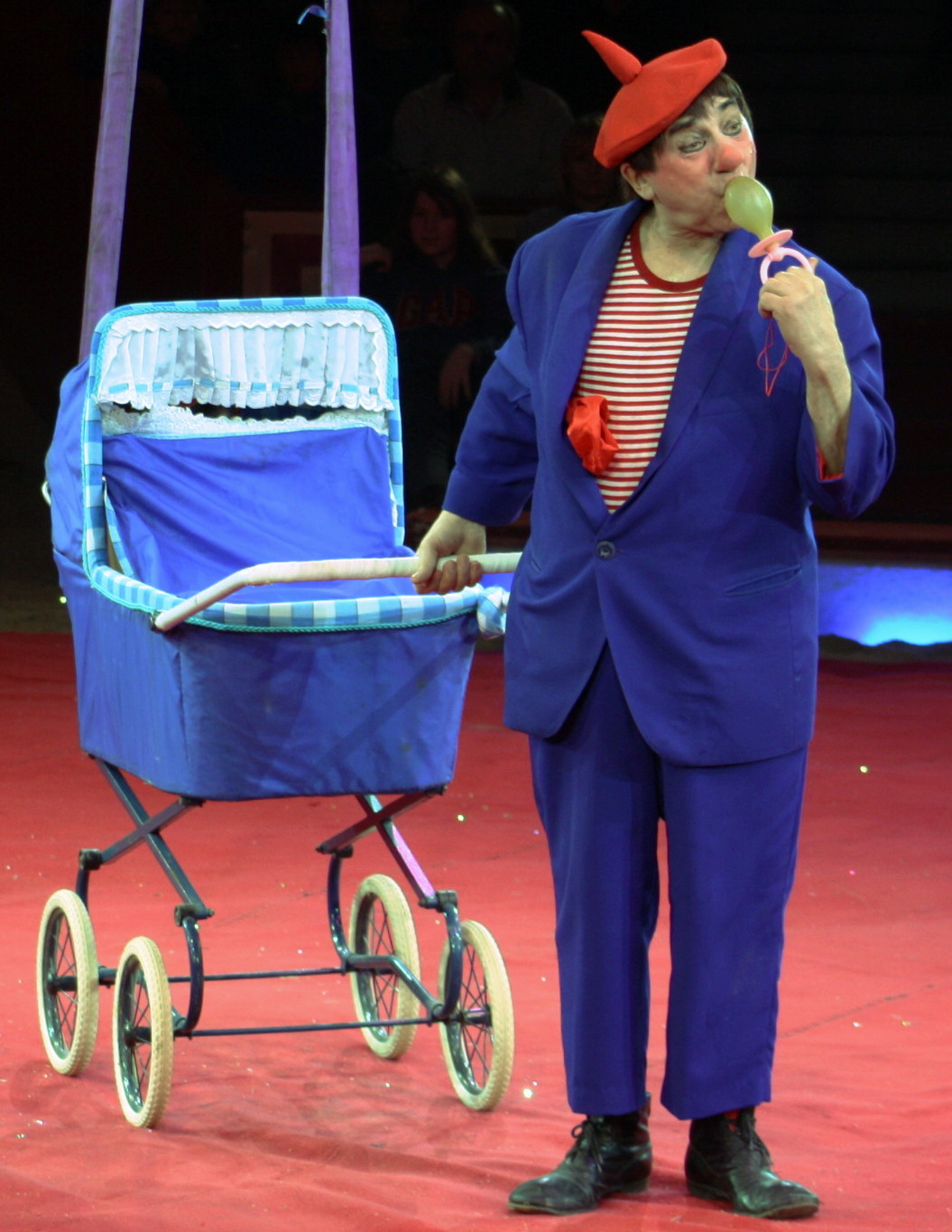
A clown with a red beret

Here we come again: Chávez and his amigos kept announcing supposed attempts against the life of the comandante-presidente every so few months. 
Somehow I missed this: María León, a deputy for the Chávez party, PSUV, declared in May at the Office of the Attorney General that there were plans to murder Chávez and other of the "revolutionary" grandes. The case is based on twitter accounts. This didn't make it to the first pages of Venezuelan newspapers, only to the secondary ones, which will be interpreted by the Boligarcs as yet another proof of the conspiracy against them.

Since Chávez came to power we kept hearing and reading about attempts against his life. Chávez officials and he himself call those attempts "magnicidios" because they are against someone who is ""magno", just like Alenxader the Great or Alejandro Magno. The announcements were legion but the most important ones kept popping up every third month or so. They stopped shortly before rumours of Chávez having cancer started to hit the news in Venezuela. Chávez suggested the US could be provoking cancer among Lula and all his president-friends but other than that, the magnicidio announcement stopped for a while while we had the soap opera of Chávez as the Phoenix. Chávez declared himself healed two months ago. Already in May I predicted we would start getting the announcements about magnicidios very soon and lo and behold: we had that shortly after I said it. But now they are so boring that they don't even make it to the first page of any Venezuelan newspaper that I follow.

Below I copied and pasted (in Spanish, I will later translate that) a selection of the "magnicidios" announced by Chavismo. I wonder: do you think the officials working with Obama or Merkel or anyone of those politicians keep announcing about similar tweets or other attempts against those politicians?

1999
Julio: Chávez declara que lo quieren matar en Puerto Ordaz (fuente Tal Cual contiene otras referencias más abajo)
Diciembre: Castro advierte a Chávez de plan de magnicidio en contra del militar de Barinas.

2000
Agosto: Se anuncia un complot de militares para asesinar a Chávez.

2001
Junio: Chávez anuncia planes para tratar de asesinarlo en celebraciones de la independencia.

2002
Octubre: Chávez anuncia intento de magnicidio en su contra.

2003
Julio: Chávez anuncia que lo tratan de matar en Los Próceres, Caracas.
Julio: Chávez denuncia que preparan su asesinato en Santo Domingo.
Noviembre: Supuesto caso de magnicidio se "descubre" en Puerto La Cruz, pero los "implicados" son puestos en libertad por falta de pruebas.

2004
Mayo: Chávez anuncia que colombianos de extrema derecha quieren matarlo. Mucha más información sobre todo el asunto puede ser leída aquí.

2005
Febrero: Chávez responsabiliza a EU por cualquier atentado en su contra.
Junio: Chávez dice que prepara respuesta a intento de magnicidio.

2006

Octubre: Chávez anuncia que unos meses antes se salvó de un atentado en el Zulia y que Bush tiene un plan para matarlo.

2007

Noviembre: Chávez acusa a CNN de incitar a su asesinato.
Diciembre: Chávez teme por su vida si va a Guatemala.

2008

Septiembre: Chávez teme por su vida en Venezuela.
Octubre: Chávez teme por su vida en El Salvador (cumbre Iberoamericana).

2009
Mayo: Chávez teme por su vida en El Salvador (de nuevo).
Junio: Chávez anuncia que desde Tachira preparan grupos paramilitares para matarlo.
Julio: Diputado oficialista Isea anuncia que se abre nueva investigación de intento de magnicidio en Zulia, Táchira y Mérida. Dice que "la comisión trabaja sin prisa pero sin pausa".
Agosto: El presidente vuelve a anunciar que la oposición tiene un nuevo plan para asesinarlo.


Aquí un artículo de la BBC del 2008 sobre los magnicidios.
Aquí hay un artículo en inglés sobre otros intentos.
Actualización:
Por lo visto me faltaba un artículo deTal Cual que pueden ver aquí donde aparecen más intentos de asesinato de Chávez.

2010Enero: Diputado Mario Isea dice que hay nuevos planes de magnicidio.

Noviembre: Hugo Chávez declara que la oposición tiene 100 millones de dólares para matarlo.

2011

Early 2011: Rumours about Chávez having cancer.
June 2011: CHAVEZ DECLARES TO HAVE CANCER!

2012


Early 2012: Chávez declares himself cured.

May: PSUV deputy María León denounces a new attempt against the life of Hugo Chávez and other "revolutionaries".


Friday, 20 July 2012

You know Chavismo's claims on social justice are a farce when

You know Chavismo's claims on social justice, sustainable development and security are a farce when you see what is happening in Venezuela's prisons now.

The latest is this: there has been a riot at the Merida prison centre, in Venezuela's West, and some 20 prisoners have died since everything started a couple of weeks ago. A gangster still refuses to be transferred and has "kidnapped" several hundred fellow prisoners, whatever that means. You should know gangsters in Venezuelan prisons keep running their business when in jail and they always end up getting to a compromise with the guardia nacional.

Below you can see the amount of murders in Venezuelan prisons since 1999. On the Y axis you have the total amount of murdered people and on the X the years. The source is the ONG Observatorio Venezolano de Prisiones.


La espada del caudillo Bolívar, el caudillo Chávez y el caudillo Assad


Esto fue en 2010.
Hasta los rusos se dan cuenta ahora de que las horas de Assad están contadas.
Me pregunto quién más querrá recibir la "Espada del Libertador".


Miranda, transparency and charting it all


The government of Miranda, managed by the opposition, is doing an outstanding job in many areas, in spite of the fact that the Chávez government has taken away from it - against the law- a lot of competences and most income sources. The Miranda team keeps working for the community and looking for new ways to carry out projects that really make sense. 

They have also been stressing the need for transparency in their work. 
Higuerote, Miranda

Now they are developing an interesting site where they put as much information as possible about every corner of the state - at physical, social and economic level. They use maps.

Please, take a look at their interactive visualisations of Miranda. Be sure to select a parameter and hover the cursor over each region - parroquia or municipio -.

Hat tip: Dorothy