Wednesday, 13 January 2010

Help Haiti


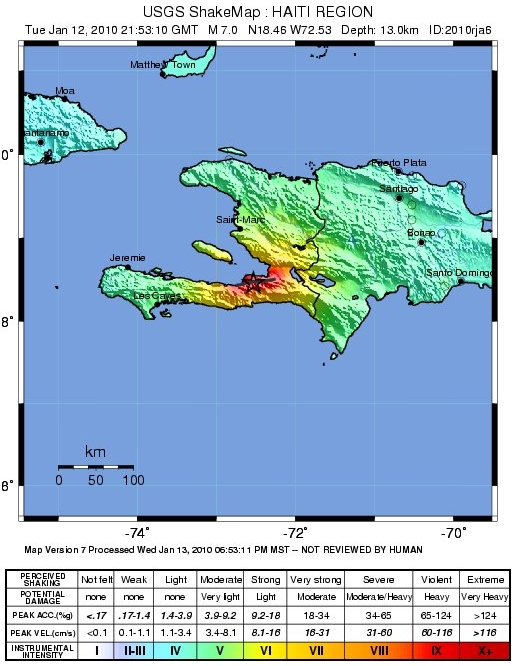
Haiti is an absolute disaster right now.

I have very little time today, but I want to point to you to an MSnbc site with the list of some organizations that may help in the disaster there now.

Please, go here if you want to contribute.

Else, I know a photographer who often goes to Haiti and she helps children there, but it is on her own with the organizations she knows in the area, so you would have to trust her. I do.

If you want to help through her, go here. The money will be used in the middle term, but it will certainly be well employed, every cent of it.

She is the winner of a very well known Unicef photography contest I posted about some months earlier. Take a look HERE

Haiti is many times poorer than Venezuela or any Latin American country. Still, there are common things there, things we need to think about, things regarding sustainable development, independence and education. I will discuss them when I have more time.


Most Haitians now don't even have this:

Tuesday, 12 January 2010

New Way of Promoting Exports

Firstly the context: Our president devalued the Bolívar way too late (we have demanded that for a long time) and in a very clumsy fashion, with a dual but corruption-prone improvised system of 2.3Bs per $ for health and food imports, 4.3 for all the rest. He did it because he desperately needs cash to win the September elections for the National Assembly, which is now almost all pro-government. Hugo says now he wants to help exporters and support Venezuela's diversification, something we and many other Venezuelans have demanded at least since 1937. I wonder how he wants to do that when his government puts so many hurdles on the path of people trying to export, demand higher and higher illegal payments to give permits for export and on top of that declares the private industry people are a bunch of thieves and they are needed but only in the transitional period toward a state socialism.

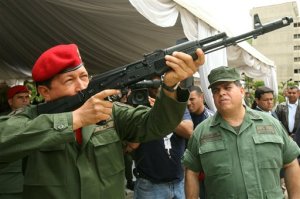
And now the pearl: our minister of "Popular Power for Trade", Eduardo Samán, in red, on the left picture (on the right you have Trotsky, who doesn't have anything to do with this post), former teacher of farmacy and someone who according to the Social security never paid social contributions until he became an employee of this government at age 41, just announced he will implement a new idea:


This year the government plans to put in the Venezuelan market 60000 cars made in China and Iran at a price calculated at 2.60 Bs (instead of 4.30), which would "push" prices down.

"We will break the power of the parallel dollar because we plan to sell...more than 60000 cars , machine machines, refrigerators, dish washers, kitchens, television sets all brought at a 2.3 B/$ rate". So I was right about the refrigerators. I wonder if they will also distribute electronic mixers.

Now I want readers to explain to me why that is a great idea for promoting exports in a country that is getting deeper into recession than the rest and has the highest inflation rate of the Western hemisphere.

Enlighten me!

Sunday, 10 January 2010

Venezuelans and their cargo cult


The Venezuelan government devalued the Bolivar two days ago. There was until then a fixed rate of Bs 2.1 per dollar. Now the government has set up a fixed dual system where imports for health and some other areas get a dollar at Bs. 2.6 and the rest at Bs 4.3

I wrote an article in Spanish here. I won't translate it, but here is some of what I wrote:

1) Venezuelans have practiced a cargo cult for many decades now, thinking their many imported gadgets are well deserved without thinking how much real value they have produced to get those gadgets, they haven't changed a wee bit
2) I have pleaded for years for the government to devalue the currency as the fixed value it had was too much, it was really killing the export sector and favouring the rich
3) I think the government acts way too late and without comprehensive plan. The government does not have a real project, it is just using the "as we go" way of management.
4) The government has not clarified whether exporters will be able to get sell their gained dollars at 3.6 (which is the way to go)
5) The government has just doubled the amount of bolívars it has for the Parliamentary campaign of 2010

And then:

6) the opposition has shown a ghastly response, with most spokespersons just talking about the incoming inflation and their horror that their travels abroad will be now much more expensive. Nobody has had the courage to say the Bolivar was very overvalued because nobody wanted to annoy their peers, who have been profiting from cheap travels abroad and nice flat TV screens that costs less than in any place in the world.

The inflation will go up, but as Quico said, the currency change is not the main factor to affect inflation this year. We will again have the highest inflation in the Western hemisphere and I am sure it will be over the 25% of last year (mind: in the middle of a recession).

I believe chavismo will now use the extra cash (it has nearly doubled the amount of local money) to massively import food and other goodies from Europe, from Argentina and Brazil and give it away at very low prices so that it can maximize its votes in September. I doubt very much there will be a real plan to use that money for sustainable development. I doubt the regime will use the opportunity to really promote the exporting industry, even if Hugo is just discovering the importance to get off the oil dependency, something I thought most of us learnt during primary school time. If we started to have a burgeoning exporting sector, chavismo would lose some power and that is something it definitely does not want. The Venezuelan regime does not want to be depending on exporters as the Kirchner mafia is in Argentina.

Meanwhile, most opposition leaders will be acting - a real tragedy - without cojones, just complaining about the government's mismanagement (they are right there), about the fact imports will be now very high, about the way the government improvises, but they will be unable to talk honestly to the people and say Venezuelans do need to make sacrificies. They will be unable to put forward a plan.


And while that is happening:

  1. The INE says 44.8% of the working force is active in the informal sectors. Basically, most of them are selling each other chinese toys and Peruvian panties, while the rest are cooking cachapas and empanadas for us all.
  2. Spain reports that Venezuelans are, after Paraguayans and Brazilians, the Latin Americans who are most likely to be rejected at immigration and sent back to their country. Venezuelans don't need a visa to visit the Shengen region, but some arrive without sufficient funds. This comes amid increased controls due to the worsened economic situation in Spain. Venezuela was a net importer of economic refugees from Spain for many decades. Since the eighties things changed and more and more Venezuelans have been leaving for Europe. 1338 out of 8200 persons with a Venezuelan passport were prevented from entering Spain in 2009. Of course, we know many thousand Venezuelans enter Spain with their Spanish passes, mostly people whose parents or grandparents were Spanish immigrants to Venezuela. This is a sad development and shows how more Venezuelans want to leave their country.


More than one in eight is sent back

Friday, 8 January 2010

Socialist Volkswagen


We are, like every year since 1998, on election time and so the government has declared that it is selling socialist cars!

Yes! We have "socialist" cars. Most of them are red, but you also find some white and grey cars. They are Volkswagen (or Wolksvagen, as the site says) assembled by the Argentinians or refurnished French cars (Turpial and others) assembled by the Iranians. As the government propaganda site says, the government is selling those "socialist cars" for up to 50% of the current market price in Venezuela. The new cars costs "only" 63000 Bolívares, which is around € 20501 at official exchange rates, so you do the maths to find out what Venezuela's prices are right now. Mind: a school teacher in Venezuela earns less than €500 a month.

Last year Venezuela's GDP fell by over 2.5%. Oil exports went down a lot and non-oil exports, which are just a tiny source of Venezuela's income, fell even further.

If you speak Spanish you can go through the comments of chavistas in that governmental site. You will find a lot of what is wrong with Venezuela: cargo cult mentality, pseudo-ideologies based on a complete ignorance of economics, history and geopolitics, parasite behaviour nurtured by so many decades of petrodollars without quality education for the people, an economy that is driven by killing all our golden chickens.

Wednesday, 6 January 2010

Venezuela's military infatuation

Chávez riding behind Bolívar (this is no photoshop, picture comes from a governmental office)


José Tadeo Monagas


José Antonio Páez


I was born in a Venezuela economists used to call "Venezuela saudita", a third world country awashed in petrodollars. It was a democracy, even if it was a highly dysfunctional one. Some areas looked like other poor areas of America, some little places like Africa and others like Europe and all this in a distinctly tropical and subtropical nature. Back then and well into the years of increasing economic decline in the late eighties I used to think that even if Venezuela was very corrupt, dangerously dependent on oil and going towards a crisis, we were inmune to the worst ills of Latin American countries: military dictatorships and civil wars.


South America in the late seventies (in red: military regimes either in full form as in Argentina, Uruguay or Chile or in some sort of military "transition" as in Peru and Brazil):

Our presidents were mostly lawyers and physicians, even if they often looked more like dishonest cowboys. There were many immigrants from Argentina, Chile, Uruguay and other countries who arrived in Venezuela escaping from dictatorships. In each class from primary school to university there were at least a dozen sons or daughters of Spaniards, Portuguese or of Eastern European origin escaping from dictatorship. One of my best friends at high school was from Chile, another one was from Uruguay. I knew about Venezuela's past dictatorships because of what my parents would tell me: about how life was under Pérez Jiménez, the right-winged dictator Hugo Chávez admires, or about how my grandparents suffered during the Gómez dictatorship. It was only after the caracazo and specially in 1991 that I started to see the real military threat. People were fed up with the corrupt democracy we had and started to long for "those times when streets were secure and there were big constructions and less poverty". Already at the end of 1991 I remember how a good friend of mine and I were discussing when a coup may happen. We rejected any such action but we knew it was in the making. We were sure it would come on the first quarter of 1992. We did not know it out of some relationship with the military, we had none. We were just reading the signs on the wall. We were, unfortunately, very right: on 4 February there was the first bloody coup in many decades, led by our current president. In November, there was another even bloodier coup attempt.

Still, I did not realise to what extend Venezuelans always had been prisoners of our long-standing infatuation with the military. I did not know how we were bound to repeat history because of the general ignorance Venezuelans have of it.

I always knew the Bolívar cult was over the top, but it was something I found rather kitsch and nothing more. I appreciated the good things Bolívar did or was supposed to have done and I thought the cult was something that did not really hurt, like some non-extremist religion. Every visitor to Venezuela has seen it: the omnipresent cult to Simón Bolívar, a Venezuelan who played a key role in the Independence war in South America. The highest peak, the largest state, the main avenues and squares in every city or town, countless institutions, the main airport and the currency are some of the many things called after him. Bolívar's name is everywhere. The admiration for Bolívar is not only in Venezuela, but in Venezuela the name is so often used that it can get confusing.

There was a hat called "Bolívar" in Europe in the XIX century, a hat liberals would wear. Bolívar was definitely admired everywhere in the Americas and Europe and the many places - towns, streets, squares - called after him are a proof of this. People saw not just his opposition against the Spanish imperialism, but against slavery, against oppression of the Native Americans. It helped a lot that Bolívar died still in his forties.

Still, the cult for Bolívar's has been above all a Venezuelan disease. Bolívar rejected the title of a king, but he wanted to be president for life. He declared he only aspired to have the title "Liberator of Venezuela", as if Venezuela's independence would have been inconceivable without him. I won't get into the dark parts of Bolívar's role here, but will go more into the instrumentalization of his memory and that of the other military of his time in Venezuela's history*.

Once the country became independent, the military who fought in the wars claimed special rights for themselves, as "próceres", as the ones who had fought with the "Libertador". One of our first presidents, who was not a military, physician Vargas, had to resign after much pressure from the military demanding more power. Most of Venezuela's heads of states after that and until 1958 were military or the puppets of military.

Almost every single president since the Independence declared himself a "Bolivarian", whatever that would mean for the time. As historian Manual Caballero said in his "Por qué no soy Bolivariano" (Why I am not a Bolivarian), caudillo Monagas declared himself a "revolutionary", promoted special rights for the military (something the current president has done as well in indirect ways), claimed to revive the Gran Colombia and placed many relatives on top positions in the government, just as our current president. And he was thrown out of the presidential palace in 1858 by people shouting "Death to the thieves". Several dictators were particularly active in cultivating the Bolívar cult but two used this new religion with particular zeal: Guzmán Blanco and Juan Vicente Gómez. Bolívar became some sort of demi-God and anyone associating himself with Bolívar became protected by this divinity.


Gómez in 1934


History books everywhere the world, specially in schools, tend to glorify the national past or at least a part of it. Still, those in Venezuela have been particularly focused on the Independence time. It hasn't helped that many of them were written mostly by people who were anything but professional historians. It did not help that Venezuelans for many reasons always tended to have an abysmal knowledge of history.

Humboldt was on a related topic when he wrote:

"Native Americans kept their language, their national dress and their national character...[but] through the introduction of christianity and other circumstances I analyse elsewhere, historical and religious heritage progressively became lost. On the other side the settler of European origin looks down upon anything that refers to the dominated nations. He sees himself in the middle between the ancient history of the motherland and the one of his birth country and he is as indifferent to one as to the other; in a climate where the small difference between seasons makes the passing of the years almost unnoticeable he only thinks about enjoying the present and he seldom looks back at the past".

"Der Eingeborene hat seine Sprache, seine Tracht und seinen Volkscharakter behalten..durch die Einführung des Christentums und andere Umstände, die ich anderswo auseinander gesetzt, sind die geschichtlichen und religiösen Ueberlieferungen allmählich untergegangen. Andererseits sieht der Ansiedler von europäischer Abkunft verächtlich auf alles herab, was sich auf die unterworfenen Völker bezieht. Er sieht sich in die Mitte gestellt zwischen die frühere Geschichte des Mutterlandes und die seines Geburtslandes, und die eine ist ihm so gleichgültig wie die andere; in einem Klima, wo bei dem geringen Unterschied der Jahreszeiten der Ablauf der Jahre fast unmerklich wird, überläßt er sich ganz dem Genusses der Gegenwart und wirft selten einen Blick in Vergangene Zeiten."


The native American, the European and the African slave all merged into the average Venezuelan of today, but we still show either a complete disdain for history or love for one part of it, the part we identify ourselves most with. You will find most Venezuelans with some education know Bolivar's birthday and death anniversary and they can quote Bolívar for this or that. Most of them would not know in what century the Europeans arrived in Venezuela or what reactionary tendencies Bolívar had. They would not know a lot of very basic stuff about world history and Venezuela's link to it all.

That is how Chávez can say now all Indians were socialists and equal and most of his followers believe it (see this video in Spanish from from 4:00 or before) or that we are mostly a native American and African-American nation (the European part supposedly being mostly that of the opposition, see my posts on genetics). That is also why some very racist right wingers paint European conquistadores in such rosy terms and still use the term "indio" as an insult, probably not even knowing most of us are both of European and native American origin, if not also sub-Saharan.

It is in that framework that Venezuelans have evolved. As the economic situation of a nation highly addicted to petrodollars deteriorated in the eighties and nineties, a group of military pretending to defend some nebulous Bolívar heritage prepared the bloody coups of 1992.

Hugo Chávez has taken the Bolívar cult to new heights. He needs to do that. He single-handedly renamed Venezuela in 1999 by adding the "Bolivarian" adjective, even if the approved constitutional draft had taken away that proposal of his. His movement is naming the most spurious organizations or events "Bolivarianos". Never mind their image of what Bolívar thought at any given time is rather distorted.


Now take a look at these maps. In the first one you see Venezuela's states. The largest state , in cyan, is called Bolívar. The states in red have been called after military honchos from the times of the Independence movement.


The following map shows Venezuela's municipalities. Municipalities in cyan are called Bolívar or Simón Bolívar. Municipalities in dark blue are called Libertador (referring, of course, to Bolívar). Those in red are called after military who fought in the Independence war. The ones in yellow are called after other military. Here you can see how things are in Colombia: although our neighbours also have some areas called after military, the ratio is lower. The same goes with other countries I am aware of. As you may suspect, we have some issues with the military. We have the Bolívar syndrome.


President Time in power remark Profession
Cristóbal Mendoza, Juan Escalona and Baltasar Padrón 1811-1812
Lawyer / Military/ Big landowner * Respectively
Francisco de Miranda 1812
Military
Simón Bolívar 1813-1814
Military
José Antonio Páez 1830- 1835
Military
Andrés Narvarte 1835-1835
Lawer / Politician
José María Vargas 1835-1836
Physician, Scientist,Professor
Andrés Narvarte 1836-1837
Lawyer / Politician
José María Carreño 1837-1837
Military
Carlos Soublette 1837-1839
Military
José Antonio Páez 1839-1843
Military
Carlos Soublette 1843-1847
Military
José Tadeo Monagas 1847-1851
Military
José Gregorio Monagas 1851-1855
Military
José Tadeo Monagas 1855-1858
Military
Pedro Gual Escandon 1858-1858
Lawer / Politician
Julián Castro 1858-1859 coup Military
Pedro Gual Escandon 1859-1859
Lawyer / Politician
Manuel Felipe Tovar 1859-1861 coup Politician
Pedro Gual Escandon 1861-1861
Lawyer / Politician
José Antonio Páez 1861-1863
Military
Juan Crisóstomo Falcón 1863 - 1868 war Military
Manuel Ezequiel Bruzual 1868-1868
Military
Guillermo Tell Villegas 1868-1869
Lawyer and military
José Ruperto Monagas 1869-1870 war Military
Guillermo Tell Villegas 1870-1870
Lawyer/ Military
Antonio Guzmán Blanco 1870-1877 war Lawyer /Military
Francisco Linares Alcántara 1877-1878
Military
José Gregorio Varela 1878-1879
Military / Politician
Antonio Guzmán Blanco 1879-1884
Lawyer /Military
Joaquín Sinforiano de Jesús Crespo 1884-1886
Military
Antonio Guzmán Blanco 1886-1887
Lawyer /Military
Hermógenes López 1887 - 1888
Military
Juan Pablo Rojas Paúl 1888 - 1890
Lawyer
Raimundo Andueza Palacio 1890-1892
Lawyer
Guillermo Tell Villegas 1892-1892
Lawyer and Military
Joaquín Sinforiano de Jesús Crespo 1892-1894 war Military
Ignacio Andrade 1898-1899
Politician
Cipriano Castro Ruiz 1899-1908 coup Military
Juan Vicente Gómez 1908-1914 coup Military
Jose Gil Fortoul (Gomez puppet) 1914-1915
Writer
Victorino Márquez Bustillos (Gómez puppet) 1915-1922
Lawyer / Politician
Juan Vicente Gómez 1922-1929
Military
Juan Bautista Pérez (Gómez puppet) 30 de mayo de 1929 -
13 de junio de 1931

Lawyer /judge
Juan Vicente Gómez 13 de junio de 1931 -
17 de diciembre de 1935

Military
Eleazar López Contreras 17 de diciembre de 1935 -
5 de mayo de 1941

Military
Isaías Medina Angarita 5 de mayo de 1941 -
18 de octubre de 1945

Military
Rómulo Ernesto Betancourt Bello 18 de octubre de 1945 -
17 de febrero de 1948
coup Politician
Rómulo Gallegos Freire 17 de febrero de 1948 -
24 de noviembre de 1948

Writer
Carlos Delgado Chalbaud 24 de noviembre de 1948 -
27 de noviembre de 1950
coup Military
Germán Suárez Flamerich 27 de noviembre de 1950 -
2 de diciembre de 1952
transition by coupsters Lawyer
Marcos Pérez Jiménez 2 de diciembre de 1952 -
23 de enero de 1958
coup Military/Engineer
Wolfgang Larrazábal 23 de enero de 1958 -
14 de noviembre de 1958
coup Military
Edgar Sanabria 14 de noviembre de 1958 -
13 de febrero de 1959

Lawyer
Rómulo Ernesto Betancourt Bello 13 de febrero de 1959 -
13 de marzo de 1964

Politician
Raúl Leoni Otero 13 de marzo de 1964 -
11 de marzo de 1969

Lawyer
Rafael Caldera Rodríguez 11 de marzo de 1969 -
12 de marzo de 1974

Lawyer
Carlos Andrés Pérez Rodríguez 12 de marzo de 1974 -
12 de marzo de 1979

Politician
Luis Herrera Campins 12 de marzo de 1979 -
2 de febrero de 1984

Lawer
Jaime Lusinchi 2 de febrero de 1984 -
2 de febrero de 1989

Physician
Carlos Andrés Pérez Rodríguez 2 de febrero de 1989 -
21 de mayo de 1993

Politician
Octavio Lepage 21 de mayo de 1993 -
5 de junio de 1993

Lawer
Ramón José Velásquez 5 de junio de 1993 -
2 de febrero de 1994

Writer, historian
Rafael Caldera Rodríguez 2 de febrero de 1994 -
2 de febrero de 1999

Lawer
Hugo Rafael Chávez Frías 2 de febrero de 1999 -
10 de enero de 2001
(elected, but former coupster) Military

Pedro Carmona Estanga 12 de abril de 2002-
13 de abril de 2002
(2 días)
coup Economist
Hugo Rafael Chávez Frías 13 de abril de 2002 - 10 de enero de 2013


*
Worth reading if you speak Spanish: Por qué no soy bolivariano: ISBN 10: 9803541994
Also worth reading is what Karl Marx, the heroe of virtually every communist, wrote about Bolívar. Although the truth is probably in the middle, you have to read Marx's view on the Venezuelan figure here.

Sunday, 3 January 2010

Venezuela's democratically elected president and his support for a terrorist

If you speak Spanish, you can read the following interview where terrorist Carlos the Jackal states his support, among other things, for the terrorist attacks on 11 September 2001. Chávez recently defended that man again, stating Carlos is just a freedom fighter and a friend of the Palestinians. I think the majority of Palestinians would differ.

I hope those Venezuelans who still support the madman in power wake up soon.


Friday, 1 January 2010

You, Venezuela and the wisdom of crowds


A lot has been written about the real power of the Wisdom of the Crowds. I wil try to see if we can work together to find out if it helps in this case.

Last month I started up a little poll asking readers to guess when Chávez would cease to be the head of state of Venezuela. Every month from now on I will keep having the poll and after the second month I will transform all results into a line chart and I will add a pie chart with that month's figures.

Here we have the first results (no line chart yet). It will start to become interesting from this month onwards. Please, feel free to find vote every month. It only takes a couple of seconds. There were 47 answers. 10 persons thought Chávez will be out before the end of 2011, 11 thought it would be between 2012 and 2013, 14 between 2014 and 2020, 4 thought later and 8 do not know.


I also add here another chart to show you the gender distribution for our readers. I started that poll much later, so there are fewer respondents. Still, I think the proportion would not change much in the next months: there are less females than males reading the blog, 3 for every 4. That reflects the usual Internet usage differences, but I do expect and hope the differences to dicrease on the middle to long term.