Sunday, 11 April 2010

Conquering Delta Amacuro


Delta Amacuro is a thinly populated state of Venezuela. It still has an important group of native Americans, the Waraos. The Waraos speak a language that is not related to any other known language in Venezuela or elsewhere. They live mostly in the huge mangroves of Orinoco's Delta. The normal way of moving around there is by boat.

The state's population has been increasing very rapidly due to the migration of Venezuelans from other regions looking for job around the oil and gas field centres. The region is under heavy environmental pressure. It is poor. A lot of people live from fishing, from odd jobs around oil field providers, some limited and badly controlled tourism and handouts. It has been forgotten by the capital since time immemorial.

The Venezuelan regime still has a strong support there, but this support is not total or definite. The state has 4 municipalities and one of them, Pedernales, has a non-Chavista mayor.

Juan Cristobal from Caracas Chronicles just sent me an interesting document showing how Delta Amacuro and other thinly populated states will be overrepresented in the September elections for the National Assembly. That is true: it is very overrepresented. Still, we could turn that to our favour if we manage to support the opposition there, if we present ideas that are good for the general population of Delta Amacuro and if we make sure that we have enough people defending the vote during election day.


In the graphic above you can see a mindmap of the 2009 referendum for two municipalities: Pedernales and Casacoima. I show just the vote for "No" (100-NO and you get SI, I did not examine abstention). The blue nodes show rooms where the opposition had a witness and afterwards the acta of the voting. The red nodes show those rooms or boxes for which the opposition did not have witnesses.

The nodes with green only had not a single witness from the opposition. Mind: although Chávez very badly needed the indefinite reelection possibility for his post as president, the preference for YES or NO between chavismo and opposition was not so clear-cut as in 2007. There were quite some opposition caudillos who thought the new proposal would benefit them as it allows them now to run for their little local posts forever.

Draw your conclusions.


Ps. references to which actas we have can be found here

Saturday, 10 April 2010

Woolly from Venezuela


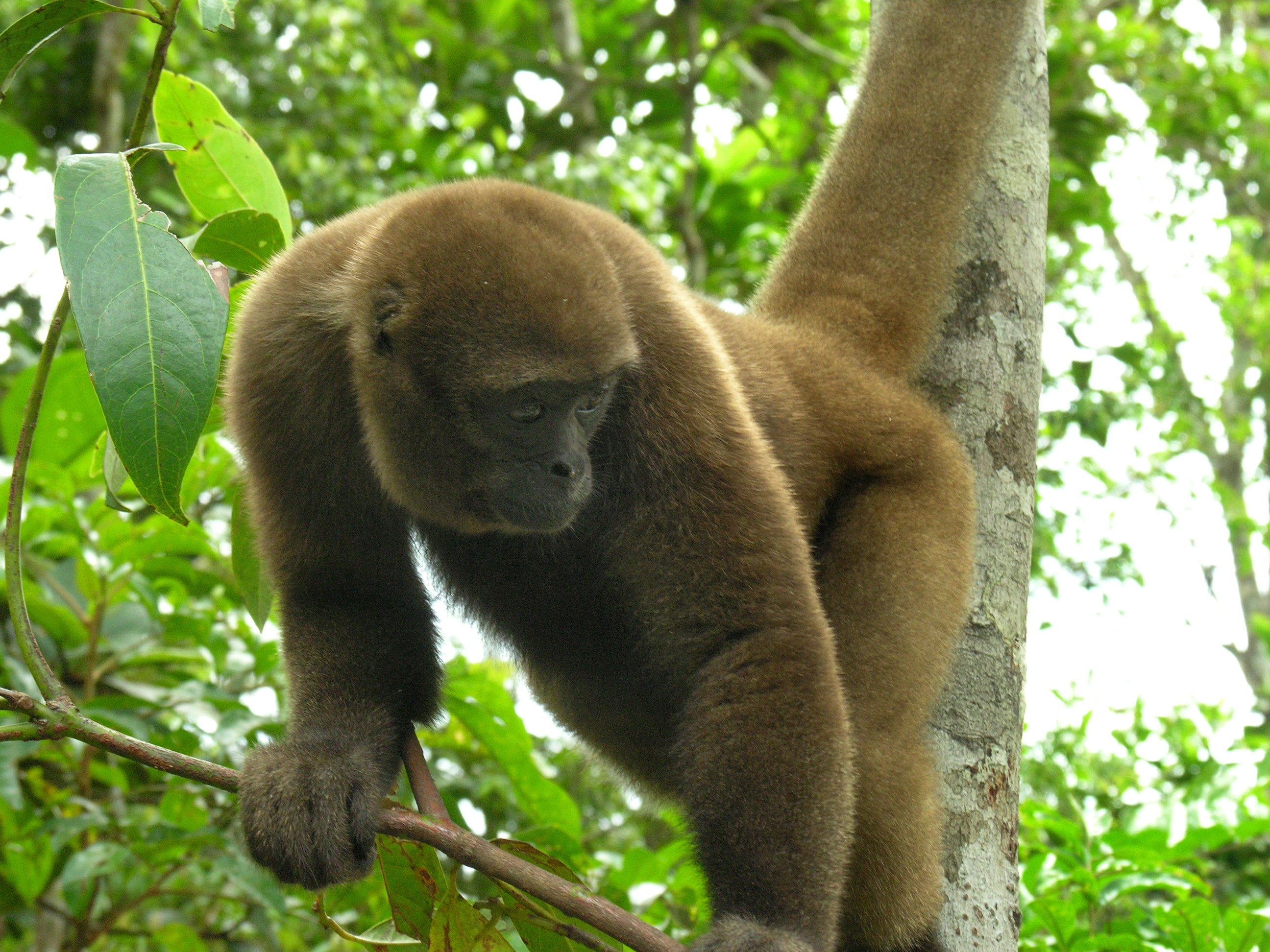
The Brown Woolly Monkey is a monkey that can be found from Colombia to Brazil. They are endangered in Venezuela, but still can be found in the Orinoco Forests and on the South-West.

Alexander von Humboldt reported seeing them in their natural habitat on his voyage through Venezuela in 1799-1800.

These monkeys have a particularly long tail. They use it, as expected, to move with ease from tree to tree. They also use it when crossing rivers in a group, so they are basically on each other's tail.

I hope Venezuelans realise sooner than later that comprehensive measures are needed to keep these little cousins roaming around.

Friday, 9 April 2010

Caracas ist Caracas und der Rest ist Wildnis

Venezuela ist extrem zentralisiert. Caracas es Caracas y el resto es monte y culebras: das ist eine Redewendung, die man in der Hauptstadt oft hört. Der Rest sei monte y culebras , lauter Wildnis und Schlangen. Es gibt ein paar andere Städte, die eine gewisse Bedeutung haben: Maracaibo, Valencia, Barquisimeto und Ciudad Guayana. Viele andere Städte, die jeweils mehr als 100000 Einwohner haben, gelten als "Dörfer". Dabei ist Venezuela kein China: Die Gesamtbevölkerung beläuft sich auf 28 Millionen Einwohner.

Die Bemühungen, mehr Verantwortung an die Regionen zu übertragen, dauerten von 1988 bis zum Anfang der Chavez-Periode. Venezolaner konnten 1988 zum ersten Mal Gouverneure und Bürgermeister direkt wählen. Damit fingen sie an, ein bisschen mehr Konkurrenz in der Politik zu sehen...bis Chavismo an die Macht kam.

Chávez will die ganze Macht für sich und darum bemüht er sich, Kompetenzen der Regionen an die Zentralregierung - seine Zentralregierung - wieder zu transferieren. Nach den Regionalwahlen von 2008 hat diese Zentralisierung drastisch zugenommen. Chávez beruft sich oft auf den vergötterten Bolívar, der bekanntlich ein Gegner des Föderalismus war.

Die Oppositionsführer in der Hauptstadt sowie in den anderen grösseren Städten haben bis jetzt nicht begriffen, dass sie, wenn sie jemals die Macht gewinnen wollen, aus ihren Städten herausgehen müssen und die Leute auf dem Land, vor allem aber in den sekundären Städten erreichen müssen.

Fast alle jetzigen Oppositionsführer sind in Caracas geboren. Einige stammen aus Valencia bzw Maracaibo. Im Gegensatz dazu sind die Hälfte der Chavista-Bonzen Menschen aus anderen Regionen. Auch wenn die meisten Venezolaner zur Zeit in Städten wohnen, wohnen sie meisten in sekundären Städten.

Hier könnt Ihr die Ergebnisse der Regionalwahlen in zwei Regionen sehen. Die erste ist Baruta, ein Teil von Miranda und Gross-Caracas. Die Opposition hat eine deutliche Mehrheit da. Das zweite Bild zeigt die Ergebnisse in Maturín, eine Stadt, die schon eine halbe Million Einwohner hat, die aber von den Medien in Caracas und von den Caracas-Politikern völlig vernachlässigt wurde. Da herrscht der Chavismus.


Es gibt vieles, was sehr auffällig ist. Venezolanische Parteien sind meistens keine richtige Parteien, sondern vielmehr Organisationen zur Promotion bestimmter Politiker. Das kommt überall vor, in Venezuela ist es aber die Regel. Venezuela hat mehr als 12 sogenannte sozialdemokratische Parteien und zumindest genauso viele Parteien, die behaupten, liberal bzw konzervativ zu sein. Praktisch keine Partei ist in der Lage, einen Plan für die Entwicklung des Landes vorzuweisen. Kein Wunder, dass die Opposition es so schwierig hat.

Die Vertreter dieser Pseudoparteien müssen endlich begreifen, dass sie herausfinden müssen, welche Parteien zusammenwachsen und welche verschwinden müssen. Sie müssen begreifen, dass sie endlich mal an das Land denken und vor allem daran arbeiten müssen, Ideen für Venezuela zu entwickeln, offene Debatten zu fördern und die Leute in der sogenannten "Wildnis" in der ganzen Diskussion über Venezuela einzubeziehen.

Wednesday, 7 April 2010

Al Jazeera on Venezuela's energy mess

Here you have some view on the energy crisis in Venezuela. A little detail: notice the huge poster of Hugo Chávez. Venezuelans and frequent visitors to Venezuela will tell you such posters are fairly common since Chávez is in power (not before). I hadn't seen a more pathetic personality cult anywhere but Turkmenistan.


Thanks to Schoukri in Germany.

Monday, 5 April 2010

The Lord of War or More weapons, less schools


The nasty world of weapons


Venezuela is in the middle of a recession - the biggest in South America according to The Economist numbers -, there is no real plan for sustainable development, it is more dependent than ever on oil and yet the regime is wasting more money on weapons.

The weapon business is an ugly world and a lot of countries in the world are involved in it: Russia, the US, China, France, Germany, Israel, Ukraine and many others. Viktor Ostrovsky described in his book By Way of Deception very well how the state of Israel promoted its business at all costs. Among many things, they would sell weapons and training to the government of Sri Lanka while selling weapons and training to the Tamil rebels. No wonder the war took so long. Many other countries are into that kind of deals. They have vested interests in promoting fear and struggle. If there were more stability and peace, their arms industries would suffer. Of course, the other side of the equation tells us that if developing countries spent less on weapons , they could spend much more on primary schools, on universities, on hospitals, on sustainable development in general. Venezuela is a developing nation. Unlike what some think, it is not an emerging market or newly industrialized nation or, as Germans say, a Schwellenland. It is a developing nation heavily dependent on oil.

Russia weapons instead of schools

Vladimir Putin arrived in Russia back from Venezuela and announced Hugo Chávez and his regime are ordering Russian weapons for over 5 billion dollars. The amount includes a credit for 2.2 billion dollars Russia gave Venezuela in September 2009. The agreement will benefit some 13 Russian companies, including well-known Izmash. You can read some stuff in Russian here and some in Spanish here. That is some money for Moscow, which is in the middle of a very bad recession, worse than what you would see in Western Europe or the States these days.

Putin said Russia just gave Venezuela the last 4 helicopters of the 38 Venezuela ordered in 2005. The contract included 20 Mi-17-B5, 10 Mi-35M, 3 Mi-26T, 3 Mi-172-3 and 2 Mi-172 for 500 million dollars.

In 2005 Venezuela bought helicopters, rockets, one hundred thousand Kalashnikovs, T72 tanks and the anti-aircraft system Smerch for 4 billion dollars. The Venezuelan military will now also get more naval aircraft, some extra airplanes. I am still not clear whether there will be more submarines.

Putting it to bad use

Where is all of this leading us to?

I firmly believe Venezuela cannot attack Colombia with those weapons. It does not stand a chance against the Netherlands or Brazil either. Guyana is no match to Venezuela, but other countries would rush up to defend it also.

Venezuela's military regime -yes, with a democratically elected former coupster as head of state- is probably thinking of using those weapons in case of a civil war it keeps announcing. Let's remember the vast majority of leaders under Chavismo are military or ex guerrillas. The only thing I don't see any use for are submarines. The possibilities I thought about are just too crazy.

Some people in Venezuela may have also got some commissions, but I have no proof of this.

What are we to do?

The Venezuelan opposition has to inform as many Venezuelans as possible about how this situation will affect them. It is of little use for Borges or Ledezma to talk on Globovisión and preach to the choir. Insted, the opposition should go to the secondary cities of Venezuela (Maturín, El Tigre and many others with less than 1 million and more than 100000 inhabitants) and talk to the people who have no internet access and no cable TV. They should describe the programmes that could be financed with the money now going to the Russian industry in Russia: more and above all better schools for the poor, investment in small companies with projects for sustainable development, investment on health and general infracture.

Saturday, 3 April 2010

What you think: when is Hugo Chávez leaving office


This is the result of the latest poll showing when Venezuela Europa readers reckon Hugo Chávez is leaving office.

48 people took part in the March poll. 19.14% think he will leave office before the end of 2011. 25.53% think he will leave office between 2012 and 2013.

25.53% think the coup monger will leave office between 2014 and 2020. 14.9% think he will be out only after 2020. The same amount of persons have no idea.


Obviously, the amount of people believing in a departure before the end of 2011 has decreased. Expectations have gone to a middle ground so far.

I will start the next poll tomorrow.

Thanks for taking part.

Friday, 2 April 2010

Amnesty International condemns Hugo Chávez' regime


Amnesty International has produced a report condemning the Venezuelan regime of military Hugo Chávez. AI's message starts like this:

"Amnesty International urged the Venezuelan authorities to stop targeting government critics following a series of politically motivated arrests.

At least three individuals seen as opposed to President Hugo Chávez were arrested and charged in March alone. "

You can read the rest here.

I want to say thanks to Amnesty. Still, I would like to stress the fact those detections are not the worst attacks on human rights in current Venezuela. The attacks are constant, widespread and although they may not seem as clear at first sight, they are as or more pernicious.

A government is going against the Human Rights Declaration, when

  • it sends policemen to attack the Venezuelan opposition even if people are just distributing peacefully their flyers as Chavismo does all the time (see here)
  • it promotes hatred towards anyone disagreeing with its project on "Bolivarian socialism". In Spanish here: "be sure that if the inhabitants of Miranda state voted for the opposition and this gets into power there, they will start to planify the war". In Spanish here: "if the population of Carabobo [state] allows that the oligarchy and above all the coup monger and pro-Yankee Polluelo (reference to current opposition governor Salas), I will probably have to take out the tanks to defend to people of Carabobo". There is a lot more like that in every speech, on the government TV and radio programmes.
  • the whole judiciary is controlled by the government and there is no fair process
  • the government does anything it can - legally or not - to make regional governments of opposition groups collapse.
See here for more (not updated, as I don't have enough time, but things haven't improved)

Venezuela still has a TV channel, Globovision, that is very critical of Chávez. It is a Venezuelan version of Fox News and Chavismo benefits from it as the channel can show it as a Potemkin village of "freedom". The government very well knows less than 28% of the population can actually watch that channel: only those who live in Caracas, Valencia or in those houses with cable or satellite dish around the country, which are a minority. We still have some critical newspapers, even if they have a very low circulation and few people read anything in Venezuela.
Still: things are deteriorating more and more. Venezuela was not under a Batista when Chávez came to power, so the change had to be more slowly. Venezuela had a dysfunctional democracy, but democracy all the same. The governments before Chávez had just been receiving for over a decade 12 to 18 dollars per oil barrel instead of $70+ now.

Venezuela is far from being a Cuba. There are loads of petrodollars and although misery is increasing again and there is no sustainable development, you don't see the generalized poverty as in Cuba.

The current government has total control of the electoral powers, of the judiciary system and it diverts money legally allocated for regions so that the local opposition governments collapse. Chávez will increase repression and promote tension. He will emasculate the National Assembly if need be and use the consejos in the same way as others used the Soviets: to increase control over people while pretending to have "participatory democracy". Chávez will speed up expropiations and promote the emigration of people who disagree.

We need to promote a change and do it in a peaceful way. We need to be aware there are lots of mines on the road. We need to promote real, open debates in Venezuela and not parallel monologues. We must promote pluralism and fair play. This has to be a Venezuelan evolution but we need the world's attention.


I also want to thank here Vaclav Havel and Garry Kasparov, among others, for their words regarding Venezuela. You can read them here.