Monday, 15 February 2010

Sweet creeper

The Green Honeycreeper is a bird that can be found from Mexico up to Bolivia, including Venezuela.


The female


The male


If you know of someone trading birds or keeping birds in a cage, tell her: that's not good. Some people still don't understand.

Friday, 12 February 2010

Towards unchartered waters


Smashing conditions?


On 26 January Ramón Carrizález, minister of Defense and Vice-President and his wife Yuviri Ortega, minister of environment decided to present their resignation "on personal grounds". They said it was not true that their resignation had anything to do about disagreements in the government.


Stepped down for "personal reasons"


Stepped down for "personal reasons"


At the very same moment, Vásquez Orellana, a close friend of Carrizález, also stepped down from his position as president of the state Banco de Venezuela. He claimed to do it "for health reasons".


Stepped down for "personal reasons"


On 10 February, minister of Health Rotondaro also presented his resignation for "strictly personal reasons". He is best-known not for any work on medical research or health service for the poor, but rather for being the military who broke the sound barrier while flying on an F-16 over the capital during Chávez's bloody coup in February 1992. I remember the sound.


Stepped down for "personal (health) reasons"


Of course we know all this chair shifting does not have to do with "just personal reasons", unless we do see everything as personal in Venezuela, which may be the case as reader Gweh says.


But "HE" is stepping in


These people are jumping from the ship without even telling the truth as others did before. Why are they doing so? They have a lot to lose still if they say something. The longer you stay, the less scrupulous you are likely to be and the more you have to lose, so the latest people getting out tend to do so silently. Baduel did not do so and now he is in jail.

Quico wrote about The Economist's article on Venezuela's rising "cubanization". Although I have always resisted to say Venezuela was becoming like Cuba while the oil boom was going on and I saw just a raise of authoritarian wild capitalism, it is true we are heading in a certain way towards that direction. It will never be the same, but that does not mean it could be better. The arrival of Valdés, the minister of Interior of Cuba, is just the latest. The cubanization is not about the many thousands of "doctors" (in reality most are some sort of "health technician"). It is above all the many thousands of security/intelligence personel coming from the Prison Island. You notice them in the accent, they are everywhere.


Here I present a mind map I had in my Spanish blog.


The data is in Spanish, but even if you don't speak my language, you will understand. It is about the ministers of Interior and Justice Venezuela has had since 1999. We have one every 1 1/2 years. Some, specially at the start, distanced themselves completely from the government. Others got some nice post at an embassy or similar. Some others have become ministers of other things. Jessie is trying to keep low profile after the government had to sacrifice his revolutionary and billionaire brother (like Juan Barreto and Bernal for lesser but still very meaningful affairs).

As I earlier wrote (sorry, in German, but the links are in Spanish), a recent poll showed just how messed up Venezuelans' perspectives are: only 22% of Venezuelans support communism and yet about twice as many (or more depending on VTV's or El Nacional interpretation of the same poll) support Hugo Chávez. Now, the president is a declared communist and he has been quite vocal about where he wants to take Venezuela.

We have to understand this in the light of this: Hugo Chávez is a communist (sometimes using the term Marxist, sometimes specializing as Maoist or Gramscist or anything else) but also an admirer of former right-winged dictator Pérez Jiménez and current Iran honcho Akhmadinejad.

How can that be? He once said mankind was 20 to 25 centuries old and another time that all Indians were socialists and there was not such a thing as kings among them. Many Venezuelans, whether supporting or rejecting the regime, whether poor, middle-class or upper class, have a similar or different but equally distorted perspective about history and society. So, the president celebrates the fall of the Pérez Jiménez dictatorship at one moment and praises that same regime on the next.

The ship is not likely to sink fast. Venezuela is not a rich country as its people are generally unskilled and not used to the sacrifices other nations such as South Korea or even Chile, have performed. Still, it is chock-a-block with oil, gas and many other natural products and the president has been building up his military and paramilitary troops for many years now. Those 100000 Kalashnikovs are not for parades.

Recently, the government started to get again, as last year, billions of dollars in what they claim to be 'good investments', but are rather sold-outs for oil fields to those foreign powers they claimed to be liberating us from.

Oil field Carabobo I goes to Spanish Repsol (so, don't expect "socialist" Montesinos et alia to be very vocal about human rights in Venezuela), Malaysian Petronas and Indian ONGC (we are talking about other countries that are overtaking Venezuela)

Oil field Carabobo 3 goes to US Chevron, with 34% of shares, to Japanese Impex and Mitsubishi, with 5% and the Venezuelan Suelopetrol, with 1% (we have to found out who owns that one).

The government gets quite some handy dosh for the election next September. As El Nacional informs us, the bidding brought 34% less money than expected.

The Venezuelan regime is betting on more opponents to leave the country, in the same way as Lukashenko and Fidel have done in their countries. The Venezuelan regime will also use more expropiations and money from the resource sold-outs to keep part of the population content and eager to support it.

Whether the game can be played for two or more years is something we, Venezuelans, need to decide about.

It would be interesting to know how the mood is playing in the barrios right now when it comes to Cuban influence. Most Cubans people in the slums deal with are the few "health technicians" still ther. The security and intelligence people from Cuba are not so easily detected. They tend to blend in very soon in Venezuela as their accent is very similar and their appearance perfectly fits in. They are also usually not in the slums. They are more noticeable when they arrive (at the airports) or when they are just commandeering in higher echelons.

If you happen to have some experience with "new Cubans" in Venezuela, let us know.


Thursday, 11 February 2010

European Parliament condemns the Venezuelan regime


As Spanish newspaper El País informs us today, the European Parliament, meeting in Strasbourg, approved again a resolution with regards to Venezuela's government. As usual, there were discussions between most parties and Hugo's apologists.

Hugo's apologists will say again something like "there was a coup at the European Parliament", "there was no quorum", "they put something in the drink, so less people followed us". Never mind there is always an agenda and people know when those discussions are taking place.

Below you can see the draft as taken from here (11). The final resolution is likely to be different, as usual, but I think it will not change much.


European Parliament resolution of 11 February 2010 on Venezuela

The European Parliament,

– having regard to its previous resolutions on the situation in Venezuela and, in particular, those of 7 May 2009, 23 October 2008 and 24 May 2007,

– having regard to Rule 122(5) of its Rules of Procedure,

A. whereas the concept of freedom and independence of the media constitutes an essential component of the fundamental right to freedom of expression enshrined in the Universal Declaration of Human Rights,

B. whereas media freedom is of primary importance for democracy and respect for fundamental freedoms, given its essential role in guaranteeing the free expression of opinions and ideas, with due respect for the rights of minorities, including political oppositions, and in contributing to people's effective participation in democratic processes, enabling the holding of free and fair elections,

C. whereas the right of the public to receive information from pluralistic sources is fundamental to any democratic society and to citizens' participation in the political and social life of a country,

D. whereas the obligation imposed by the Law on Social Responsibility in Radio and Television on all media to broadcast in full all speeches made by the Head of State does not comply with such principles of pluralism,

E. whereas Articles 57 and 58 of Venezuela's Constitution guarantee freedom of expression, communication and information,

F. whereas the media must abide by the provisions of the law; whereas closing a media outlet should be the last resort and a measure that should only be implemented after all the guarantees of due process have been given, including the right to present a defence and appeal in independent courts of justice,

G. whereas in May 2007 Radio Caracas Televisión’s open signal was suspended by President Hugo Chávez and the channel was obliged to become international in order to be able to transmit a signal through cable television,

H. whereas the first protests by the student movement began as a result of the channel being taken off the air,

I. whereas on 1 August 2009 the government of Hugo Chávez ordered the closure of 34 radio stations through a refusal to renew their licences,

J. whereas in January 2010 President Chávez ordered RCTV International (RCTVI) and five other cable and satellite TV channels (TV Chile, Ritmo Son, Momentum, America TV and American Network) off the air after they failed to broadcast the official presidential speech on the occasion of the 52nd anniversary of the overthrow of Perez Jimenez; whereas two of them – America TV and RCTVI – are still banned,

K. whereas this new shut-down triggered a further wave of student protests, which were harshly suppressed by the police in many of the country’s states and cities, and these events resulted in the deaths of two young students in the city of Mérida and dozens of injuries,

L. whereas these measures are designed to obtain control over and gag the media, if not to curtail the democratic rights to freedom of expression and information,

M. whereas the OAS, through the Inter-American Commission on Human Rights, has warned that this new move to take channels off the air has enormous repercussions in terms of the right to freedom of expression,

N. whereas President Chávez recently stated that the use of social networking sites such as Twitter, of the Internet and of text messaging via mobile phones to criticise or oppose his regime 'is terrorism',

O. whereas the reform of the law on science and technology currently being debated by the National Assembly of Venezuela aims to regulate 'information networks' in a manner that could lead to internet censorship,

P. whereas Venezuela has signed the International Covenant on Economic, Social and Cultural Rights and the American Convention on Human Rights,

Q. whereas Venezuela is the country with the largest energy reserves in Latin America and whereas measures such as arbitrary confiscation and expropriation, some of which affect EU interests, undermine the basic social and economic rights of citizens,

R. whereas some leaders close to President Chávez, such as Ramón Carrizález, Vice-President and Minister of Defence, Mrs Yubiri Ortega, Minister of the Environment, and Mr Eugenio Vázquez Orellana, Chairman of the Central Bank, have recently submitted their resignations,

S. whereas, according to Transparency International's 2009 report, Venezuela is one of the most corrupt countries in the world,

T. whereas the latent climate of insecurity and the levels of crime and violence, which have turned Venezuela and its capital Caracas, into one of the most dangerous places in the world, are causing concern among the people of Venezuela,

U. whereas the many insults, threats and attacks directed against national and international leaders by President Chávez have given rise to unease and a huge number of unnecessary tensions, which in some cases have even led to an order for the mobilisation of troops with a view to a possible war with Colombia,

1. Is appalled at the death of the two young students, Yonisio Carrillo and Marcos Rosales, during the protests in Mérida, and calls on the authorities to carry out an investigation into the reasons why these young men were killed and calls for those guilty to be dealt with by the justice system;

2. Regrets the government's decision no longer to allow these channels to broadcast in Venezuela and calls for their reinstatement;

3. Calls on the Venezuelan authorities to review this decision and the obligation to broadcast fully all speeches made by the Head of State;

4. Reminds the Government of the Bolivarian Republic of Venezuela of its obligation to respect freedom of expression and opinion and freedom of the press, as it is bound to do under its own Constitution and under the different international and regional conventions and charters to which Venezuela is a signatory;

5. Calls on the Government of Venezuela, in the name of the principle of the impartiality of the State, to ensure equal treatment under the law for all media, including the Internet, whether privately or publicly owned and irrespective of all political or ideological considerations;

6. Believes that the Venezuelan media should guarantee pluralistic coverage of Venezuelan political and social life;

7. Believes that the 'National Telecommunications Commission' should show itself to be independent of the political and economic authorities and ensure equitable pluralism;

8. Calls on the Venezuelan Government to be committed to the values of the rule of law and to promote, protect and respect the right to freedom of expression, including on the Internet, and freedom of assembly;

9. Points out that, under the Organisation of American States’ Inter-American Democratic Charter, in a democracy, in addition to clear and necessary legitimacy of origin, grounded in and obtained at the polls, legitimacy of exercise must also be complied with, and this must be founded on respect for pluralism, the established rules, the constitution in force, the laws and the rule of law as a guarantee of a fully functioning democracy, and this must of necessity include respect for peaceful and democratic political opposition, especially where that opposition has been elected in the polls and enjoys a popular mandate;

10. Is deeply worried by the drift towards authoritarianism shown by the government of President Hugo Chávez, whose actions are directed towards weakening the democratic opposition and restricting the rights and freedoms of citizens;

11. Calls upon the Venezuelan Government, with a view to the parliamentary elections on 26 September, to respect the rules of democracy and the principles of freedom of expression, assembly, association and election;

12. Instructs its President to forward this resolution to the Council, the Commission, the High Representative for Foreign Affairs and Security Policy, the Government and National Assembly of Bolivarian Republic of Venezuela, the Euro-Latin American Parliamentary Assembly and the Secretary-General of the Organisation of American States.

Sunday, 7 February 2010

Predicting a head-on collision in Venezuela

Updated


So: what will happen?

I am not a seer. Politics is not physics or mathematics. Societal "predictions" can influence outcomes. What we claim one group will do may influence what it really does in the end.

Still, I reckon it is fair to say this:

The Venezuelan government will

  • massively send military and police agents to the regions where Hugo of Sabaneta said the government will focus when fighting crime; crime may or may not go down a little bit and the government will announce it has greatly reduce it, even if the murder rate will still be several times what it was in 1998
  • distribute mixers, refrigerators, TVs, mattresses and more either for free or next to nothing (minister Samán has already said they are importing all kinds of gadgets and cars to sell at $2.6 while the private sector gets dollars at $4.3)
  • falsify results supposedly coming from areas where the opposition does not have actas (which are many, specially outside the major urban areas)
  • infiltrate groups in the opposition, specially those in charge of actas
  • insist on doing paper trail counting - when things come to that - only in those centres the cne has prepared
  • invite several deputies from far-left European parties to try to legitimize themselves with "international observers"
  • send armed groups in bikes to intimidate oppo voters and witnesses during voting day in September
  • announce the political inabilitation of oppo politicians who could win many votes
  • increase the amount of hours of forced transmission of Hugo's speeches in all radios and TV channels
  • announce some juicy deals for Spanish or Brazilian companies but economically bad for Venezuela in order to buy off favours from Spanish or Brazilian politicians
  • threaten companies and well-known individuals who are still not with them with confiscation unless those companies and individuals stop supporting the opposition
After results are known, they may decide to
  • prepare a law to emasculate the National Assembly
  • aprove a law to give Hugo of Sabaneta full powers for several years (see also Quico's post here)
  • transform the so-called councils (in Russian "soviet") in mere groups under complete control of the Partido Socialista Unido de Venezuela
  • make elections go indirectly through the councils and transform them into intimidation mechanisms against the opposition
  • take away more resources from the states and municipalities

And some of the errors the opposition may make:

  • opposition governor Salas Feo could again refuse to cooperate with the rest of the opposition in Carabobo unless they accept his father and other members of his family party to lead the list of oppo candidates
  • opposition governor Salas Feo and Andrés Velázquez may again fail to organize enough field workers and set up a good network of observers in the most critical areas like Municipio Libertador or Miguel Pena
  • opposition leaders may remain in the main urban centres and fail to go to the secondary ones; they may again use a lot of money to campaign through Globovision and newspapers instead of using flyers and hard ground work in secondary urban centres and slums
  • Primero de Justicia will fail to join forces with the others in Monagas, specially in Maturín
  • A lot of oppos may want to become witnesses, but only in "their areas"
  • The opposition in general may keep thinking Tweeter, Facebook and Globovision are good methods to campaign in Venezuela
  • Oppos may get infiltrated
Of course, nothing of this is inevitable.

Quico made a remarkable job in presenting possible scenarios in this post.


After this and in view of the fact the economic situation keeps deteriorating and oil prices don't rise (fast enough), Hugo will try to gain more control via the Soviety (or councils in English).

The vast majority of Venezuelans do not want communism, but some sort of that is precisely what Hugo is finally trying to set up in Venezuela. Of course, communists will say that what Hugo is trying to impose is not communism, but then it seems as if implementing communism is like trying to measure position and momentum exactly at the same time: according to the uncertainty principle, that is not possible. I do agree so far we haven't had even socialism, it is all about control by one political force around a man supported by extreme left-wingers and wild boliburgueses and mongrels thereof.

Hugo will give more power to those thugs acting as his Sturmtruppen in the same measure as the economy deteriorates further.

Hugo will also try to accelerate the mass emigration of those who opposed him. Never mind that most highly qualified professionals opposed Hugo. As one former chavista told me (she describes herself now only as "nib"): "que se vayan" (may they leave). Hugo is also constantly saying the opposition will lead Venezuela to a civil war if it wins the majority (as he has always claimed about his adversaries). We need to remain cold-blooded and avoid the violence Hugo will try to provoke.


Government "journalists" kicking other journalists who were distributing flyers about the freedom of expression. These "journalists" are free:

GEGEN DIE WAND: 1


Heute können wir über die letzte Umfrage lesen, die das Instituto Venezolano de Análisis de Dato durchgeführt hat. Wir können einiges sowohl beim staatlichen Agitproporgan VTV wie auch in der regierungskritischen El Nacional erfahren.

El Nacional sagt uns folgendes:


  • 47.6% der Venezolaner haben Vertrauen zum Präsidenten Hugo Chávez, 51.6 von ihnen nicht
  • 1.7% der Venezolaner denkt, die Lage der Nation sei sehr gut, 10.9% gut, 23% mittelmässig bis gut, 19.4% mittelmässig bis schlecht, 25% sehr schlecht
  • Die Arbeit des Präsidenten wird von 13% der Venezolaner als ausgezeichnet, von 22.7% als gut, von 22.6% als mittelmässig bis gut, von 14% als schlecht bis mittelmässig, von 12.3% als schlecht und von 12.6% der Venezolaner als sehr schlecht angesehen
  • Heute würden 42.4% der Venezolaner für Hugo von Sabaneta, 41.5% gegen ihn stimmen. 16.2% der Venezolaner weigerten sich, ihre Meinung dazu zu sagen.
  • 54.8% der Venezolaner fanden Hugos Verhalten in Januar nicht gut, während 39.8% damit einverstanden waren. 5.4% sagte nichts.
  • 23% der Venezolaner denkt, dass ein Referendum jetzt das Ende seiner Regierung bedeuten würde, 42.8% denkt, dass das Ende 2012 bei den Wahlen sein wird und 13.3% denkt, dass er bis 2021 regieren wird. 15.8% geht davon aus, dass er noch über das Jahr 2021 hinaus regieren wird.
  • 66.8% der Venezolaner lehnt den Kommunismus ab, während 22.4% den Kommunismus unterstützt.
  • 39.6% der Venezolaner denkt, dass die Regierung die Hauptschuld an den Problemen der Stromversorgung trägt, während 25.8% denkt, dass die echte Ursache El Nino ist
  • 62.5% der Venezolaner lehnten die Entwertung der Währung, während 29.8% sie unterstützt
  • 56.7% der Bevölkerung lehnt die Verstaatlichung des Bankssystems ab, während 36.1% der Venezolaner damit einverstanden ist.
  • 63.5% der Venezolaner denkt, dass das private Eigentum in Gefahr steht, während 32% das Gegenteil denkt
  • 52.2% der Bevölkerung findet, dass die letzten wirtschaftlichen Massnahmen nur auf die Septemberwahlen abzielen, während 42.7% der Meinung ist, dass die Regierung damit nur die Lage Venezuelas verbesseren will. 7.1% der Venezolaner hatte dazu keine Meinung.
  • 84.1% der Bevölkerung denkt, dass ein Dialog zwischen Regierung und Opposition notwendig ist. 13.5% ist dagegen.

  • Und was sagt uns der Regierungssender und Propagandaorgan VTV über dieselbe Umfrage?

    • Über 58% der Venezolaner unterstützt den Präsidenten
    • 42.4% würde ihn wieder wählen und 41.5 würde es nicht tun
    • 58.3% der Venezolaner denkt, der Präsident leiste eine gute Arbeit, während 38.9% das Gegenteil denkt
    • Die PSUV ist mit 33.4% stärkste Partei Venezuelas, während 6.1% der Venezolaner UNT und 5.4% AD unterstützen (meine Anmerkung: Die PSUV ist Venezuelas SED, während UNT und AD zwei unserer zahlreichen "sozialdemokratischen Parteien" sind)
    • 49.5% der Venezolaner denkt, dass es nicht gut wäre, wenn die Opposition die Mehrheit in der Asamblea Nacional bilden würde, während 41.5% das will
    • 51.7% der Venezolaner ist davon überzeugt, dass die Regierung das Problem der Stromversorgung lösen wird, während 40.8% das nicht denkt
    • 32.2% der Venezolaner meint, die Dürre sei die Hauptursache der Stromversorgungskrise, 24.6% denkt, dass die Regierung die Hauptschuld trägt und 18.5% denkt, dass das fehlende Umweltbewusstsein der Bevölkerung die Hauptursache der Krise ist.
    Tja...unglaublich aber wahr: es handelt sich um dieselbe Umfrage.

    Im folgenden Post werde ich schreiben, warum die Venezolaner gegen die Wand laufen.

    Friday, 5 February 2010

    Fliegende Rosen


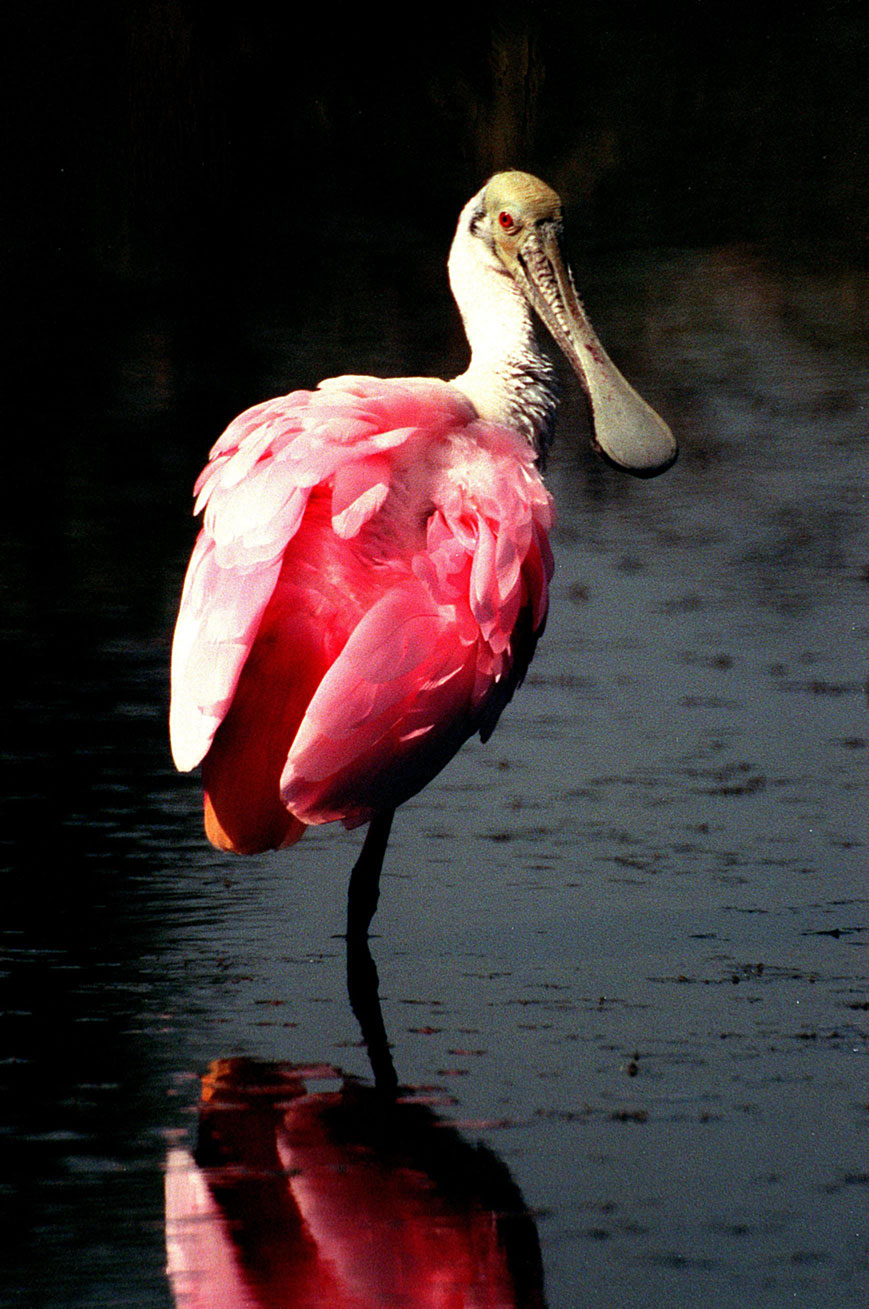
    Die Rosalöffler sind Vögel, die von Florida bis nach Argentinien leben. Sie sind natürlich auch bei uns, in Venezuela, zu Hause. Man findet sie oft am Orinoko und an den Nebenflüssen.

    Sie können bis 89 cm groß sein. Die Weiber legen 3 bis 5 Eier.


    Hier sind man einen Rosalöffler in Apure, Venezuela. Ganz in der Nähe kann man ein paar Capibaras sehen.

    Thursday, 4 February 2010

    Violent coup mongers celebrating themselves


    On 4th February 1992 there was a failed but bloody coup in Venezuela. The country had been spared the kind of military dictatorship that had afflicted other Latin American countries in the sixties, seventies and eighties. Still, Venezuela was not free of the military plague.

    After so many years of corruption and mismanagement, the living condition of people had been worsening and tension grew. Middle-level military thought their time had arrived and they went in for that coup. The conditions were there: millions of Venezuelans, very naively - and I would say very stupidly - had voted for Carlos Andrés Pérez in 1988. He had been president once before, in the early seventies, when oil prices were high and population much smaller. He got elected in 1988 because people thought Pérez would get Venezuela back to the "Saudi days" of the seventies. That was not possible with the Venezuela (and oil prices) of 1988. He tried to implement some policies by the IMF and he acted very badly when communicating them. One of the first steps he took was to increase prices of petrol. Almost all Venezuelans think they have a birth right to stupidly cheap petrol prices (the cheapest on Earth). Riots followed. The government, supported by the military, used forced and killed many people.

    The strange thing is that Venezuela's current government, a government that claims that the 1992 coup was partly motivated by those killings, has not been able after so many years to present a report on the issue. They claim there were "between 300 and 5000 people who were killed". I think we know more about some Greek-Persian wars than about that event. It is very curious because most people in Venezuela do have a family and you cannot just "disappear" so many people in just a couple of days without having family members reporting that. Still, they say "300 to 5000 people". There are no reliable lists. There are hardly any accussed as most of the responsible were in reality military, military who are now with the man in power. The current government cannot explain how they can justify a bloody coup in 1992 because of an event that happened in 1989.

    Carlos Andrés Pérez was a highly corrupt man and yet his government was going to end in 1994. Back then the presidential system in Venezuela did not allow for immediate reelections.

    In spite of all that, Hugo Chávez and his thugs carried out the coup, murdered many innocent people and ended up in prison because Hugo Chávez at the end was afraid for his life and gave in (he justified it because he did not want to shed more blood, but it was rather his, the other coupster elsewhere were already in control). Some months later another failed coup shook the country. One of the coupsters was Arné Chacón, the brother of the former miniter Jessie Chacón. In 1992 Arné Chacón said on TV during the coup that they were taking over because of the corruption of the government of that time. During the last few years Arné Chacón became one of the richest men in Venezuela. The situation was so blatant and it was getting so embarrassing for the regime that Hugo had to put him in prison. His brother stepped back as minister and is keeping low profile, he says he knew nothing about what his brother was doing, even if street cleaners seemed to be pretty aware of it. But there are still lots of boliburgueses at large.

    Today the Venezuelan government is celebrating the initial coup. They are spending a lot of time in marches because, apparently, the people in there do not have to work. This reminds me of Cuba, where a large group of the population has no other work than to go to marches and spy on their neighbours.

    The Venezuelan government is even wasting Venezuelan money by celebrating this coup in European capitals where coups against democratic countries are not usually celebrated. Here you see an invitation in French to go today to the Venezuelan embassy in Brussels:


    (snatched from another Venezuelan blogger, V.)

    "the morning of 4 February 1992 marked the breakup between the State and society due to a government sunk in corruption and subservient to the interests of foreign powers. This set up the basis for a military rebellion and the emergence of a national leader, Hugo Chávez Frías, thanks to whom the Bolivarian revolution was born".

    So they are celebrating right now a coup against a government that was elected by the people and that was going to be over two years later anyway. Their excuse were the crimes said government committed two years earlier, in part backed up by the military. I always disliked the government of Pérez but I definitely cannot justify a coup. I still remember the shootings back then. I was living in a student residence close to one of the places the coup mongers attacked in San Bernardino. I still remember the destruction I saw on several buildings. I still recall the fear in the eyes of the people. I still see the pictures with the corpses of the innocent murdered by the the military under Hugo's command.

    The saddest part is that right now corrruption has increased much more and involves most of the high ranking officials in power, foreign powers are more present than ever in Venezuela and the country is much more dependent on oil exports than ever. Apart from that, the murder rate has more than tripled, hundreds of thousands of Venezuelans have left the country running away from crime and political mobbing and we have one of the worst cases of personality cult in the world.

    The joke of the 1000 years in Power

    Thanks to Dutch blogger Alpha I saw Hugo of Sabaneta has just now said he thinks the revolution will last for 900 years and he may rule for 10...or perhaps 20 more years...but "20 may be too much, wouldn't it?". Those in the public shouted "no". Isn't this like some kind sick relationship between a harassing man and his beaten wife?

    Shame on all those who support this regime.

    PS: I still haven't got a response from the Vice-president of the European Parliament on my questions. Oh, I will keep demanding that he answers. He is an employee of the European Union.