| BRAZIL | ||
| Renan Calheiros | “Politician” | 1998 |
| José Carlos Dias | Lawyer | 1999 |
| José Gregori | Lawyer | 2000 |
| Aloysio Nunes Ferreira Filho | Lawyer | 2001 |
| Miguel Reale Júnior | Lawyer | 2002 |
| Paulo de Tarso Ramos Ribeiro | Lawyer | 2002 |
| Márcio Thomaz Bastos | Lawyer | 2003 |
| Tarso Genro | Lawyer | 2007 |
| Luiz Paulo Barreto | Economist | 2010 |
| José Eduardo Cardozo | Lawyer | 2011 |
| CHILE | ||
| Raúl Troncoso Castillo | Lawyer | 1998 |
| José Miguel Insulza Salinas | Lawyer | 2000 |
| Francisco Vidal Salinas | History | 2005 |
| Andrés Zaldívar Larraín | Lawyer | 2006 |
| Belisario Velasco Baraona | None | 2006 |
| Edmundo Pérez Yoma | Arts,Entrepreneur | 2008 |
| Rodrigo Hinzpeter Kirberg | Lawyer | 2010 |
| Andrés Pío Bernardino Chadwick Piñera | Lawyer | 2012 |
| VENEZUELA | ||
| Luis Miquilena* | "Politician", union leader | 1999 |
| Ignacio Araya* | International Relations | 2000 |
| Luis Alfonso Dávila* | Military | 2000 |
| Luis Miquilena* | "Politician", union leader | 2001 |
| Ramón Rodríguez Chacín | Military | 2002 |
| Diosdado Cabello | Military | 2002 |
| Lucas Rincón Romero | Military | 2003 |
| Jesse Chacón Escamillo | Military | 2004 |
| Pedro Carreño | Military | 2006 |
| Ramón Rodríguez Chacín | Military | 2007 |
| Tarek El Aissami | Lawyer | 2008 |
| Néstor Reverol | Military | 2012 |
| Miguel Rodríguez Torres | Military | 2013 |

Tuesday, 14 January 2014
Justice ministers in Venezuela and elsewhere: what are they made of?
In the tables below you can see the list of ministers for Interior and Justice of Brazil, Chile and Venezuela since late 1998, with their professions. For Venezuela I added a star sign next to the name of those who very openly fell out of love with Chavismo - i.e. had a very public quarrel with Chávez.
Brazil has serious problems with violent crime but the situation is better than it was in the nineties. Chile has violent crime levels that are so low as to be the envy of all of Latin America.
Venezuela, on the other hand, is one of the most dangerous countries on Earth now. The murder rate of Brazil is about a third that of Venezuela.
Just in case: I am not making big judgements on the value of a university degree for becoming a "Minister of Justice". I have heard quite some rumours about Venezuelan El Aissami and what he did when he was studying. He was the only one who studied law among Chávez's ministers in this field. But those are rumours. I hardly know anything about the different ministers in those other countries. Still, I think there is a pattern here.
We need to remember this now, when in Venezuela Maduro is again talking about a stronger "civic-military" union.

Monday, 13 January 2014
Der Ministeriendschungel im bolivarischen Venezuela
Sehr verehrte Leserinnen und Leser,
Hier haben Sie eine Übersicht über die 30 Ministerien und 111 Vizeministerien, die Nicolas Maduro schaffen oder umgestalten will.
Hier haben Sie eine Übersicht über die 30 Ministerien und 111 Vizeministerien, die Nicolas Maduro schaffen oder umgestalten will.
Als Maduros Vorgänger und Idol, der Caudillo Chávez, an die Macht kam, versprach er, die Ministerien der "4. Republik" drastisch zu reduzieren. Stattdessen wurden es mehr. Schlimmer noch: Chávez wechselte die Minister durchschnittlich jedes Jahr, manchmal schneller. So hatte seine Regierung in 14 Jahren 12 Innenminister. Die Mordrate Venezuela ist in dieser Zeit um über 300% gestiegen.
Maduro will diese Tradition fortsetzen. Ich habe in Gelb die Vizeministerien gezeichnet, die ich besonders albern finde. Unter diesen Vizeministerien zählt man das Vizeministerium für das Höchste Soziale Glück des Volkes und das Vizeministerium für die physische Aktivität.
Eine der interessantesten Stellen ist die des Vizeministers für Soziale Netzwerke des Ministeriums für die Volksmacht der Kommunikation und der Information.
Man kann das Bild klicken und vergrößern!

Friday, 10 January 2014
A bloody coup monger as minister of Interior, Justice and Peace...and other things from the Venezuelan fraud
I just write this to remind foreigners about who the people in power in Venezuela are.
Miguel Eduardo Rodríguez Torres, the current minister of "the Popular Power of Interior, Justice and Peace", was one of the coup mongers who attacked the Presidential House in February 1992. He lead a group of military who killed quite a lot of innocent people there.
He has been involved in the training of the paramilitary Bolivarian circles.
He has been in charge of the security services SEBIN.
And he is one of the many pseudo-revolutionaries who want to minimize the crime situation in Venezuela.
As Rocío San Miguel explains, this guy has now managed to increase his power. He can be considered as influential among the military strongmen as that other coup monger, Diosdado Cabello.
Yesterday Maduro ratified Rodríguez in his position and proceeded to change some ministers, as Chavismo so often does. Below you can see a chart of the new changes.
There is a bad singer who got the ministry of Sports as he was not elected as mayor last December. He replaced a woman who was at that position for just a few months. There is another former coup monger, Wilmer Barrietos, who now became head of the "Despacho para la Presidencia", a sort of Presidential Office - don't mix up with the Presidential Secretary.

Thursday, 9 January 2014
Venezuela's wonderful tourism in the times of the civic-military "revolution"

This chart shows the evolution across time of the amount of foreign tourists to American countries outside North America and huge Argentina and Brazil. Apart from a group of hardly known islands, you have them all: from Aruba, Colombia and Peru to Venezuela. I got the data from the World Bank.
The red dotted line at the bottom represents Venezuela.
Some things you can spot right away:
- Venezuela receives less foreign tourists now than in 1997, but has basically got the same amount of tourists
- Cuba had as many foreign visitors as Venezuela in 1998 whereas now it has more than 5 times the tourists Venezuela gets. A similar case goes for Guatemala, Costa Rican, Ecuador and other countries.
- Even El Salvador, formerly described by someone I knew as Central America's Armpit - surpassed Venezuela
- The same goes for Honduras, in spite of its also horrible murder rates
- Aruba, a tiny tiny little island off the coast of Venezuela with fewer beaches than those we have in just a fraction of the Paraguana region, has almost twice as many tourists as Venezuela from Guajira up to Guyana.
- Few countries get less visitors than Venezuela: a few tiny islands that can hardly receive more tourists, natural-disaster-ravaged, extremely poor Haiti and the tiny group of Guyana and Suriname.
Venezuela has never received many tourists because 1) the country has been very dependent on oil, 2) it has been rather expensive and 3) the authorities have never ever developed infrastructure.
I remember having visited the ministry of tourism in the early nineties to find out what the hell they were doing. Apparently, their main concern was to publish posters of how beautiful Venezuela was and producing some examinations for tourist guides.
Now, in the year 2014, we haven't got proper tourist offices or the like just yet. We get posters of the "Comandante Eterno" saluting foreign tourists when they arrive. Things have got grimmer and grimmer. Other bloggers have written about the case of former Miss Venezuela, Miss Spears, who was recently murdered, together with her husband and in front of their little child, while on a tourist visit to her home country. She died in similarly horrible circumstances as many others that same day. The difference was that she was a well-known figure who was currently living abroad and came to Venezuela to promote its tourism.
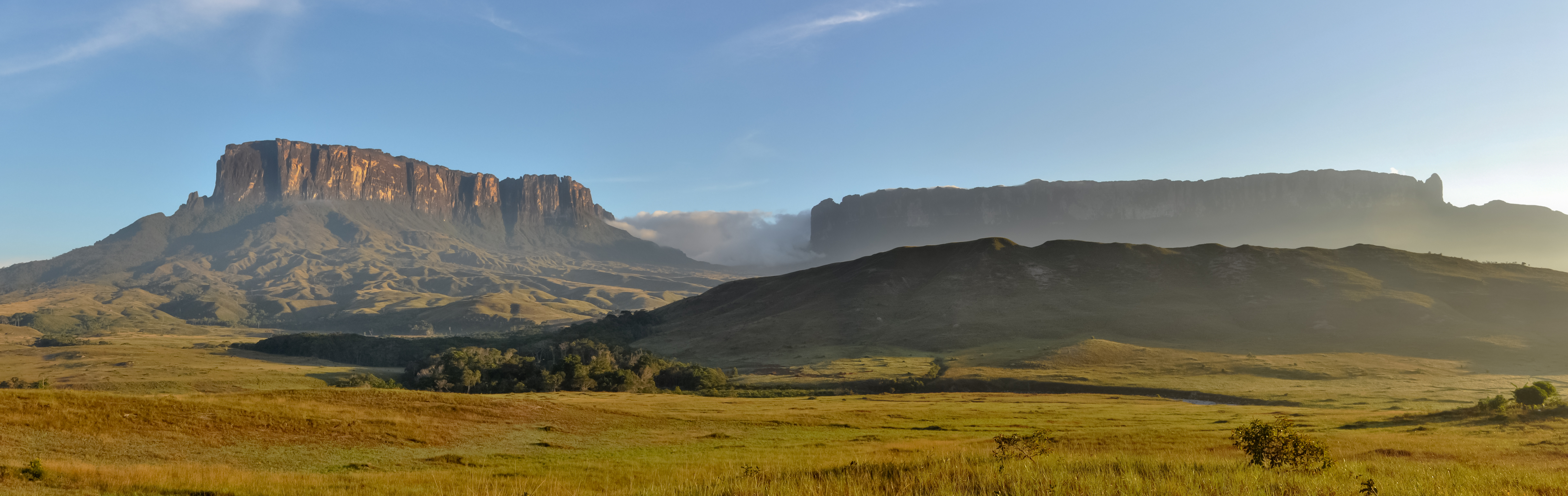 |
| This doesn't count if you don't have the people to take care of tourists or to protect the environment |
Venezuela's murder rate went from 19 murders per 100 000 inhabitants in 1999, when Chávez started to rule, to 34 in 2002 to 45+ to 70 now, depending on what statistics you want to believe (the government stopped sending murder numbers to United Nations in 2002).
 | |
|
There are simply more tourists everywhere in the year 2014 than 15 years ago. Not only are there more people but the middle class has grown almost everywhere in emerging markets and there are more flights. In spite of that, Venezuela's at the bottom and still the "minister of the Popular Power for Tourism" - a relative of yet another left-winged military man- has the chutzpah to brag about how he is promoting tourism.
 |
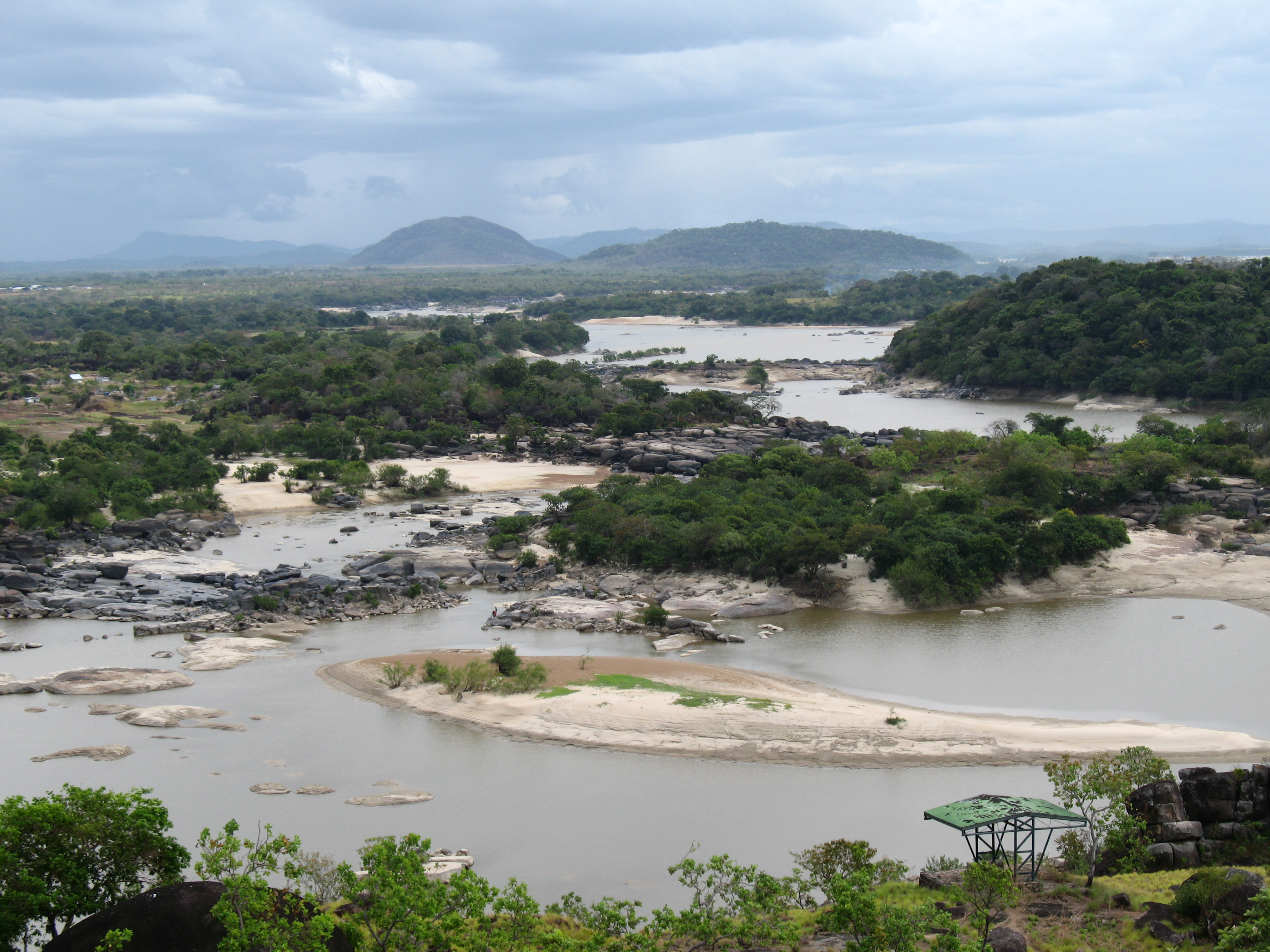
| This doesn't count either while we are polluting it as few do it in the Caribbean and you can get robbed more often while enjoying it because our government is simply incompetent (and now I will be accuse by the government of being the cause of so few tourists: a traitor of the Vaterland for writing this) |
Tuesday, 7 January 2014
Venezuelan genetics in context
The chart below shows the main genetic components of nationals from different Latin American countries based on DNA tests carried out for a Brazilian research project. The chart represents the "average" citizen. We know Latin America shows a huge variance. As a reference, my DNA profile says I have about 67% European, 25% native American and 8% sub-Saharan markers. That is still close to the Venezuelan average. As we know, every region has its tiny but clear variations.

Thursday, 2 January 2014
Latin America, Internet, Venezuela and Cuba
This chart shows the average download speed on the Internet across most American nations.
As you can see, Venezuela's average Internet speed is at the level of Cuba - which has Internet connection for the better connected thanks Venezuela - and of Bolivia, an extremely poor country.
And this is what the Boligarchs want - to control and curb the flow of information more and more.

Understanding Venezuela for foreigners: the Minister of Information
Querida Delcy Rodríguez, "camarada": este post será enviado a un montón de organizaciones internacionales. Hay algo que se llama "estado de derecho". Eso incluye la prohibición a empleados como tú de abusar de información del Estado - que no es lo mismo que gobierno - con fines políticos.
The Venezuela minister of Information, Delcy Rodríguez, just tweeted a "list of shame" with the names of opposition-minded people who travelled abroad for Christmas, the date of departure and the destination. Ms Rodríguez wrote "Don't miss the list of foreign holiday destinations for opposition leaders". Then she added the list including mostly elected politicians in local elections but also a regime-critical journalist.

Venezuelans abroad have taken countless pictures of the Boligarchs, as we call the state oligarchs pretending to be revolutionaries, abroad. One example is this of the Attorney General getting out of at a posh shop in Paris or Chávez's daughter travelling all around the world or another of communist deputies full of purchases in a gringo shopping centre, in the middle of the Evil Evil Empire. But those pictures are taken by some of the over 1 million Venezuelan expats. What this minister is doing is showing a list that was obviously obtained from the security services.
It is hard for a foreigner to get a real picture of what Venezuela's communicational landscape is like if she doesn't know what information the average Venezuelan in the average Venezuelan city can get. The average Venezuelan city is not Caracas, Valencia or Maracaibo: more than half of Venezuela lives in such cities as Punto Fijo, Charallave, El Tocuyo, Guacara, El Tigre. The fact Venezuela is a highly urbanized country does not mean Caracas but Punto Fijo. Less than 40% of Venezuelans have Internet connection and Internet speeds in Venezuela are among the lowest on Earth. We can envy Nigerians or Malians for the Internet speed they enjoy. Globovisión is now a lame duck and the "many" private TV and radio channels don't dare to show more than baseball, soap operas and the like. If you speak Spanish, you can listen for a couple of minutes - or more if you can - to the current state radio or TV. When I was a child, state radio and TV had mostly educational programmes. Sure enough, we still have badly founded opposition-minded newspapers...in a country where hardly anyone reads. Try to find El Universal outside the very centre of Punto Fijo or Guacara.
Now state TV and radio have reached a level of brainwashing as you wouldn't have seen in Soviet Russia. And that's funny because Venezuela still doesn't have a form of socialism. Not that I would defend socialism - I would only defend pluralism of ideas and a real multi-party system with real competition and a separation of powers. Venezuela simply has a pseudo-communist-led, very dysfunctional Malawi-related form of petro-feudalism with no rule of law.
And yeah, here I put the destinations according to the list the minister used based on immigration data only state employees can have:

Subscribe to:
Posts (Atom)
