Showing posts with label science. Show all posts

Monday, 14 September 2015

Alexander von Humboldt and the environment


Alexander von Humboldt was born one day like today in 1769.

Here you have an interesting article - in Spanish - about global warming and Humboldt.


I wish scientists could carry out the same kind of experiments in Venezuela as they did in Ecuador now and see what level of environment destruction has taken place in what he visited 215 years ago. Unfortunately, Venezuela is now a complete failed  state so that it is almost impossible to carry out scientific work without getting mugged or worse. 


Oh, Alexander! If you saw how much Venezuelans have managed to destroy their environment!

Saturday, 18 April 2015

Yanomami, their guts, your guts


Newspapers are reporting about fascinating scientific findings coming from Venezuela and the United States. The news are about how the First Nation group of the Yanomami seem to have the most varied microbiome known up to now in humans and this seems to bring special resistance to antibiotics. Exceptionally, US American and Venezuelan scientists could work together on this.

You can read about it here (in English) and here (in Spanish, different details). I am still not sure about the conclusions people are drawing on this case but then I am an absolute layman when it comes to biology

On a somewhat related note - guts and nations-, I recently read in German a book by young physician Giulia Enders: Darm mit Charm. It will appear in English next month with the title "Gut".

There is some food for thought in all these sources.

And I ask myself: what is in here for the sustainable development of the Yanomami? Their region is being invaded by countless illegal miners and smugglers.


Wednesday, 31 December 2014

Venezuela from space & 2015 wishes

Western & Central Margarita. JAXA-ESA (c)

This image shows the Western and central part of Margarita Island and it was taken from a Japanese satellite and sent to the European Satellite Agency on April 2010.

I wish my readers a great 2015. May peace, pluralism, rule of law and development come to Venezuela as soon as possible.

Monday, 12 May 2014

A great Venezuelan scientist died


Jacinto Convit García just died. He was 100 years old and yet he died prematurely. He was one of the most productive Venezuelans in the last 80 decades or so.

When I was a child my parents took me to a workshop where don Jacinto was talking in a plain fashion to the general public about the work he had been doing through the decades. I still remember that day as a very magical day, a day of meeting someone who was truly into 1) discovering how nature works and 2) helping people.

Convit got the Príncipe de Asturias Award for Science and the Légion d'Honneur for his research on leprosy and Leishmaniasis.


Tuesday, 7 January 2014

Venezuelan genetics in context

The chart below shows the main genetic components of nationals from different Latin American countries based on DNA tests carried out for a Brazilian research project. The chart represents the "average" citizen. We know Latin America shows a huge variance. As a reference, my DNA profile says I have about 67% European, 25% native American and 8% sub-Saharan markers. That is still close to the Venezuelan average. As we know, every region has its tiny but clear variations.


Saturday, 28 December 2013

La verdadera riqueza, la inteligencia y el futuro de Venezuela

Cada día la riqueza de un país se define más y más por el nivel de productividad y de educación de sus habitantes. La innovación es un elemento crucial para el desarrollo sustentable de toda sociedad.

 Aquí pueden ver una comparación del número de patentes registradas por habitantes de 5 países latinoamericanos y sus nacionales en el extranjero. En el primer gráfico están Brasil y México. En el segundo gráfico solo muestro los otros tres países.
Dos cosas principales notamos: 1) Brasil le está sacando la delantera a México  pese a que su población es solo 54% mayor que la del mayor país de habla española y 2) Venezuela está actualmente por el piso. Recuerden algo: Chile tiene poco más de 17 millones de habitantes, mientras que Venezuela tiene unos 29 millones.

Sería interesante saber también quiénes fueron los que presentaron esas patentas relacionadas con Venezuela. ¿Chinos en Venezuela o venezolanos que huyen del desastre socioeconómico de un país que se cree rico por tener petróleo, oro y playas bonitas, aunque cada vez más contaminadas?


Wednesday, 11 September 2013

Happy birthday, Jacinto!


Today one of the most remarkable Venezuelan scientists, Jacinto Convit, celebrates his birthday. He is 100 years old. Convit received in 1987 a Prince of Asturias Award in the Scientific and Technical Research category. He is best known for his work on the treatment of leprosy.


Wednesday, 3 July 2013

Sunday, 18 November 2012

1001 post: Amoebae and politicians

It seems our long-standing suspicion was right. It seems it is less costly and much more effective to maintain the appropriate amoebae cultures in Petri dishes and observe their reactions to problems on sustainable development and social challenges than spend money in thousands upon thousands of politicians.


Think again

Seriously: are there ways we can deal with less politicians and give more power to people without falling into the "Soviet/council mobbing" trap the extreme left is trying to take Venezuela to?

Tuesday, 3 July 2012

Bolivarian idiocy and our lack of innovation

I wanted to write about this for a long time, but I kept putting it off because I wanted to do some thorough research on patent generation and I wanted to explore different ratios. I had written something about the patent issues  a couple of years ago in my Spanish blog. Anyway: someone did the work for me and you can read some of it in Spanish here.

The most telling item is this: Venezuela has a level of innovation similar to Uganda...even if Venezuela's GDP per capita is five times that of the African country. That is more than embarrassing. Brazil, not surprisingly, is doing it rather good for Latin American standards. As I mentioned before: Spanish American countries are now under threat of getting yet another master if they don't start putting their house in order.

This situation shouldn't be surprising considering the Bolivarian idiocy we have now. The military caste is the military caste.


"Bolívar, Bolívar, Bolívar...el imperio...socialismo, Bolívar, el imperio, socialismo"

Our problem is not new, though...as Fernández Morán or even Carlos del Pozo y Sucre could have told you.

Sunday, 30 October 2011

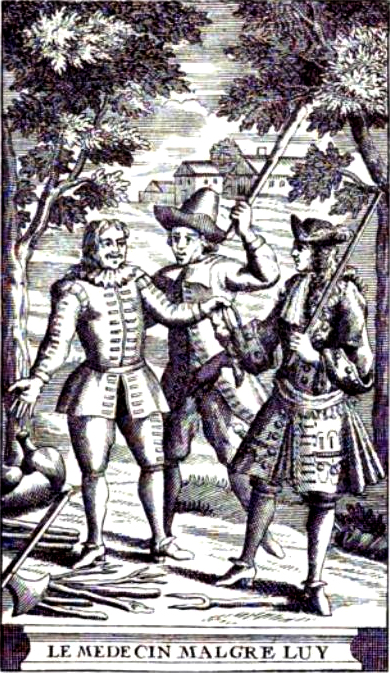
The mock doctors in Venezuela under Chávez

The president of the Academy of Medicine in Venezuela, Aoun Soulie, felt compelled to tell us for the nth time about a very worrying development: the education given to the so-called physicians of "Integral Medicine for Communities" is a farce.

This month 8300 people will get their title as "médicos integrales comunitarios" after having spent 6 years following an outdated study model based on Cuba's experience, which is based more on a myth than anything else. They spent all those years to become health experts and yet they have no training whatsoever in laboratory work, in tropical medicine (remember Cuba's not Venezuela), in radiology, biochemistry, parasitology, pharmacology, histology or anatomy (hard to believe but I got the same report from many good sources). They follow their courses by videoconference and have no training in the emergency rooms of public hospitals as was a must before Chávez came to power. Unlike physicians pre-Chávez, they have never been to operating theatres. Until now the law stated a surgeon had to first do one year of rural work and one in city hospitals. That's gone now: from the video-conferencing to the OR. When I arrived in Europe and had to visit a couple of physicians I immediately felt Venezuelan physicians were at least as good if not better than many German or British doctors. That will never be the case with these "Bolivarian" physicians produced by the Cuban-Venezuelan regime.

Only 225 of their 7215 teachers have actually a degree in medicine. That is weird, to say the least. Soulie also repeated what I have heard from two of the few real physicians who are working at the Bolivarian universities: teachers are told they cannot allow students to fail, all have to pass.

The health of the poor is more at risk than ever with these thousands and thousands of workers without proper training and no solid education dealing with emergencies of all kinds. Venezuela's so-called "revolution" is proving once more than it is nothing more than a pretense, a fairy tell for the gullible at home and abroad. Venezuela as a whole is also getting a new time bomb: how are we going to tell these mock doctors they were cheated by the Chávez-Cuban government for six full years and they would need to take some form of retraining to become real doctors once Chávez is gone?


Wednesday, 17 August 2011

Science in a banana republic

Humberto Fernández M orán must be rolling in his grave

Researchers from the Universidad Simón Bolívar, the Universidad Central de Venezuela, IVIC and Unimet are asking the Supreme Court to declare the new Law of Science, Technology and Research inconstitutional.

This law is the kind of concoction only a military regime in a banana republic can think of. Venezuela is supposed to be a pluralistic state and yet this law is slanted towards one single ideology. The law's objective is suppossed to be "the creation of the Socialism of the 21rst Century in accordance with the National Plan for Economic and Social Development of 2007-2013". That plan, by the way, was based on the work by a Chilean communist, Marta Harnecker. The term 21 Century Socialism is a fancy name proposed by Heinz Dieterich, a rather obscure figure mostly known within the Latin American hard-core left circles who a few days ago wrote an article explaining how he fell out of love with Chavismo.

This piece of legislation would mean only those projects that have the support of the government in office - a government that wants to stay forever - will get financial resources from the State.  

The new law is also against research by the private sector: all the money for research should go to the government, which will manage it as it sees fit. This means that basically no private company can legally be working on research and development unless Chavismo approves it.

It's quite amazing no one seems to tell the military pseudo-socialist regime that the Chinese are doing exactly the contrary to what Chavismo is trying to do.

This is the kind of thing 95% of Venezuelans won't grasp but it is also the kind of things that will affect 100% of Venezuelans for many decades to come unless we react now.


Monday, 16 May 2011

Venezuela and the origin of life on Earth


Nature mentions a study about how early multicellular organisms 
may have learnt to breathe in the air: by evolving next to certain 
cyanobacteria as those found in Los Roques right now. Los Roques
is a group of Venezuelan islands at 11°51′27″N 66°45′27″W

According to the authors, the lacoons there may represent a similar
environment to the one that existed during the Ediacaran: very low
oxygen levels but with bacteria that would produce oxygen..
The area is usually extremely salty. Almost no animal can survive
there. Still, during the day those bacteria expel oxygen as waste and
this oxygen goes just to the upper milimeter of the bacteria mats. 

Insect larvae use that oxygen now. Scientists think such bacteria could 
have produced a sort of oasis for primitive animals, which would 
otherwise not have been able to find enough oxygen for their systems.

Read it here and here!

Tuesday, 18 January 2011

Humboldt in Venezuela 2


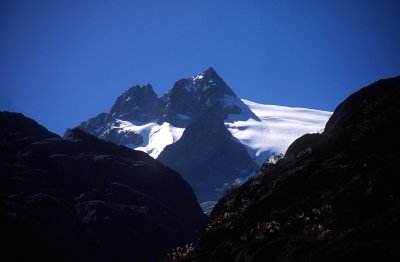
The Pico Humboldt is the second tallest mountain summit of Venezuela. It rises 4,940 metres above sea level, which is not much for the Andes, but higher than the Mont Blanc by over 100 metres.

Good old Alexander von Humboldt was not on that side of Venezuela, although he did write a bit about the region and he investigate a lot about the rest of Venezuela. He very much deserved a peak and a river and a couple of other items called after him.

The Pico Humboldt has 2 of the 5 last glaciers in Venezuela. Chances are those glaciers will be gone by 2040. You can read some practical studd about how to reach the Pico Humboldt here (in Spanish).

The first person to get to the top was Venezuelan scientist Alfredo Jahn. I will write more about Jahn later on.

Sunday, 16 January 2011

Venezuelans, (and some of) the First Americans


Paraguaná is a peninsula in Northern Venezuela. It is very close to Aruba, an island the Dutch took over from the Spaniards in 1636.

The peninsula is a very interesting place. The strait connecting it to the rest of Venezuela also goes through the magnificent Médanos de Coro National Park. It was visited early on by the first Europeans in South America, including Amerigo Vespucci, who would later give his name to our double continent.

In the northern part of the Paraguaná Pensinsula we have the Taima-Taima region. Here Jorge Cruxent, a Venezuelan-Spanish archaeologist, discovered some of the oldest remains of human presence in America. If you want to read more about that discovery, check out this site. Very shortly said: that discovery together with another one at Monte Verde, Chile, led scientists to rethink the population of America. Before those discoveries, most archaeologists thought humans had only arrived in America after the Late Glacial Maximum came to an end. Now we know humans populated America during the Late Pleistocene.

It is a real pity that the whole archaeological site and the discoveries kept in a private museum have been so deglected.

Friday, 25 June 2010

The Power of Persistence or the Story of a Venezuelan scientist


Scientist Jacinto Convit does not want to retire too young. He is just 98 years old and he feels he can give a lot more of his time to science. I met him when my parents took me as a child to a fascinating presentation he was giving to the public in my hometown.

When Convit was a young physician, leper patients were put into chains and sent to very isolated colonies with guards. They were treated as the worst of the world. This scientist dedicated a lot of time treating those patients and giving them better conditions. Convit, together with 6 other Venezuelan and 2 Italian doctors, started to perform experiments on the Chaulmogra oil, which was known as a palliative. They managed to identify the role of clofazimine and other components in the Mycobacterium leprae and this lead to their development of a vaccine. Lepra colonies are a thing of the past.

The team produced this vaccine by combining a tuberculosis vaccin with the bacterium Mycobacterium Leprae. Convit also developed a vaccine against a terrible parasite disease common in tropical and sub-tropical regions, Leishmaniasis.

Mr Convit has been nominated to the Nobel Prize for his work against leprosy. He got the Prince of Asturias Awards for Science Research in 1987 and the Premio de México de Ciencia in 1990.

Now he said at an interview he is carrying out experiments on human patients for a vaccine that is supposed to fight mammal and colon cancer and "so far, so good". The details of that article are still very vague, but I will try to find more about them as soon as I can.


Thursday, 27 May 2010

Keeping an eye on Venezuela's waters


Here you have a very interesting video about how satellite observation can help us to understand what is going on with water resources.

I found the second part of the video particularly interesting for Venezuela.

I wrote already in Spanish about the huge mess with water resources in my region. Other bloggers like Miguel and Daniel have written a lot about the mess with the Guri Dam and other sources of hydroelectric power in Venezuela now. I have little hope the current government will come up with sustainable solutions to these problems but I can imagine we will be able to use satellite studies in the middle term to monitor in a more intelligent way Venezuela's hydrological resources.

In any case, when the time comes and we have that kind of permanent monitoring used by Venezuelan scientists, I think it would be imperative that they keep the public and not just some governmental institution or NGOs informed about how things are evolving: have major changes been detecting in the Orinoco basin? What is happening with the oil fields around the Delta? And what about the Tacarigua Lake? How does the data compare to what we had one, two years earlier?

Monday, 10 May 2010

The Germans and mountains under Venezuela's Caribbean


A German expedition ship, Meteo, with a team from Greifswald University has just announced they may have discovered sunken "islands" off Venezuela's and Colombia's coastline in the Caribbean. Basically, we are talking about mountains with summits 800-1000 metres under sea level and going further down up to 1000 metres to the seabed proper. Those elevations hadn't apparently been charted before.

The expedition also dregged soil material from that area and found fossalized chorals, snails and algae. Those elements hint at the mountains once being part of shallow waters. The team assumes the area was above sea level 40 to 50 million years ago.

You will find a general article in English here and a comprehensive report in German and English here about what the initial plan was. Mind: they had several targets in mind, from doing research on volcanic and tectonic activity to testing theories on how the Caribbean appeared to finding signs of oil and learning more about heavy metal circulation, so I suppose we will be hearing more about the other things they were investigating there.

I hope Venezuelan scientists can get more involved in those expeditions.

Thursday, 26 November 2009

The First Nations in our blood

Map showing how main female genetic markers spread


Population genetics has been providing new insights into where we all came from, what roads we took to settle the world and how each of our many ethnic groups interacted with each other. Very little research has been carried out in Venezuela compared to Europe. Still, Venezuelan scientists have carried out some interesting studies. They confirm a lot of what historians knew but they also provide new details that could help us fill in some of the gaps in our understanding of the past.

I have written before about some of those studies. Basically, they confirm what most Venezuelans but our president knew: the vast majority of Venezuelans are very mixed, most of our male ancestry is of European origin and most of our female ancestry is native American and there is sub-Saharan influence on both sides as well.

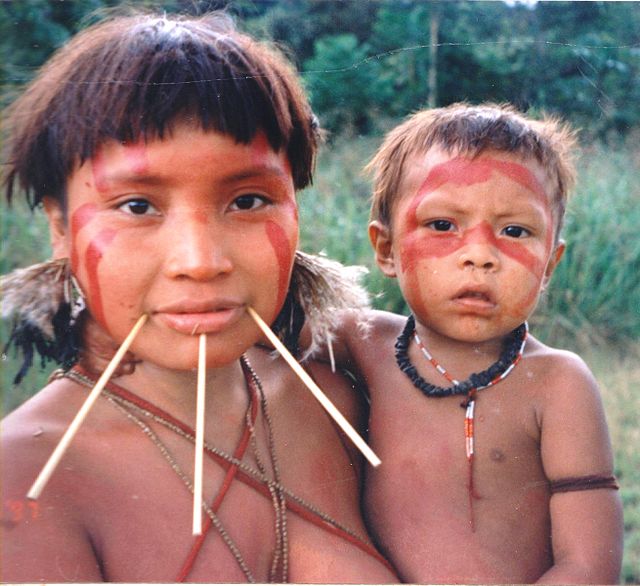
Native Americans keeping a distinctive ethnic group are a tiny minority in Venezuela these days. I have talked a little bit about those groups. A lot of Venezuelans have some native American background, though, even if they look very European or African or anything else. Still, little do they know about that background. We eat arepas, we eat cachapas, we use some Indian words in our Spanish (less than Bolivians, Peruvians or Mexicans, but still some like cuaima or catire) but we don't know much more about our American ancestors. As Alexander von Humboldt noted already after his 1799-1801 trip through Venezuela, most Venezuelans have lost track of their history, their European, their native American and their African history.

The historical records tell us that there were some Indian groups around the Tacarigua Lake, some others in what is now Caracas, some others in Margarita Island. We know about some of those groups have the same language and others belonging to very different groups with very different looks and customs.

Very roughly, we know a lot of the West of what is now Venezuela was populated by Arawak groups (Arawak being a very broad term, like Romance groups or Slavic groups) and a lot of the East was populated by Carib groups (also a very broad term). We also know there were isolated groups that spoke languages completely different to all the others. We still have in Venezuela about 30 languages that represent several language families, quite a lot of variety compared to what you see in Europe. The native Americans are now mostly in remote regions on the West, on the East and South. Still you see the Arawak groups more to the West, the Carib more to the East and both in the South, but there are exceptions, like Carib Yukpas in Zulia, and there are many groups that have very different languages to all the rest, like the Waraos.


Some Venezuelan scientists presented a paper this year where they showed a first study on "Mitochondrial diversiy in Northwest Venezuela" and "Implications for Probable Prehispanic Migratory Routes".

Dinorah Castro de Guerra, Figuera Pérez, Izaguirre, Rodríguez Larralde, Guerrera Castro and other Venezuelan researchers chose 4 communities in Northwestern Venezuela: three very small towns in Northwestern state Falcón and Barquisimeto, a big city and capital of Lara (to the South of Falcón). They selected their samples from people whose grandparents were all born in the same town, signifying people who were likely to have very strong roots with the place.


The mitochondrial DNA (mtDNA) is always inherited through the mother and the Y chromosome through the father. A certain pattern of DNA sequences in the mtDNA or Y chromosome can be used to identify a a genetic group, a haplogroup. In this case, most of the mtDNA haplogroups (refering to the mother's mother's mother's...) were of native American original, albeit there were also instances of sub-Saharan African and European groups.
This contrasts with the markers on the Y chromosomes, which show, as usual in the Americas, that Venezuelans have on the paternal side mostly European haplogroups.

There are 4 native American mtDNA haplogroups and they are known simply as A, B, C and D. H is the most typical of European populations, J is typical of Middle-East, Northern Africa and Europe, U is mostly in the Old World outside sub-Saharan Africa and L and L3 are mainly found among sub-Saharan populations and recent descendants (like slaves).

Here I plot the mtDNA haplogroup distribution for every town in this study.

Some of the things we can observe:


  • As in previous studies, the Indian contribution is the most frequent on the female side
  • the European maternal contribution in traditional populations in those towns is much lower than in the main cities as in the capital (see what I wrote on a previous study for Venezuela's capital here)
  • Macanillas is a place where people apparently have very unique haplotypes and in general there seem to be a lot of unidentifiable haplogroups in this study (errors? something special about hardly studied groups?).
  • The African maternal contribution is slightly higher in the most costal village, which is not surprising for anyone who has been to Venezuela
  • It seems as if on the coast (Macuquita) haplogroup D is particularly represented, which could hint at Indian populations that differ more from the other 3 locations
All this should be taken with a pinch of caution. The samples were taken from 81 persons in Barquisimeto, 25 in Macuquita, 58 in Churuguara and 29 in Macanillas.

I will continue in a future post with some proposals for future studies on Venezuelan population genetics.




Wednesday, 30 September 2009

Venezuelan colours II

Venezuela is very mixed, as we have often mentioned, but: how mixed is it precisely? What differences are there exactly across social groups?

Population geneticists help to investigate how homo sapiens expanded from Africa to settle the whole world and how different groups intermingled. One of the main sources they have are non-recombining pieces of DNA. These are genetic markers we all get from one side of our ancestors only. Most of the DNA information in our cells are a "random" mixture of both parents' genes: it is not possible to know but some parts get transmitted almost unchanged from father to sons across many generations or from mother to daughters and sons. They are patterns that are recognizable after thousands of years. Only from time to time there are minor mutations and those mutations help us see how different branches of mankind appeared.

The markers on the males' side are patterns of DNA-bases found in the Y chromosomes. I have the same sequences as my dad but for very minor variations. The markers on the female sie are DNA bases found in our mitochondria, little structures we all have in all our cells and which we get exclusively from our mothers. We all have the spitting image of our mother's mitochondria.
As populations in previous times stayed put in some places and did not mingle randomly with others, geneticists have been able to find haplogroups that are shared by all common ancestors of an individual many years ago. Things get much more complicated than that, but basically, with those haplogroups we can track down a whole line, either on the paternal side or on the maternal side of each man and on the maternal side of every woman on Earth.


Like your mother


The Y: like dad's


Sub-Saharan Africans, Europeans, Asians and native Americans have particular haplogroups. If you see a "sub-Saharan" male haplogroup in an European, this means that the father of the father of the father...of that European (a male as only males have Y chromosomes, unless we are talking about very unusual cases) came from sub-Saharan Africa in recent history. The same goes on the female side.

I am Venezuelan and as I wrote in previous posts, I have the usual admixture. My paternal haplogroup appeared in the Fertile crescent around 18000 years ago and it is present in lots of Lebanese, Iraqis, Syrians, Turks, Armenians, Greeks, Southern Italians, Jews and to a lesser extent Spaniards. I got it from there. My mother's haplogroup is sub-Saharan and most likely a female ancestor of mine was a slave brought to Venezuela between 1528 and 1810 (it could have come indirectly through Spain as 1-3% of Spaniards also have sub-Saharan female haplogroups, but that is less likely). That lady was from West Africa. That is only part of my background. As my family has been in Venezuela for a long time, it is almost certain there is native American blood there as well and from other parts of Europe (two of them I know) and Africa. One has 2 parents, 4 grandparents, 8 great-grandparents and 2 times n ancestors n generations ago.

Now back to the study carried out by Rodríguez-Larrade. The blood samples were from 50 and 60 individuals who were in a public and a private maternity respectively.

The results for male haplogroup origin in the public maternity (where the dad of the dad of the dad of the dad...of the males came from) showed this:


The results for male haplogroup in the private maternity showed this:


A lot of the people in public hospitals are people from families who came from the countryside to the capital in the last 50 years. About 40% of the grandparents of the people in the private clinic were born in Europe. As the study says, "Many of these migrants, mostly Spaniards, Italians, and Portuguese, helped to develop economic activities related to commerce and construction, activities that rapidly introduced them to the high socioeconomic level. On the other hand, most of those individuals at the low socioeconomic level are a consequence of rural-urban internal migration; they seem to be more representative of the traditional Venezuelan population. This reveals that the identification of the grandparents' geographic origin is an important methodological aspect to take into account in genetic studies related to the reconstruction of historical events."

Still, in both cases we see the European component on the male side is the dominant by far. Male Indians were killed or outbred in previous centuries, whereas the conqueror or richer settler reproduced more, as all around the world.

On the background we got from our mothers, we have a completely different picture. The background in the public maternity looked like this:


The genetic background on the female side in the private clinic looked like t his:


Let's hope in the future there won't be such differences and our public hospitals become as good as those in Northern Europe. Let's hope any background differences between public and private clinics disappear.

In any case, we sum up saying Venezuelans are, genetically speaking, mostly European on the paternal side and mostly native American on the maternal side, with a sub-Saharan component on both sides (as my maternal haplogroup shows) but any mixture is part of Venezuela and most Venezuelans have a bit of recent background from every continent. There are obvious ethnic differences, although smaller than elsewhere: the poor of the present tend to be descendants of the poor of yore, who tended to be more descendants of Indians and slaves, although it is a matter of some degrees. There has been a lot of mobility in Venezuela for many decades now, probably more than in many other places, although not as we would want. The main reason is the little support given to the quality of education of the poorest, something that hasn't changed.

The cool thing is that a Venezuelan of German or Lebanese, Japanese or Peruvian parents is just that: a Venezuelan with foreign parents, but a Venezuelan 100%. She is also going to eat her arepas and cachapas, she will have the same Venezuelan music, use the Latin American Spanish adorned with those Indian, African and Italian words

Genetics can take us further and teach us more about the history of Venezuela. We will write about this in future posts. But it does not take genetics for us to know we need better education for the poor. This will help us reduce all kinds of social differences and get us on the road to sustainable development.