Showing posts with label interior. Show all posts

Sunday, 13 December 2015

Cuando la oposición se convierte en una amplia mayoría

Ratio opositor por chavista para algunos estados venezolanos en las elecciones de abril del 2012, abril del 2013 y diciembre del 2015
Si Ud. camina ahora por San Cristóbal, en la Venezuela andina, al menos dos de cada tres personas que vea y que hayan votado en diciembre serán opositoras al régimen. En los estados centrales de Miranda o Carabobo, tres de cada cinco votantes son opositores. La proporción de opositores es algo mayor en el estado noroccidental de Zulia. Actualmente son muy pocos los estados donde aun hay algo más de chavistas que opositores y estos tienen poca población. El desarrollo se viene perfilando desde hace mucho tiempo: la oposición se expande desde zonas urbanas...y Venezuela es un país altamente urbanizado.

Esperábamos una mayoría para la oposición en Venezuela. Aun así, nos costaba creer que podíamos obtener una mayoría absoluta. La principal razón de esta timidez se debía a la absoluta parcialidad del Consejo Nacional Electoral, dominado por chavistas, y al uso de recursos de Estado por parte del grupo que gobierna Venezuela desde 1999.

Realmente el desarrollo que tuvimos no es sorprendente. No solo la crisis económica se hace cada vez más dolorosa e impulsa a los chavistas a abandonar el barco de la mal llamada revolución. El creciente número de opositores hace más fácil ejercer presión para que los grupos armados que apoyan al gobierno no cometan fraude. Hemos alcanzado la masa crítica.

Entre las elecciones presidenciales de 2012 y 2013 transcurrieron apenas 6 meses. Las elecciones regionales de 2014 difícilmente pueden compararse con elecciones presidenciales o con las de la Asamblea Nacional, que se asemejan más a un plebiscito presidencial. Entre las elecciones de 2013 y 2015 hay más de 3 veces el tiempo transcurrido entre las elecciones del 2012 y del 2013. Si calculásemos las pendientes que resultan de la proporción de opositores entre los dos períodos de 2012 a 2013 y del 2013 al 2015 y tenemos en cuenta la cantidad de meses pasados, veríamos que en realidad la "deschavetización" de la sociedad transcurre a un nivel menos acelerado. Podemos ver, incluso, que en estados como Miranda o Lara el número de opositores creció ahora a un ritmo mucho menor. Valdría la pena investigar porqué no han caído aun más los números de chavistas. Hay varias causas posibles.


Monday, 7 December 2015

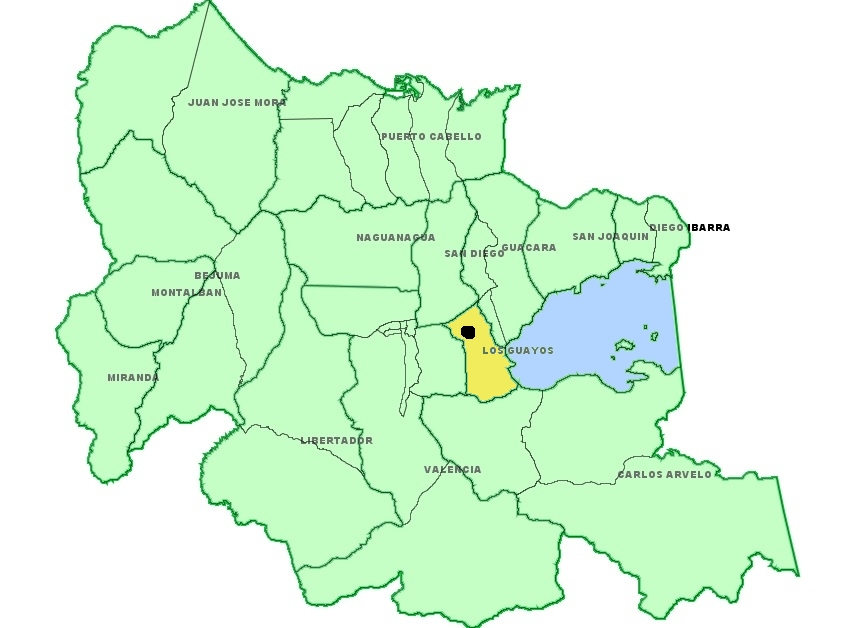
Carabobo, provisional results


The map you see here is based on the preliminary results (at this very moment no longer accessible) for Carabobo according to the National Electoral Council. Things are bound to change. So far, about 58.61% of votes went to the opposition and 39.87% to Chavismo in this state.

I think we have to clarify something: traditionally people have had a very simplistic view of what urban versus rural is in Venezuela. The extreme case is those who see anything but Caracas as rural. There are others who consider urban Venezuela is made up of cities with a population higher than one million people or the like. In other countries there are also lots of definitions about what is rural or urban but generally, places with high population density and city-style land use are considered urban. 

Carabobo is one of the most densely populated areas of Venezuela. Most of what is not populated is to be found on the mountain range in the North and West, but there is also a fringe of thinly populated regions in the South and in the low mountains in the South-East.

The opposition won in almost all urban areas but for some shanty towns of Puerto Cabello in the Democracia parish and in semi-rural Borburata, where we have a very strong African American component. It still lost in the mostly rural Juan José Mora, including the very poor city of  Morón, which also has a relatively high percentage of people with black ancestors. It lost in the semi-rural areas of Diego Ibarra, in the shanty towns of Tacarigua and in the more rural areas of Libertador, Negro Primero (part of the Valencia Municipality but very thinly populated) and very rural Güigüe and Belén.

Most areas where there are shanty towns went to the opposition now, including most of Valencia's slums, those of very poor Los Guayos, where I went to school, rural areas of San Joaquín and rural areas of Guacara (and, of course, the city of Guacara).

Bear in mind there were still areas where we hardly had any witness...and they happen to be the areas where Chavismo scored the best.


Now let's take a moment to enjoy this tweet of military strongman Diosdado Cabello...today a little bit less strong:

Saturday, 28 November 2015

News from Greater Valencia: no petrol, again


El Palito Refinery seems to have technical problems. Some tankers with petrol off Puerto Cabello haven't docked because the Venezuelan government hasn't paid for the deliveries.

There are huge queues to tank from Puerto Cabello to Valencia and around.

When I was a child the refinery you see in the picture (El Palito) was one of the prides of Venezuela. Now it is falling apart...but it is "roja rojita".


Friday, 3 April 2015

Venezuela, gender, work and politics (I)

Gender distribution in 4 parishes of central Venezuela: males are shown with dash, females with continuous lines
Look at these statistics based on Venezuela's 2011 census. They show how many males and females live in four areas in Central Venezuela. All are urban, even if some were formerly villages that became part of Greater Valencia. The areas -parroquias or civil parishes- are:


  • San José - Northern Valencia, mostly middle class and the tiny upper middle class (SJ)
  • Tocuyito - just Southwest of Valencia, the place is by far the most dangerous area in the whole state
  • Los Guayos - formerly a humble village, now the most densely populated municipality of Carabobo, as poor as Tocuyito
  • Urdaneta - South-Eastern Valencia, rather poor and one of the areas where the opposition tried to protest in March of last year but where several people got killed. As I wrote in a post back then, continuous protests in areas like this - there were many others- showed it was not an "uprise of the upper middle class": the poor were also mad, but protesting in areas where the opposition has "only" 60% of support instead of 80% or more can be rather lethal.
We can see the obvious: the poorer the region, the more children there are. Still, there is something curious here: although all these regions are urban, Tocuyito is the only area where there are just as many men as women from age 18 onwards. We know in many countries there is a particular gender inbalance depending on whether the region is poorer or richer. From Africa there is currently a mostly male migration now. The same goes for Arab states. In Eastern Germany, it has been women who first leave the rural and backward areas to look for better horizons. The same goes for rural China. In rural Venezuela we can also see a clear, sometimes dramatic surplus of men.

But what is going on here? Is Tocuyito just a transition region that was not so long ago a rural area? I doubt that is the case. Tocuyito also has a prison. It was conceived for 1200 inmates, but it has now well over 3000 and the vast majority are males. Is that all or are there some other factors that explain why there are clearly proportionately more women in the other areas? Do men in Libertador live healthier lives or else?

The following chart shows the percentage of people between 18 and 24 years old who are following courses at a college or university in the areas mentioned above. What are the young males in Libertador who are not studying doing? Are they working? How many? In what jobs?


We'll examine a wider area in future posts to discuss possible reasons for these demographic patterns.


Saturday, 24 January 2015

Murder in Chavista Venezuela

Here you can see the murders reported in the Central Venezuelan state of Carabobo from January 2006 up to December 2014. The data comes from Notitarde. As this newspaper has just been sold out under governmental pressure, you can expect those numbers to drop or completely disappear. The Chavista government said it wanted an "impartial press".

The murder rate in Carabobo, like in all of Venezuela, rose dramatically from 1999 up to 2008. Since then numbers seem to have stabilize, although there is quite some discussion about what is really going on, as you can see here. I have discussed this issue with Dorothy Kronick in a couple of emails. My impression, based on projections from the Electoral Council data on voters is that if murder has reached its peak it is because of the demographic evolution: the amount of men in the most likely age range to be involved in murders also peaked about that time. Still, it might be too early to tell whether the murder epidemic has reached its maximum.

In any case, Venezuela now is just a shadow of what it was in 1998...and back then it was already in bad shape.

Time for a change?

Sunday, 18 January 2015

Fish smuggling in Venezuela


The German newspaper Die Zeit has an interesting article with pictures Reuter's journalist Carlos García Rawlins took in Apure shwing how the smuggling of fish to neighboring Colombia takes place.

Think about how preposterous the idea of smuggling fish within neighbouring countries in Europe or even North America would be. In Venezuela it makes economic sense. That is consequence of the idiotic economic policies and general corruption as promoted by Chavismo.

Wednesday, 31 December 2014

Venezuela from space & 2015 wishes

Western & Central Margarita. JAXA-ESA (c)

This image shows the Western and central part of Margarita Island and it was taken from a Japanese satellite and sent to the European Satellite Agency on April 2010.

I wish my readers a great 2015. May peace, pluralism, rule of law and development come to Venezuela as soon as possible.

Wednesday, 9 July 2014

The revolutionary oligarchy's infighting in Apure (updated)

Minister of Interior, who led the bloody attack to the Presidential Palace in 1992. His father wants to become the governor of Apure

News came in of a conflict between two Chavista groups in the Southwestern region of Apure, bordering with Colombia. A group of eight armed men went into the hacienda of 46-year old rancher Juan Carlos Rodríguez Torres and tried to kidnap the rancher. They didn't succeed because he was not there.

The first detail: Juan Carlos Rodríguez Torres is the brother of Miguel Rodríguez Torres, the current minister of Interior. Miguel Rodríguez Torres was one of Chávez's military pals. He was the one officer who commanded the bloody attack against the president's palace back in February 1992 during the coup led by Chávez.

Second detail: Juan Carlos also works as "political consultant" to his brother, the minister.

Third detail: Juan Carlos' hacienda has an area of five hundred hectares. That is not small for the brother of a socialist revolutionary. The place is located in the municipio Rómulo Gallegos of Apure.

Agents of the criminal police, under Miguel Rodríguez Torres' control, detained Oscar Montilla, member of a group called Frente Campesino Ezequiel Zamora. Montilla was accused of coordinating the attempted kidnapping. They accused him of commanding the men who tried to do the kidnapping. He was taken into custody to the alcaldía of Alto Apure and, according to deputy Zambrano, another Chavista, he was beaten up there. Alto Apure is a 10-year old entity, a sort of Über-municipality comprising the municipalities of Rómulo Gallegos and of Páez. It was created in 2004 by Chávez's suggestion. The mayor of Alto Apure is Jorge Rodríguez Galvis, Miguel Rodríguez Torres's father. Jorge wants to become the next governor of Apure.

Anyway: there is a conflict between the Rodríguez clan and the governor of Apure, Carrizález. The criminal police is, according to Montilla, trying to link him and Carrizález to the kidnapping. 

That's just the start. What do I expect? Carrizález's days as governor of Apure are counted.

Here you can read (in Spanish) a little bit more about how some local PSUV politicians critisize the Rodríguez clan.


Alto Apure, where the minister's father is the boss


Ps. Jorge Rodríguez Galvis had already been accused of not providing the required reports for the way he managed Alto Apure. The red judiciary system dismissed the case in 2009.

Tuesday, 27 May 2014

What do Venezuelans do for a living? (III)

Second part was here
All data comes from the INE


Here you have a new view of how important the public versus the private sectors are in different Venezuelan regions.


As you see, eastern Delta Amacuro is basically a region of state employees. But then Delta Amacuro's weight in Venezuela can be better seen with the following chart, where you have total number of workers in the governmental and private sectors in the same regions. As you can see, Delta Amacuro's share is tiny.

Still, it is not surprising that the regime has a higher share of the vote in rural areas highly dependent on government jobs.


Saturday, 10 May 2014

What do Venezuelans do for a living? (II)

I previously showed a couple of charts showing labour distribution according to certain work categories in different Venezuelan regions according to the Instituto Nacional de Estadísticas. One thing we should be clear about is that in Venezuela there is a particularly high percentage of irregular workers, people who more often than not live worse off than Spaniards on the dole.

I added here new data for Carabobo, my region, also very urban and connected to Caracas and the Caribbean. In the first chart you can see where legally registered workers are active in different states of Venezuela. Notice the incredibly high proportion of people working in "services" in jungle-rural Delta Amacuro. There is also a large proportion of those in rural Portuguesa. The less rural the state, the less people you see working in the category "services". What on Earth does that mean? What are they actually doing? My hypothesis: mostly they are working for state entities, secondly for some types of shops. Portuguesa has the highest share of people working in agriculture, which is not surprising for a Venezuelan, and Zulia comes next in this selection, although there are other regions I didn't include that are more agricultural than Zulia (but I use Portuguesa as a reference for them).

The higher the proportion of people working in "services" for the State, the higher the proportion of Chavistas you will find.

Now, wait until you see the next post about this topic.
Delta Amacuro
Now look at the informal sector. You can see again agriculture taking a huge share in Portuguesa. Curiously, you also see some share for agriculture in the Delta...but this time people working in more precarious conditions. I suppose most are Warao. What I am curious about is who on Earth is working in "finance and insurance" as an informal employee.


Friday, 9 May 2014

More repression in Venezuela


Yesterday seven more people were detained in the working class neighbourhood of La Isabelica, in Valencia. They are accused of organising protests there.

As others reported earlier, the Venezuelan regime detained 243 young people in Caracas, of which 18 were underage. They were rounded up and put in jail for holding protest camps in the city. The former coup monger and current minister of Interior said the National Guard had found drugs, guns and even mortars...he could have said students also had a couple of planes and tanks hiding inside their tents.

As many people report me, the officers in charge of the Guardia Nacional forces are giving speeches to their subordinates about how those who protest are "traitors of the fatherland", scum, people who want to destroy their way of living. It is no surprise Human Rights Watch has produced such a report about Venezuela.

The hearing of opposition leader Leopoldo López has been postponed again..just like that. It is incredible López is still in prison, but then that's the way the military and Cubans have to rule in Venezuela.

The US under secretary Roberta Jackobson really screwed it up when she said the Mesa de la Unidad told the US government not to hang sanctions against the regime. The opposition representative Aveledo said that wasn't true, but he wasn't clear about what the Mesa de la Unidad wants either.

The opposition should stop carrying out any discussion with the government behind closed doors. A government that is fundamentally against any pluralism will always use the process to pretend it is open to dialogue when in reality it is not.

If there is a meeting, as foreigners expect, it has always to be as a live debate where one public channel broadcasts everything to all Venezuelans. People who used violence to get to power even if Venezuela had elections, who murdered people to reach their goals as Chavistas did, can only be dealt with in a transparent way in front of everyone. Never trust them. Behind closed-door meetings are perhaps fine for discussing details of government formation in Switzerland or the Netherlands but not when dealing with former coup mongers who have a lot to lose if they ever relinquish power.

Thursday, 8 May 2014

What do Venezuelans do for a living? (I)

Share of employment per economic sector and region F: formal sector, I: informal workers
"What do Venezuelans do for a living?" There is a lot we could say about this and it is quite complicated. One thing that has always been quite clear is that the country has an extreme case of the rentier model whereby an oil-exporting state has distributed for many decades oil revenues in a more or less corrupt, inefficient way. Although about 45% of the population live from what is called "informal jobs", which are mostly based on selling each other Chinese and US imports on the streets or working as illegal taxi drivers or empanada vendors, the government uses a lot of foreign apologists to tell the world Venezuela only has about 7% of unemployment, compared with 26% in Spain.

Let's start examining things a wee bit deeper. I plotted the chart above with data from the Instituto Nacional de Estadísticas (INE). Although that organisation has become more or less a propaganda tool for the current government, it still has some interesting data.

I retrieved labour-related figures for all of Venezuela plus 4 regions: 

  • Portuguesa, a mostly agricultural, semi-rural state in the Venezuelan flat-lands, the Llanos.
  • Miranda, a North-Central, mostly very urban state with opposition Capriles as governor, a region where half of the capital is located and most of the better-off areas
  • Zulia, a huge, very varied Western state with the second largest city in the country and a strong oil sector but also some agriculture and very rural areas and
  • Delta Amacuro, a mostly rural area occupied, as the name implies, by a huge delta - that of the Orinoco River, the place where the native American Warao live.
The story is: how many people work in what economy sector. The sectors used by the INE are fuzzy at most. The category "services" includes stuff as dissimilar as a public employee working as secretary for the mayor and a software engineer working for a private company. There are two columns for each region: one representing the percentage of people in the formal or legal sector and one for the informal sector.

As you can see, Portuguesa and to a certain extent Delta Amacuro have a much larger agriculture share. Miranda's share on finance is larger than the average. Zulia has the most on the energy (mainly oil) sector. Most of the people in the construction sector are working as illegal employees - without any real security.


But there are some things that are more remarkable. Take the service sector in Delta Amacuro. This might be one of the reasons why that region is one of the most pro-government there is: its population heavily depends on "services" as state employees.

Of course, the amount of workers in each state needs to be put in perspective. Here you can see totals per region, again two sets (formal and informal) for each state:
Total workers per region, sector and whether it's formal or informal


As you can see, the Delta region is a drop in the ocean of the (actually small) Venezuelan economy. But things become more interesting if you mind some other factors (to be continued)

Wednesday, 23 October 2013

Venezuela, Cuba and Santería

Los Guayos in Carabobo

Bones of human corpses from the graveyard of Los Guayos, a town very close to Valencia, are being desecrated on a daily basis. About three tombs get opened every night. The vandals take away the bones of the lower extremities. This has to do with the massive rise in Santería since Cubans control things in Venezuela.

The rising vandalism is happening everywhere in the coastal region now. Cuba was supposed to become a communist or at least a socialist country. Believers of traditional religions were persecuted and discriminated. Religious freedom has progressively returned to Cuba in the last couple of decades, but it seems what a lot of Cubans were left with was a degenerated form of the most primitive rites of Santería. Now profiteers try to sell Santería rites to many in pauperised Cuba and a rapidly degenerating Venezuela as a form of getting power, money and sex/love.

I never heard of such acts of vandalisms in Los Guayos' history. I know the town very well: part of my family came from there. There were acts of savagery there during the Independence wars and before that perhaps in the first years of the Conquista but that was it.

Even worse: every month about 10 people get murdered in Los Guayos. That's 120 in a year. Los Guayos has a population of some 149000 inhabitants. It has, thus, a murder rate of 80 murders per 100 000 inhabitants. That's over 3 times the rate it had when Chávez came to power in early 1999.

And even if Madurismo is losing votes by the hour and the opposition will conquer a lot of the most populated municipalities in December, most Los Guayos voters will still go for Madurismo in this once beautiful town.


Sunday, 13 October 2013

Valencia's Political Mayhem


There is quite  some political shake up right now in Valencia, Venezuela's third largest city. The mayor , Edgardo Parra, has been detained. He is accused of corruption. This is no surprise to us Valencians. Parra had an awful reputation as mayor and people assumed he was particularly corrupt. 

Parra got elected in 2008 when one of the opposition clans, the utterly feudal Feo-Salas family, did not want to accept empresario Michele Cocchiola as unique opposition candidate. Cocchiola was the choice for all the other opposition parties. Cocchiola got 36.43% of the votes, Salas's candidate Padrón got 11.37% of the votes and the Chavista choice, Parra, got 38.15%. The opposition was mad at the Salas-Feo clan and it wouldn't be the last time, but that's for another post. In any case, Parra and officialdom managed to take over the city - officially as anyway the national powers are the ones that count in Venezuela.

First thing Parra did after the elections was to travel to China on an official mission with lots of relatives and friends. Shortly afterwards he went to Spain. We never heard about what those trips brought to the city. The mayor kept fighting with everybody and everyone, including those of his own state party.  The Aquarium, an attraction we were very proud of, has suffered under his control. The cultural centre Ateneo de Valencia was taken over by Chavismo. The mayor started to pour money in that institution but without any control, apparently for the only benefit of the current workers. The cultural activities taking place there are the shadow of what we had before. Venezuela's third largest city is now particularly full of dirt and its roads are a shambles.

Parra appointed his sister-in-law Elsa Guardia as head of the city's human resource department. His half-sister Ohilda Rodríguez became the head of the important department for Civil Engineering Works, Imvial. His brother-in-law, José González, became head of protocol. One of the mayor's sons, also called Edgardo Parra, became the head of finances. The step-sister of his wife became Director of the Office for Child Care. One of his god-daughters, Patricia Marcano, is head of Fundatur. A friend of his is Law Consultant, another one, Isaura Gutiérrez, is head of the City's Registries. Another of Parra's son is not working for the city but is a "businessman" in the import sector, which is a highly privileged sector in the "revolutionary times", with Venezuela having a tight currency control and a highly overvalued national currency.
 
Parra would still be mentioned in favourable terms in the state media early this year, but things were about to change. At the start of July Parra was suggesting Valencia's largest civil parish, Miguel Peña, should be renamed after Hugo Chávez. Few people were thrilled: the city was falling apart, that area is the most affected and the municipalities' elections started to appear in the horizon.

Chavismo knew Valencians were completely fed up of Parra and concluded they couldn't let him run for re-election. So when Parra publicly said last July that he wanted to run again for the position, they decided to sacrifice him. And the higher powers within Chavismo in the region opted for Miguel Flores, who is very close friend of and business partner with Carabobo's current governor and former military coup monger Francisco Ameliach.

This is my city. My native American ancestors were living close-by, my European and sub-Saharan ancestors arrived very early on. Don't mess with it!
Flores will be running against Cocchiola. This time the opposition managed to get one candidate alone. This has to do in part with the Salas-Feo election failure for the elections in the state of Carabobo in 2012. I have to own up Cocchiola would not be my first or second or third choice for the opposition. I don't see any single candidate with a lofty position in the region. Still, Cocchiola is the opposition parties agreed on for Valencia and he is likely to win easily. He is most likely going to be a better mayor than anything Chavismo has. Still, Chavismo will now try to show a whole speed trial against Parra to convince Valencians that they distance themselves from corrupt individuals.

 By the way: Parra, who considered himself a "revolutionary", was living in one of the better-off areas of Valencia (like any mayor of Valencia) in a street not accessible for anyone but the neighbours. Those streets, with electric fences and guards, are the norm for better-off neighbourhoods throughout Venezuela since the late nineties and specially since Chávez times. That is the way crime has transformed the Venezuelan landscape.

What's in the offing? Chavismo will have a two-throng approach: the national and state authorities will support the new candidate Flores on one hand and prepare for taking away further competences from the city in case the opposition wins in the December elections.

Saturday, 27 April 2013

Maduristas' strange numbers

There are lots of strange numbers coming from Venezuela's "official" election results. For instance, in the following voting centres Maduro got more than 100 votes and Capriles didn't get a single one:

You see voting centre, municipio, state and number of votes for Maduro, according to the government-controlled National Electoral Council. The only centre in central Venezuela where this happened was in Carabobo, but it is very far away from any urban area.

'ESCUELA BASICA BARRANCO YOPAL', 'MP. ROMULO GALLEGOS', 'Apure', '154'
'ESCUELA PRIMARIA CHIMBORAZO', 'MP. ROMULO GALLEGOS', 'Apure', '201'
'UNIDAD EDUCATIVA BOLIVARIANA CHAVIRIPA', 'MP. CEDE#O', 'Bolívar', '107'
'ESCUELA INTEGRAL BOLIVARIANA RIMO AJE', 'MP. CEDE#O', 'Bolívar', '104'
'UNIDAD EDUCATIVA BOLIVARIANA SANTA MARIA DE EREBATO', 'MP. SUCRE', 'Bolívar', '140'
'ESCUELA CONCENTRADA SIN NUMERO ARAGUABISI', 'MP. ANTONIO DIAZ', 'Delta Amacuro', '263'
'ESCUELA ESTADAL CONCENTRADA NUMERO 383 SAN JORGE', 'MP. ESTELLER', 'Portuguesa', '166'
'ESCUELA ESTADAL CONCENTRADA NÚMERO 43 SIN NÚMERO LA PEÑA', 'MP. BOCONO', 'Trujillo', '110'
'ESCUELA NUDE SANTA LUCIA', 'MP. BRUZUAL', 'Yaracuy', '121'
'ESCUELA BASICA BOLIVARIANA SHIRAPTA', 'MP. MACHIQUES DE P', 'Zulia', '330'
'ESCUELA BASICA ESTADAL SANTA MARIA', 'CE. VALENCIA', 'Carabobo', '124'

Sunday, 31 March 2013

Wasser und Wahlen in Venezuela

Wir haben einen Gast auf dem Blog. Sie ist eine deutsche Freundin, H.

So langsam wird es enervierend: jeden Tag fährt ein Propagandafahrzeug durch die Kleinstadt in Carabobo, mit großen Lautsprechern ausgestattet und spielen immer den gleichen Chavez-Schlager. Man könnte das leicht ignorieren, aber durch die Häufigkeit wird es nervig. Wie in Südamerika üblich ist die Lautstärke nicht gedrosselt, man weiß wo sich der Wagen gerade befindet, so werde ich regelmäßig und lautstark kreisförmig umfahren.
 
Das Kaufen der Wähler hat begonnen. Gestern wurden von zwei Lastwagen Wassertanks zu 1100 Liter abgeladen und kostenlos an die Bevölkerung verteilt. Jeder hat zugegriffen, ob er einen funktionierenden Wassertank hat oder nicht. Benötigt wurde nur der Personalausweis. Bei uns ist der Wassertank kaputt, es haben sich Risse gebildet und so verlieren wir Wasser über das Dach. So kam diese Aktion zumindest für uns zeitlich günstig.

Aber ändert das ja nichts daran, dass das Hidrocentro, das öffentliche Wasserwerk, das Wasser für alle Einwohner nicht sicherstellen kann. Wasser führen die Leitungen vom Hidrocentro zweimal in der Woche oder gar nicht. Jedes Haus hat einen Tank auf dem Dach oder unter der Garage in den man das Wasser mit einer privaten Pumpe hochpumpt um es über die Hausleitungen zu verteilen, es fließt dann über die Schwerkraft. Tief liegende Wassertanks müssen eine private Wasserpumpe haben. Häufig ist der Druck aus dem öffentlichen Wassernetz nicht hoch genug um wie in Deutschland immer Wasser aus dem Hahn zu bekommen.

Kepler sagt: siehe hinten die kubanische neben der venezolanischen Flagge. Chavista-Bonzen loben die Bereitstellung von Wassertanks, obwohl dies eigentlich nur zeigt, wie das Wasserverteilungssystem in Venezuela im Eimer ist.
Der Stadteil im Zentrum hat Glück, zwei Wasserfälle aus dem Nationalpark speisen ein Auffangbecken weit oben, bevor der Rest in den Fluss geleitet wird. Vor ca. 20 Jahren haben sich die Nachbarn zusammengetan und ein separates Wassernetz mit einer Pumpe aufgebaut. Dieses System funktioniert gut und wird von einigen Nachbarn in Stand gehalten. Nach starken Regenfällen löst sich der Sand aus den Bergen und verstopft die Leitung. Ist die Pumpe kaputt oder ein anderes Problem, wird eine kleine Versammlung abgehalten und ein bisschen Geld gesammelt und alles repariert. Dieses Wasser aus den Bergen ist fast ununterbrochen zugänglich, auch wenn es manchmal durch Sand getrübt ist. In der Regel lässt man die Trübung in einem Tank absinken und kann es dann benutzen. Zum Trinken muss es abgekocht oder durch eine Ozondesinfektion geleitet werden.

Seit letztem Jahr arbeitet die Nachbarschaftsgemeinschaft nun an der dritten Ressource. Ein Projekt wurde ins Leben gerufen, Geld beim Bürgermeister erbeten und ein neuer Brunnen gebohrt. Das Wasser ist aber wieder nur für den Stadteil im Zentrum. Für diese dritte Ressource soll nun ein drittes Leitungsnetz verlegt werden. Für diesen zweiten Teil des Projektes wartet man wieder auf Geld von der Stadtverwaltung. Ich kann nicht verstehen warum man das Geld von der Stadtverwaltung nicht in ein Projekt steckt, dass endlich dafür sorgt, dass das Hidrocentrum seine Aufgabe erfüllt und regelmäßig sauberes Wasser liefert. Inzwischen zahlt niemand mehr die Wasserrechnung, weil man aus diesen Leitungen kein Wasser bekommt. Das Wasserwerk hat entsprechend keine Einnahmen und kann nichts reparieren und hat überhaupt das Interesse verloren.

Und nun haben sie auch noch Wassertanks mit einem Aufkleber mit Bild vom Bürgermeister der PSUV geschenkt bekommen. Die Nachbarin versteht nicht warum ich das System kritisiere, ist doch toll einen Wassertank geschenkt zu bekommen: „Du immer mit deiner Kritik an den Chavista“.

Im einem anderen Stadtteil müssen die Leute Wasser kaufen, da das Wasser vom Hidrocentro in den Leitungen nur ab und zu mal kommt, oder eben gar nicht. Fährt man vom Zentrum in Richtung dieses Stadtteils kommt man an einer Straßenkreuzung vorbei, die fast immer Nass ist, das Leck hat der Straßenbelag ist schon ganz aufgelöst. Man sagte mir, früher hätte es Wasseruhren gegeben und jeder hätte daran den Wasserverbrauch ablesen können und dann bezahlt. Nun zahlt kaum noch jemand Wasser, weil es ja regelmäßig ausbleibt. Ich kann das Wasserwerk verstehen, dass sie nichts investieren, wenn die Leute nicht zahlen. So fahren eben die Wasserwagen. An der großen Kreuzung verlieren sie noch Wasser weil der Deckel oben nicht geschlossen wurde und die Leute müssen eben so zahlen. Wenn ich mich richtig erinnere sind es pro Tankladung 100BsF. Der Minimalvertrag beim Hidrocentro für Wasser und Abwasser kostet 15 BsF im Monat (auch lächerlich, aber wenn man dafür gar nichts bekommt, außer dass das Abwasser abgeleitet wird). Das Abwasser kommt dann aber auch regelmäßig bei Starkregen wieder die Gullis hoch und überschwemmt Straßen und Wege.

Nun haben sie in einem anderen Stadtteil auch eine Nachbarschaftsversammlung abgehalten. Ich fragte, ob sie auch Wassertanks bekommen hätten, "Nein, die waren nur für den Stadtteil im Zentrum". Unglaublich, wer laut schreit und Beziehungen hat, besitzt zum Schluss drei Wassersysteme für das Haus, bekommen einen Wassertank ob sie ihn brauchen oder nicht und andere haben nichts.

Ein anderer Nachbar ist eigentlich gegen die Chavista, hat aber bei denen einen Job gefunden und nun heult er mit den Wölfen. Es heißt in der Werkstatt nicht mehr Kollege sondern jetzt Kamerad. Ich sagte ihm, er müsse aufpassen, dass wenn es zu Ende geht, dann würde in den gleichen Sack geschmissen und es würde auch auf ihn eingeschlagen werden. Er meinte, ohne das hätte er eben auch keinen Job. Kann man auf der Seite dann auch verstehen.

Opportunismus und Selbstzensur leben in Venezuela. Wenn die sich alle trauen würden zu wählen und die Wahlen geheim wären. Selbst Chavista haben mir gegenüber bezweifelt, dass die Wahl geheim ist, sie meinten sie würden sich nicht trauen die Opposition zu wählen.

Letzte Wochen gingen sie rum und haben Flyer für die Wahl verteilt: Die Erfolge im Wohnungsbau von 2001 bis 2008 wurde darin dargestellt. Was sie wohl inzwischen gemacht haben? Mit solch alten Kamellen macht die PSUV Wahlwerbung. Vielleicht waren die Zettel auch noch von der letzten Wahl übrig geblieben. Maduro hat ja auch das selbe Parteiprogramm eingereicht wie Chavez.

Genau einen Tag vor der letzten Wahl wurde in der Kleinstadt ein Teil der Hauptstraße geteert, die Löcher gab es schon seit 10 Jahren. Die restlichen Löcher müssen wohl bis zur nächsten Wahl warten oder zur übernächsten. Vielleicht lohnt es sich aber auch nicht, man kann da ja schlecht ein Bild vom Bürgermeister aufkleben.

Sunday, 16 December 2012

Numquam est fidelis cum potente societas

testatur haec fabela propositum meum...indeed: the caudillo is not present in Venezuela, some people are tired of voting, others are disappointed the caudillo lied to them about his health, others feel very shortly after having voted for him that perhaps the idea was not so good, others, from the opposition, think their leaders sold themselves out...and some others just want to vote later on during the day.

It is still too early to tell if abstention is really going to be that high. As Miguel, who is in Caracas, says, we would be in uncharted waters.

We don't know if officialdom will try to push their people to vote at the last moment by threatening them...they can, sort of, as they know in real time who has voted and who hasn't. We don't know if the binary files that run the "best voting system on Earth" (Carter dixit) will behave differently in the voting centres where we do not have witnesses..and here lies the rub as there are lots of places where witnesses haven't shown up.

Ps. In Barinas a witness was thrown out of the voting centre because he denounced Chávez supporters were "helping" people to vote. This has been a frequent thing in Chávez's feud.

Leo et Socii Eius

Tuesday, 9 October 2012

Carabobo 2006 and 2012


Very roughly I drew two maps showing roughly the voting preference in the central state of Carabobo. Firstly, you see Carabobo in 2006.

Then you see Carabobo in 2012. Bear in mind that we have only provisional data. The Southern-most parish of Valencia, at the central bottom, has very few voters

Now look at how the opposition grew in different municipios:
There is a long way to go but in spite of it all: the opposition is slowly but clearly gaining terrain...even with record oil prices at the disposal of the caudillo.

Finally, you see the total amount of voters for each municipality this time around. There is a lot of work to be done specially in Southern Valencia, in Puerto Cabello, in Carlos Arvelo and in Los Guayos. The opposition needs to understand: a good national leader is excellent (and we have one or two), but equally important is to have a couple of dozen eloquent, charismatic national representatives who were born not only in Caracas and who may be willing to travel throughout the country from now on at least on an intermitent basis. This is the way it is done elsewhere. Venezuela is a primarily urban country but "urban" means above all Puerto Cabello or Punto Fijo, not Eastern Caracas or Northern Valencia. Capriles understood that. Others have to understand that message as well.


Wednesday, 3 October 2012

State resources for Chávez campaign

As we mentioned earlier, Jimmy Carter, who honestly thinks he is making a better job as ex president than what he did as president, said Venezuela has the best voting system on Earth.

It's because of the paper trail and the fancy "voting machines".

In the picture above you can see a couple of the hundreds of PDVSA - i.e. state- vehicles that were kept for weeks at the PDVSA petrol distribution centre in Yagua, Carabobo. This picture was taken when state officials were about to distribute those vans all around Carabobo and neighbouring states for general campaigning and above all for the election day, when state employees and the military case will be involved in taking possible Chávez sympathizers to vote.

Although the opposition has repeatedly said the print machines used in Venezuelan elections are not connected to the voting machines proper, many people are not sure about that and fear the government can find out about their voting decision once they put their finger for scanning and go right away to the other machine. This is another obstacle democracy has to face now.

This is the kind of tricks the BBC journalist does not report about because she is basically interviewing people in Caracas, thank you very much.

Sunday, 30 September 2012

The murder of Venezuelan citizens and the Chávez regime


Every week, several hundred Venezuelans get murdered. Venezuela's murder rate has gone from 19 x 100 000 inhabitants in 1998 to over 65 x 100 000 today. The minister of Interior doesn't give a press conference every time two people get murdered. But yesterday the ones who were murdered were clearly killed when Chávez employees shot them during a political rally. The Chávez government  decided to minimize the incident at all costs. You can hear in the clip how minister El Aissami talks to the national Chávez TV for several minutes to say basically as little as possible and pretend the government cares: he said two people died in some incident between Barina and Barinitas and that the police was investigating.
Some people say this is one of the killers 

Why doesn't he do the same thing for the 17000 to 19000 other people who get murdered in Venezuela every year? Because he only did this as preventive measure. The government does not want to mention those who got murdered were peaceful opposition people and those who murdered them were Chávez employees.