Showing posts with label predictions. Show all posts

Tuesday, 3 October 2017

Lo que viene en Venezuela

Venezuela está siendo destruida a pasos agigantados y ya no sabemos cómo describir eso. Ya cualquier persona normal en todo el mundo admite que se trata de una dictadura. 
Ahora se trata de ver qué hacer.

Si hay algo que debemos admitir es que los gobernantes chavistas, aparte de tener una suerte increíble con el petróleo durante tanto tiempo, han sido más astutos que los opositores. Su astucia ha sido dirigida exclusivamente a dos cosas: mantenerse y aumentar su poder y enriquecerse. Y cuando les faltó la astucia, les sobraron las armas.

Poco o nada les importó destruir un país. En esto se han diferenciado del equipo del autócrata ruso Vladimir Putin: si bien hay mucha corrupción en Rusia y las cosas no funcionan como deberían, el gobierno ruso ha sabido gerenciar de manera más o menos pasable su economía: ha permitido que el rublo se devalúe, ha promovido la exportación de productos rusos, ha invertido mucho más en infraestructura. En Rusia se roba y se oprime, pero los putinistas no destrozan el país.

Hoy en día Venezuela es una colonia cubana, rusa, china y un poquito de muchos acreedores en todo el mundo. Y hoy en día los venezolanos viven en una pura dictadura del siglo XIX y su nivel de vida es el peor de todo el continente suramericano.

¿Qué seguirá pasando? ¿Qué nuevos atropellos tratarán de introducir los chavistas?

Mientras algunos políticos opositores egoístas se dedican emocionados a sus campañas para unas elecciones locales y cuyos resultados serán seguramente neutralizados por la llamada Asamblea Constituyente del Chavismo, los boliburgueses preparan su próximo paso para que nos resignemos a perder.

No soy ningún vidente y no creo que tenga un nivel de análisis muy sofisticado, pero me voy a atrever a colocar aquí algunas de mis predicciones.


  1. El chavismo va a transformar las elecciones presidenciales de 2018 en una farsa como en Cuba: no querrá que haya elecciones directas y si las hubiese, el papel de presidente lo reemplazarían por otro de un "jefe de gobierno" elegidos por ellos
  2. El chavismo querrá que el mundo entero se acostumbre a la boliburguesía como se ha acostumbrado al castrismo en Cuba. El periodista Oppenheim escribía el otro día que aunque era muy correcto que el mundo se indignase frente a la dictadura chavista, tendría que hacer lo mismo con el castrismo. No es así y nosotros, los venezolanos, tampoco parece que nos damos cuenta que olvidar de apoyar el cambio en Cuba solo ayudará al chavismo en Venezuela.
Continuará...


Sunday, 1 May 2016

Venezuela now and what to do (I)

average yearly price for an OPEC oil barrel
Above you see Venezuela's Alpha and Omega...it's the average oil price as dollars per barrel for each year. Actually: the data reflects OPEC average barrel whereas Venezuela's oil is somewhat cheaper. Prices have started to increase since February. As usual, some so-called specialists say there is a clear trend now and some other so-called specialists there is none. Their guess is almost as good as your or my grandfather's.

Even if prices were to keep increasing, anything under 100 dollars a barrel won't be enough to keep Venezuela's economy afloat.

And yet: we have seen Chavismo is able to  keep power even if Venezuela is in misery...as it has been for several years now. Beyond Caracas, Valencia and Maracaibo and some surrounding areas, the regime firmly controls what people can watch and read. Your average Russian Ivan Popov in Nizhny Novgorod or even a village around Kemerovo is more likely to be able to surf at high speed on the Internet than my José González or María Rodríguez in Guacara, Calabozo or Quíbor, the kind of urban centres where more than half of Venezuela's population live. Even though the vast majority of Venezuelans are spending many hours every week queuing up to be able to buy a few basic products and find only a fraction of them, even if murder rates are among the highest in the world, even if the inflation is the highest at all, there is still a 30% of the population that keeps supporting the regime. Why? Because for them a turning back is just too painful, because they know nothing else, because they fear to lose the state jobs they now have. 

Don't fool yourself: Chavismo is led by gangsters who have a lot of skeletons in their closets. Chances they leave power willingly are less than of bank robbers of turning themselves to the police unless they are completely cornered.

What is going to come? 

We might find some support from the new government in Argentina, but Macri is very busy now trying to fix an economy plundered by the Kirchner family. Peru's future is still to be decided. Brazil is in a mess of its own. Other Latin American countries are getting into recession mode as well.

Venezuelans of good faith are again left to their own. Still, there is a lot they can do.

Let's start with this: Venezuelan expats need to organise demos in front of the embassies of Latin American countries in Latin America and all of the Americas to 

1- denounce how the Supreme Court in Venezuela is constantly violating the Venezuelan constitution
2- force the renewal of the Judiciary 
3- make the Venezuelan regime accept independent observers who will prevent abuses of power during the recall process.

Venezuelans in Brazil need to talk about these things in front of the embassies of Peru and Colombia, Venezuelans in Germany need to do that in front of the embassies of Colombia and Mexico, Venezuelans in Washington need to do the same in front of the embassies  of Chile and Costa Rica and so on. The whole world needs to know Venezuelan democrats are asking their Latin American neighbours to support democracy the same way Venezuelans supported democracy in Latin America when most countries were living under military dictatorships.


Saturday, 27 December 2014

My predictions for Venezuela in 2015


For starters:


  • The regime has named again some of its most loyal servants as directors of the National Electoral Council. We know they will yet again gerrymander as much as possible the electoral circuits for the December 2015 elections. Gerrymandering might be in principle legal in other countries but in Venezuela, at least on paper, they are completely against the constitution. Expect the CNE to announce as late as possible a new reshaping of the electoral circuits, probably around the end of November, in order to minimize as much as possible the loss of deputy seats. Even so: if worse comes to worse for Chavismo, the current majority will approve a set of laws to emasculate itself even further and transfer powers to the executive.
  • The economy will keep deteriorating and the government will keep blaming it on an "economic war", on a fictitious embargo, on anything but themselves. The Central Bank will keep the behaviour it has shown in the last year, putting off the publication of any meaningful statistical data. Except a GDP drop of more than 4%.
  • A trial against Chuo Torrealba, one of the opposition figures, will start somewhere after July. One of the aims will be to make him unable to run for president or for any other position.
  • The re-establishment of relations between Cuba and the US will play a role in the propaganda wars to come. This is a hard time for Chavismo's news agencies.
  • The developments in Russia and Belarus will, to some extent, also play a role in the perception Venezuelans in the cities have about when authoritarian regimes have to end. I don't see an end to  Putin's government any time soon and it is difficult to see Lukashenko go in 2015, but those two autocrats are going to be very busy in 2015 trying to calm down the mood and Venezuelans might - might - just notice it.
  • 2015 will be a year when the Chinese will need to take some decisions about the Venezuelan regime: do they keep supporting it and risk it further or would they try their luck with a democratic government that might make Venezuela more competitive but also create a slightly less self-destructive economy?

Who is going to defend Venezuelans against all the violations of their rights by the executive? Well: Tarek William Saab has been appointed as new "ombudsman of the people" by the same forces that control the government.

On this video you can watch the late caudillo Chávez reading out a poem Tarek William Saab wrote about the caudillo:


Somehow, a lot of foreign correspondents reporting on Venezuela won't be as shocked as if the Russian government did the same...because they feel autocracies in Latin America need to be measure by other criteria, as long as they call themselves socialist.

Yesterday, 7 men using AR-15 rifles, robbed about 300 tourists enjoying a day on a beach in Eastern Venezuela. There is nothing new here in Venezuela of the 21 Century Socialism and more of the same will come as long as Chavismo is in power.


Monday, 11 August 2014

Forecasting Venezuela (8.2014, Part I)


Venezuela will be in deep recession for the rest of this year and next one. ECLAC thinks we will have a GDP development of -0.5%, but many think the drop will be much more dramatic. Think -5%. In any case: it will probably be the only nation in Latin America to go into red numbers.

Both the regime and the opposition are in a mess. 

The regime can thank the opposition as several opposition mayors like Cocchiola behave like simple feudal lords and keep low profile while real opposition figures are being persecuted, the MUD is in disarray and Capriles, incapable of making a deep analysis of Venezuela's situation, goes on repeating mere slogans.


Still, the regime is not gaining ground either. The economy is just in too bad a shape and it will keep deteriorating.

Since 2013 Maduro has appointed Edmée Betancourt (industrial engineer), Eudomar Tovar ("economist" who can't read a chart or speak Spanish), Nelson Meréntes Díaz (a communist mathematician) and now Rodolfo Marco Torres (a military coup monger) as presidents of the Central Bank of Venezuela.

The government decided to close the border with Colombia at night "to prevent smuggling". That shows how clueless some people at the top are. Others probably know: that can only be good for smugglers working together with the military. The government has decided not to take any decision. Maduro was always said to be particularly lazy, unlike Chávez. Even Chávez kept procrastinating, Maduro can only do that.

Still, it is hard to see how a major unrest can take place in the coming months: most political leaders not afraid of losing their positions are in jail, the same goes for student representatives, highly qualified Venezuelans keep leaving the country.


In the coming months the war between the governor of Apure and the minister of Justice will intensify. The minister wants his dad to become the next governor of that border region. His brother, who has at least one 500-hectare hacienda, might try to become mayor of Alto Apure, a region that comprises two other municipalites at a strategic border with Colombia where the Colombian guerrilla is strong.


Venezuela has the highest percentage of mothers under 15 years old for Latin American countries with available data at United Nations (virtually all major ones and a lot of tiny ones are in that data set). It is only second to Colombia in the 15-19 years old range. What is worse, things don't seem to be improving, as the chart below shows. Take a look at the bottom: the yellow group for mothers between older than 15 and younger than 19 and the orange group of mothers who are younger than 15.

Age of mothers in Venezuela according to the INE (Instituto Nacional de Estadísticas) 2004-2011
This trend will keep generating a lot of problems - not only for the children-mothers but for society in general. Only a couple of tiny NGOs talk about this. The problem is far off the agenda of any politician in Venezuela.


Wednesday, 10 July 2013

Questions about Venezuela

I have a few questions.

Why did Nicolás Maduro replace Molero Bellavia with the Barinas politician Carmen Teresa Meléndez Rivas as minister of Defence? Chávez had appointed Molero to that position less than 7 months ago and he had appointed Meléndez to the post of secretary of state.

What does Athena tell you?

Why is Molero now ambassador to Brazil? Does that have anything to do with Mario Silva's leak?

What has happened to the trail of Arné Chacón, the brother of Jesse Chacón, current minister of "the Popular Power for Energy Production"? Billionaire and former military Arné Chacón was in prison from 2009 after Chávez himself complained he had become rich in no time. Arné Chacón was freed on the last day of 2012 but there has been no discussion about whether he will stand trial or what.

Will Jesse Chacón step down as minister in 3 weeks? He declared some time ago he would step down if he can't solve the energy crisis until then.

Do you think Snowden will be able and willing to relocate to Venezuela?

Wednesday, 17 April 2013

Venezuela, a bigger picture

Maduro said now the central government ("I") won't be giving any money to the regions where opposition mayors and governors were elected until they recognise him as president of Venezuela.
The military strongman Cabello, head of the National Assembly, declared in anger in front of the cameras that he won't let opposition deputies speak at the Assembly until they do the same.

It is sure that Henrique Capriles and Leopoldo López will be prosecuted for the violent actions of Monday. Capriles called off a rally for today.

People are tense in Venezuela.

And yet, I think now mostly about this:

Oil prices...the Alpha and Omega of Venezuela's drama. I am not a seer, so I try to to see if another perspective gives a new light...prices are stalling. Unless there is a new world conflict, they might just linger in this area and this is not enough for a country completely addicted to petrodollars.
 
Chavismo will try to provoke as much violence as possible. It will try to say every blackout, every problem happening in Venezuela, is caused by outside forces and the "Fifth Column".

Venezuelans will become a bit more isolated as Globovisión disappears as critical media. It already had little impact outside the main urban centres.

But problems will increase fairly rapidly and the government won't be able to make everyone believe it was the CIA that produced a new blackout or that provided the bullet that killed the son.

Inflation will keep soaring. The Chinese will become more impatient. Friends from poor, traditionally officialdom-voting areas, told me there was a lot of pot-banging in their neighbourhoods. People are unhappy.

If the opposition plays it right, this could be our moment, but we can't expect things to change in a week or a month. This goes into middle-term, not long-term, just middle-term...if we play it right.


I said it before: Venezuela, very sadly, needs to go through purgatory. But then there is a chance.


Tuesday, 9 April 2013

Socialist sanitary napkins, Russian weapons and much more from Venezuela

Sanitary napkins

If women want to get free "from the commercial vicious circle of savage capitalism", they can now buy biodegradable sanitary napkins in Venezuela. These napkins are basically the same stuff my grandmothers used, but now they are part of Socialism of the XXI century. 


More Russian weapons

At the same time the port of Puerto Cabello received a lot of Russian missiles the deceased caudillo had bought last year. You can read in Russian or in Spanish a little bit more about the purchase back in 2012. Do you think the Venezuelan military who helped in closing the deal will get a Matrushka as thank-you for their efforts?

Elections and passwords

The head of the National Electoral Council (CNE), Tibisay Lucena, dismissed the opposition's concern after it found out members of the Chávez party had an access passwords to turn on and off the voting machines, something that only CNE employees should have. Lucena said that  password is not critical and more passwords are required to activate the whole system and that all parties had that key. 

And we are supposed to believe the Chávez party does not have the other passwords. The only non-Chavista  member of the CNE board contradicted Lucena and said the opposition didn't have the entry password and that none of the parties should have had any of the voting machines' passwords.

What most people don't get is that "voting machines" are in principle computers and you can program anything you want, it's a blackbox and no testing will be enough. Only witnesses everywhere and above all, witnesses actually counting the paper ballots until the bitter end would help. Some opposition politicians like Delsa Solórzano have told the public we have now witnesses gallore.
I think her intentions are the best. And yet:  even if we do, we are not sure they will be able to keep counting and defend the paper ballots in spite of the military and the militias wanting to "hurry up" things.

Meanwhile, the Carter Center, a bunch of people who do not seem to have any real IT expertise, are going to become observers once more. Jimmy Carter had previously declared Venezuela has the best voting system on Earth. That is quite amazing considering results in Venezuela take more time to come out than in manual systems like in Brazil or Chile. It is even more so if you take into account the military caste needs to close down schools for several days before the election day and one day after it.

Some sectors within the opposition are rather confident and think we might have a chance to win this election.

I do not think so, even if Maduro sucks as a speaker and even if decay keeps creeping in. But I am not so sorry: I don't think an opposition leader could keep himself in power for more than a few months if he were to be elected now. If Chavismo were to lose the elections, it would not just use the usual parliamentary blockage tactics used in other countries. Many of their key elements used terrorism and coups before. They would do that now.


Sunday, 20 January 2013

El caudillo de Venezuela, los eternos traidores de la Vaterland y el precio del petróleo

Hoy el vice-ministro y ungido de Chávez, el antiguo guardaespaldas Nicolás Maduro, declaró que el caudillo se encuentra en una segunda etapa de recuperación. 

Vale la pena comentar dos cosas: el énfasis en el tema de la traición y la preocupación por el precio del petróleo.

Ninguno de estos temas son nuevos, pero su repetición es bastante reveladora. 
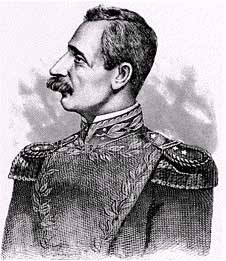
Zamora: boliburgués y foragido, se convirtió en buen revolucionario por morir a tiempo

Empecemos por el tema de la traición a la patria. Este se reconoce como un tema usado ad nauseam por regímenes autocráticos. Si por un lado los seguidores sin poder dicen que el líder siempre es bueno y que lo malo pasa "porque los que le rodean le ocultan las cosas", los cómplices del líder sacan un tema parecido y dicen que al líder lo traicionan otros, pero esta vez no va a ocurrir eso. Así, Maduro saca de nuevo los mitos eternos de la pseudohistoria venezolana: que si Guaicaipuro fue nuestro líder traicionado -como si fuéramos indígenas "puros" y estos fueran una unidad, y no fuéramos descendientes de todo tipo de europeos, indígenas y africanos. De nuevo nos viene con que Páez fue el traidor, aunque Bolívar traicionó a  Miranda y al país por su deseo de poder personal. De nuevo nos viene con que Santander fue otro traidor - y lo dice porque el pueblo desconoce que Bolívar se había convertido en un tiranzuelo sin capacidad gerencial. Otra vez nos viene con que Ezequiel Zamora fue un revolucionario traicionado y no un foragido psicópata más que murió aun joven. Finalmente nos viene otra vez con que Cipriano Castro fue menor que Gómez y no otro bellaco más.
Uno era bueno y el otro malo en la mitología de los militares venezolanos. En realidad se trataba de dos ladrones más

Al final de cuentas, Maduro y los demás chavistas van a acusar a los que piensan diferente de haber matado a Hugo Chávez. Ya Maduro sugirió que el caudillo está enfermo por las preocupación que ha tenido con el país, "de tanto trabajar". No es difícil imaginarse porqué el caudillo ha tenido que trabajar tanto: por culpa de la oposición.

El otro tema que sale de las declaraciones que hace Maduro es el precio del petróleo. Si es verdad que Chávez se comunicó con Maduro, podemos ver cuán frágil es la supuesta revolución que hay en Venezuela: pese a que el precio del petróleo actualmente es casi diez veces lo que era a finales de 1998, no es suficiente para mantener el sistema. La presión aumenta. 

Ya hace meses habíamos hablado sobre lo fluctuante que es el "precio justo" del petróleo en los ojos de Chávez. En realidad este mítico precio justo es el reflejo de la falta de planificación de un gobierno de militares incapaces, uno gobierno que gasta sin ton ni son, sin ningún interés porque haya un desarrollo sostenible.

No creemos que haya una devaluación inminente. El gobierno chavista preferirá empeñar más aun el futuro del país con tal de postergar la toma de medidas difíciles. Algunos boligarcas sencillamente saben que ajustes económicos van en detrimento de su poder. Algunos otros boligarcas, más tontos aunque no menos codiciosos, sinceramente creen que es una ley natural el que el petróleo siga subiendo de precio por décadas.

En las próximas semanas oiremos mucho más sobre cómo la oposición está tratando de matar a Chávez. Si Chávez muere en los próximos meses, Ustedes pueden tener la seguridad de que la televisora nacional explicará hasta la saciedad cómo la culpa recae totalmente en los que se oponen al régimen chavista.


Monday, 7 January 2013

Venezuela: what people get wrong


Here I will write about a couple of items in which I tend to disagree with some analysts.


  1. The Cabello-Maduro rivalry might be a source of tension for Chavismo after Chávez has passed away: I think this rivalry does exist and conflicts between their interest groups are important but Realpolitik will prevail. Cabello is smart enough to recognise most people - not the most powerful but most people - simply distrust him and the powerful know this. The rumours about his kleptocratic  tendencies are too well-established for him to try to grab power, especially after the caudillo himself anointed Maduro as his successor. Cabello already has what he needs, which is access to power and financial resources. He doesn't need the presidency, at least not in the short or middle term.
  2. The international community will sooner than later become outraged at the increase in violations of democratic values in Venezuela and pressurize the regime: this won't happen. The government of virtually all Latin American countries, the only ones that could put some pressure without being considered "imperialistic",  are not interested in annoying the Chávez regime in the least: almost all of Venezuela's "fellow-countries" have now a nice trade surplus with Venezuela. That was not the case before Chávez came to power, when Venezuelan companies could compete at least in some areas.
  3. Chavismo will have to introduce drastic economic measures very soon: It should, but it won't as long as there are some elections in the horizon. The regime may even postpone any measures for much longer than many expect even if this means more damage to Venezuela's long term recovery. Power trumps everything else for Chavismo. Chávez officials simply cannot afford to lose power. They would be prosecuted for all kinds of crimes. So: the Venezuelan government is likely to sell anything to any other country just to gain some time with some extra cash.
Three tragic developments I see within the opposition:

  1. It keeps reacting to Chavismo; it has forgotten the need to be pro-active.
  2. It does not understand there is an urgent need to educate the general population on some basic issues, like the real amount of people's money that is being stolen, the forces that are stealing them, the way in which Venezuela is lagging behind accountability, level of debate, education and last but not least, sustainable development in general. The opposition thinks it can talk about these issues later on, that there is no time now...The problem is that there has never been time for this since 1999...there is never time if you only think of the next elections. Chavistas are seeing to it we have some travesty of elections every year.
  3. Not with Henry Ramos Allup
    Nor with a young Brachiosaurus
  4. Artists and scientists, intellectuals in general who oppose the regime do that only on their own account, they never sign a general petition or do something together. I think of such people as Gabriela Montero, Yordano, Zapata, many other artists and scientists who clearly dislike the current government. This is partly justified as many of them would be horrified - I would - if they signed something that later would also include the signature of such a creature as Allup or some other IV Republic dinosaur. We need to create a movement that clearly excludes dinosaurs, that is not in competition with the MUD but simply does the job that intellectuals in other countries did when it came to challenging autocracies. 

Sunday, 30 December 2012

Is Chávez that ill?


Yesterday a French citizen accused of one of trying to carry out a "magnicidios", assassination against the president, was expelled from Venezuela. According to the regime, Frédéric Laurence Bouquet was a secret agent of the French Republic. Do they want us to believe Sarkozy was trying to kill Chávez or do they think he was a mercenary AND an agent?  In any case, the French know very little about this. Is this action part of the usual liberation of prisoners at the end of the year and not as Miguel says, part of a softening, or a change?

One of the self-styled revolution's strongmen, Diosdado Cabello, declared in another kitsch seizure that "everyday we have to be like Chávez and then we will have revolution for a long time".

And Florida-based doctor-gossip star Marquina claims Chávez has had lung thrombosis.

The question is: when will elections take place?

Wednesday, 12 December 2012

A wild, wild bet


First of all: I have to stress the following is just gut feeling. I have the impression Chávez' honchos will keep talking about how serious Chávez's condition is until late 15 or very early 16 December...and then they will tell Venezuelans how Chávez is having a wonderful recovery, they will communicate what he said to them and they invite people to celebrate their caudillo's recovery by going to vote en masse for the PSUV candidates. Chávez's actual state is inconsequential to this.


Thursday, 6 December 2012

Chavez-o-Metre


I started two polls: one for Venezuelan citizens and the other for non-Venezuelan citizens.

Give us your gut feeling. What do you think is going on?

The caudillo won't be going to the Mercosur Summit on Friday. Miguel was saying Chavista honchos are trying to keep Chávez safe and quiet until 10 January, when he will have to go to the National Assembly to formally start his new term.

Me? I haven't got a clue. I wait. I think we need to have plan A, B and C for any of the possible scenarios awaiting us in the Land of Grace. One of the problems with the opposition is that it keeps betting or waiting for X or Y to happen, without any elaborate plan. And we should know better: en Venezuela todo puede pasar.


Monday, 5 November 2012

Oil price development versus GDP growth


Based on World Bank and OPEC figures, I came up with this new chart.  What you see yearly GDP growth and oil price variation (OPEC basket).

The developments are not synchronous but they tell us a story: oil hikes are becoming less and less productive for the Chavezcracy. Unless there is an incredible oil price rise next year, Venezuela is heading for a tough time...even if it still has record oil prices...so much is mismanagement.


Friday, 11 May 2012

Chávez tweeting and other things

This is Chávez's twitter account pattern since 1 March.
Does it mean something? Perhaps, perhaps not. Capriles should rather outvote and not just outlive the caudillo. Even if the caudillo's wealthy minions will probably get into a cataplectic state for a time, we can be sure the most powerful already have a plan B.

Why is Capriles' popularity still so low compared to that of the caudillo?
There are many factors. Among other things, Capriles doesn't have the petrodollars Chávez has. Chávez's regime gives Haier washing machines and refrigerators by the hundreds of thousands. Chávez has all the state media and Capriles has only access to channels that can only reach 30% of the population. Even after two former Chavista honchos started to tell their stories about corruption within the regime, their former colleagues - dodders to the petrostate - remain unrepentant...and most Chavista followers either don't care or don't understand what level of corruption have been attained.

But this is not the only reason why Chávez remains so popular. Capriles also lacks charisma. The popularity of one is largely based on the lack of charisma of the other. And why is this? The main reason is rather technical: he doesn't have oratory skills...at least not yet. And why is that? There are again many factors, but one of them is his previous lack of interest for reading. This is fairly common among Venezuelans, even among those from wealthy origins. Capriles has got formal education but unlike Chávez, he hasn't probably read more than what he needed to read to finish his studies or to understand technical reports. Chávez may not know that mankind is older than 25 centuries and he has read in a very chaotic manner, but he still has read key books and fragments of stories that touch all kinds of people people...Not for nothing did he read Les Miserables and the Count of Monte Cristo while he was in jail for his bloody coup in 1992-93. He has also trained for decades to tell all kind of stories - first in the soldier's barracks, then in the palace and on every TV. 

Capriles is visiting Venezuela house-by-house. This can seem impressive for some but it is not very efficient. He needs those oratory skills to address the masses and he needs to present his message in a moving story. 

Chávez, on the other hand, cannot rely forever on Haier refrigerators and the sympathies derived from his countless shows of the past. He needs to start travelling through Venezuela in August at the latest.


Saturday, 24 March 2012

Was wird in Venezuela geschehen?

Krebs - wir wissen aber nicht, was für eine Art

KREBS

Präsidentschaftswahlen sind für Oktober angesetzt. Es geht um alles...für die russischen Rüstungsmagnaten, für die Chávez-Bonzen, für den Chávezclan, für die Castro-Regierung, für die Nicaragua-Regierung und so denken auch mehrere Millionen Chávez-Fans, die Gläubigen. Chávez ist krank. Er hat Krebs. Er hatte lange Zeit gesagt, der Krebs sei besiegt worden. Später musste er gestehen, dass ein Tumor wieder erschienen ist. Er musste sich - auf Kuba, selbstverständlich - operieren lassen. Nun unterzieht er sich einer Radiotherapie und das nicht zum ersten Mal. Die Chávez-Bonzen sind nervös, denn sie wissen, dass nur der Führer Chávez - el comandante-presidente, wie sie sagen - die Wahlen gewinnen kann. Ob Chávez eine ernste Krebsart hat oder nicht wissen wir nicht. Wir stellen Hypothesen. Wie Rory Carroll schrieb, sind viele Venezolaner zu Amateuronkologen mutiert.

SCHON WIEDER EIN LANDESVERRÄTER UND DER NACKTE KÖNIG

Der Gouverneur des Ost-Llanos-Bundesstaates Monagas, Briceño, hatte die Reaktion der Regierung auf die Ölpest in seiner Region kritisiert. Die Kritik galt vorwiegend den Militär und ehemaligen Putschist Diosdado Cabello, der zur Zeit Vorsitzender der Nationalversammlung und einer der mächtigsten PSUV-Männer ist, auch wenn er von der Bevölkerung nicht besonders gemocht ist. Dieser liess sich das nicht gefallen und siehe: Briceño wurde von der Sozialistische Einheitspartei Venezuelas ausgeschlossen. Der Gouverneur wollte nicht, dass mit Erdöl verseuchtes Wasser aus einem Damm an die Bevölkerung seiner Region verteilt wurde. Chávez sagte, der Gouverneur sei ein Verräter und das Wasser trinkbar. Er sagte auch, dass der Obergerichtshof - eine Marionette des Caudillos - die Opposition untersuchen musste, weil sie öffentlich sagte, das Wasser nicht nur Monagas, sondern auch anderer Regionen wie Carabobo und Aragua sei stark unrein. Ein Gericht hat prompt reagiert und gesagt, dass es verboten ist, ohne technische Studie zu behaupten, dass das Wasser verseucht ist. Die Staatsanwältin sagte auch das. Das Problem ist, dass es schon seit langem Berichte gibt - u.a. von unseren Universitäten - über die Verseuchung des Wassers in vielen Regionen (siehe zB hier). Diese Verseuchung ist entstanden, weil 1) die Staatsbehörden immer inkompetenter sind, 2) sie in bestimmten Fällen wie im Bundesstaat Carabobo Umleitungen verseuchter Gewässer in Trinkwasserreservoir vorgenommen haben, 3) sie die Entstehung zahlreicher Slums in der Nähe der Wasserspeicher zugelassen haben - sie konnten den unzähligen Obdachlosen der 1999-Katastrophe keine Wohnungen anbieten, sie haben keine Ahnung von Wohnungsbau.

Man braucht nur den Wasserhahn in Valencia oder Maracay zu drehen, um feststellen zu können, dass das Wasser verseucht ist: es hat eine gelbliche Färbung und es stinkt sehr stark. Und dennoch kann man in Twitter Kommentare unzähliger Chávez-Anhänger lesen, die behaupten, alles sei Lug und Trug der Landesverräter. Diese Chávez-Anhänger sind meistens nicht in Valencia oder Maracay, die schweigen nun.

Wie lange kann der König splitternackt herumspazieren?
Solange die Petrodollars reichen, wird keiner es gestehen wollen

In Venezuela solange es Petrodollars für die Militärs und genügend chinesische Kühlschränke und kleine Pseudojobs für Tausende Menschen zu verteilen gibt...in Venezuela solange der Wahlrat ganz klar unter der Kontrolle der Nationalregierung ist. Auch wenn Unzählige die Wahrheit sagen würden, wird die Hälfte der Bevölkerung nicht agieren. Das haben wir schon oft in der Geschichte gesehen.

Chávez ist krank...wie krank er ist: das wissen wir nicht. Er wird zumindest eine Weile nicht viel rumreisen können. Trotztdem wird er Staatsmittel in vollen Zügen benutzen, um seine Botschaften zu übermitteln. Für die deutschen Leser einige Beispiele der Chávez-Aussagen in den letzten Tagen:

Über den Gouverneur Briceño sagte Chávez schon wieder
Über eine von der Regierung organisierte Kundgebung:
"dies ist die beste Antwort, das Volk auf der Strasse, die Revolution auf der Strasse, die Volksmacht auf der Strasse, überall...die Verräter sollten lieben weggehen, diese fünfte Kolonne sollte lieber weggehen, wir brauchen sie nicht...sie werden am 7.10 gegen uns nicht können, 10 Millionen Stimmen werden wir den Schwächlingen (escuálidos) und Minderwertigen (majunches) durch die Kehle verschlucken lassen".


MEINE GLASKUGEL


Ich bin kein Zauberer. Dennoch wage ich swieder, einige Prognosen hier zur Verfügung zu stellen.

  • April: Die Nationalregierung wird alles unternehmen, um neue Wähler in Regionen wie Yaracuy, Trujillo, Sucre und Portuguesa einschreiben zu lassen, während sie die Registrierungszeiten für junge Leute in Valencia und in anderen von der Opposition dominierten Regionen weiter beschränken will.
  • Mai: Angriffe gegen Oppositionskundgebungen in den sekundären Städten werden zunehmen.
  • Juni: Der Obergerichtshof wird gegen die Opposition irgendetwas unternehmen. Wieso? Was? Egal, die Chávez-Richter werden immer ein- und auffälliger werden und seltsamere Ausreden erfinden, um Oppositionspolitiker zu neutralisieren. Sie werden wohl nicht wagen, Capriles einfach so aus dem Rennen auszuschliessen. Das ginge zu weit.
  • Juli: Chávez wird dann anfangen müssen, die Provinzen zu besuchen. Wenn das Ende Juli nicht geschieht, werden Menschen - auch Chávez-Anhänger- Fragen über seine Überlebenschangen stellen.
  • August: Dann wird die Nationalregierung massal chinesische Wagen unter Marktpreis verkaufen - Waren, die durch Darlehen für langfristige, für Venezuela ungünstige Erdölabkommen mit China  erworben wurden. Die Regierung wird zunehmend einige dieser Waren einfach schenken.
  • September: Die Chávezjournalisten werden einige Skandale über die Opposition entdeckt haben.


Saturday, 24 September 2011

Venezuela at the end of 2011

The situation

Venezuela is not getting the money it should get from the the oil industry because PDVSA is in bad shape, corruption keeps growing and the president, who rules Venezuela as if it were his personal farm, is ill...or terminaly ill, or faking to be ill, depending on whom you ask.

We read that Akhmadinejad is not coming to Venezuela because Chávez is too ill (his chancellor, Maduro, said it is "waiting a few weeks for the completion of the healing programme".

The country is experiences protests everywhere. People protest and often don't know what their ultimate plan is. They want the State to help. Sometimes they want security, which is very much their right. Sometimes they want help in social housing, which is very much fair. Sometimes they want houses for free, which is not stupid and can only be possible in a place where most follow a cargo cult. Sometimes they want the government to improve their conditions that deteriorated after some of them asked the government to privatize their companies. Sometimes they are fed up of the way in which health services are collapsing. A lot are angry because blackouts and general electricity shortages are our daily bread. People close streets everywhere, burn tyres, make a lot of noise and the ones who suffer the most are other civilians. The mood is bad. The honchos in power are fine.

Daniel wrote about how the government wants now to limit profit in Venezuela to 10% while that same government is overpaying Nicaraguan and Iranian and Chinese exporters for political reasons. Inflation is almost 30%.The IMF predicts GDP growth of 2.7% and the Venezuelan government annouced that as a big achievement, but that is only because most people don't know how to interpret GDP growth. Venezuela has a population growth that is almost 2%, it has had over 15% more revenues due to higher oil prices since 2010, it is the slowest growing country in South America. You can't compare 2.7% of Venezuela with 1% for Germany.


The Forecast

What can you expect in the coming three months?

A lot depends on Chávez's real or perceived health status. Beyond that, we can expect the following:
1) the Chávez honchos are again increasing the personality cult around Chávez. This will reach even more mental levels in the coming months.
2) more money will flow from Fonden and other state resources to the Chávez campaign.
3) the regime will put more efforts on trying to use Leopoldo López to divide the alternative forces.

At the same time we will see an increase in the competition between the different pre-candidates for the opposition. If this is carried out in a fair manner, it could benefit democracy in Venezuela. If not, obviously, we will have more military government to come.

Expect Russia and China to meddle more and more in Venezuela's affairs. Venezuela means too easy money for them. The Chinese can become more flexible when it comes to accepting a regime change. The Russians know they will lose one of their best buyer of weapons. As the CEO of Rosobonexport, Anatolii Isaikin, declared, Venezuela was one of the five countries on which the Russian merchants of war count, together with huge China, India plus Algeria and Vietnam.

I take this picture from Miguel's post...here you see Venezuelan chancellor in a "mass" organized in Mannhattan to pray for the caudillo's health

Wednesday, 29 June 2011

Alles in Butter mit Chávez?

Ein erster Gipfel der im Jahr 2010 ins Leben gerufenen Gemeinschaft der Lateinamerikanischen und Karibischen Staaten (CELAC) wurde kurzerhand abgesagt. Der Gipfel hätte am 5. und  6. Juli auf der venezolanischen Insel Margarita stattfinden müssen. Mehrere Staatsoberhäupter hatten schon ihre Teilnahme bestätigt. Der Grund: der venezolanische Caudillo ist zu krank.


Kurz davor hatte der regierungstreue Sender Venezolana de Televisión ein Video gezeigt, das beweisen sollte, alles sei in Butter mit Chávez.

Was soll all dies heissen?

Ohne den Caudillo geht nichts in der Tierra de Gracia, nada. Wenn man eine richtige Demokratie hätte, würde der Vizepräsident die Aufgaben des Präsidenten übernehmen und Venezuela auf diesem Gipfel vertreten. Der vicepresidente bolivariano Elías Jaua ist aber lediglich ein Diener des Caudillos, nicht ein Beamter, der die Interessen aller Venezolaner vertritt. Er kann und will und darf den Gipfel nicht eröffnen.

Dies heisst nicht, dass Chávez nicht am 5.7 in Caracas für den Unabhängigkeitstag sein könnte. Es ist nur weniger wahrscheinlich jetzt.

Tuesday, 28 June 2011

The pathetic "revolution"

Military man Diosdado Cabello, from the Eastern Llanos, is one of the most notorious Chavistas. Even among most Chávez supporters he is profoundly rejected...and yet he is one of the key people keeping up Chávez's regime.

You know this regime has nothing to do with a real revolution and is yet another military dictatorship when you read stuff like his tweets.

"Venezuelan, Bolivarian (only people who have no idea about history can say that), revolutionary and Chavista, on the struggle to build Socialism"

"Today we must be more united than ever around the leadership of our commandant. With Chávez everything, without him nothing".

What does this mean? My bet is he wants to show the main caudillo that he is more loyal than the others, so he needs to get some special goodies for that when Chávez returns to Venezuela.

Friday, 24 June 2011

Hat Chávez Krebs?

Das ist, was einige Bloggers gehört haben: der venezolanische Caudillo soll Prostatakrebs haben. Er soll seit einigen Wochen eine Operation hinter sich gebracht haben. Die Tests hätten schlechte Ergebnisse gegeben. Gegen Empfehlungen der Ärzte hätte Chávez darauf bestanden, Blitzreisen nach Ecuador und Brasilien zu machen - vor allem, um seine Krankheit zu vertuschen -. Er hätte aber dann eine postoperative Infektion gehabt. Die Infektion soll nun unter Kontrolle sein, Chávez müsste sich nun aber einer Radiotherapie unterziehen.

Was ich denke? Keine Ahnung. Alles ist möglich. Vielleicht hat er gar nichts. Vielleicht ist er kerngesund. Vielleicht schon. Man muss einfach warten. Diese Gerüchte sollten uns darüber nicht hinwegtäuschen, dass sich Venezuela - mit oder ohne den Caudillo - in einer explosiven Situation befindet. Die sozialen Spannungen sind grösser denn je.

Ich denke aber wieder wie Daniel Duquenal: ein baldiger Tod des Caudillos wäre worst case scenario für Venezuela. Es gibt nichts Schlimmeres, als einen Pseudomartyr zu haben, jemand, der stirbt, bevor er zur Rechenschaft gezogen wird. Als Mensch kann ich ihn gute Besserung wünschen. Als Venezolaner wünsche ich darüber hinaus, dass meine Landsleute besonnen bleiben und sich auf die Entminung des Landes konzentrieren, ob Chávez sehr krank ist oder nicht.

Am 5.7 feiern wir das 200. Jahrestag der Unabhängigkeitserklärung Venezuelas. Chávez ist immer noch in Cuba. Man fragt sich, ob der Militärmensch an dem Tag in Venezuela sein kann. Ich bin sicher, dass Chávez alles unternehmen wird, um dabei zu sein. Warten wir mal ab.


Tuesday, 5 April 2011

Looking into Venezuela's future


Here we go again, trying to predict what's going to happen in Venezuela.
Let's look at what is happening:
The Indians had the Kshatriya or warrior caste. Venezuelans now have the Bolivarian military

1) the Venezuelan regime is increasingly making big efforts in making Venezuelans used to the idea that the military caste are a special class. The regime wants to make it clear they are a special profession, a group of people that needs more attention than mathematicians, biologists, street cleaners, nurses, chemists, teachers, construction workers or the rest. The new law for military training at school level is designed to prepare the new generation of those who will help keep up the military in power in the future. You already read about the new "military areas of development". Now you can read (in Spanish) about how the military in Carabobo are using most of their former ally, drug dealer Makled, to expand their already heavy presence in that region: you can see rising star general Alcalá kissing babies and talking about how the military are giving 2 hectares of the expropiated land for housing - that's 1.3% of the total - and some other for a school and mentions how they are taking at least 80 hectares -that is 53.3%  of that land - to build new barracks for the military caste in Carabobo.

2) The Partido Comunista de Venezuela knows it doesn't have a chance without Chávez and his military, so it agrees with the militarization process and says the military training for children is good for "patriotism" (check out the article at one of the government's papers, paid with the State's money).

3) Nobody is saying anything about the horribly low standards of public primary and secondary school in Venezuela:

University students are too busy with defending university rights without looking at the broader picture - something they could do in Germany or Sweden but not in Venezuela today, in view of the social tensions, the government's propaganda machine and simple common sense- . Chavistas, on their side, believe they will solve the education problem and above all their lack of clout at university level by eliminating university autonomy and by sending more pro-Chavez people to universities even if those persons are virtually illiterate and should firstly get a real primary education. 
 
Watch leader Diego Scharifker in this old video here (English). He has valid points, but he - like most Venezuelans - forget something very fundamental about the re-election possibility: in Europe there is only indefinite reelection in countries with parliamentarian as opposed to presidential system. This is a big difference and this is something I have never ever ever heard in Venezuela. Not even so-called political scientists from Europe (pro or against Chávez) seem to notice this huge difference, which should be the decisive point to oppose indefinite-reelection: we have a presidential system, stupid! It is not just about traditions or "cultures".

Watch Diego Scharifker here as well (Spanish) talking about the budget for universities. He has a right to talk about university budgets, but he simply has no chance as long as he does not address the fact that 1) hundreds of thousands of students get their entry because they are the children of university workers or teachers or because the students' councils have sold the entries to them (student councils legally get a certain amount of "entries" they can distribute)- this is like letting illiterate people get to university for political reasons-, 2) there is a huge amount of "workers" who don't work and are on the pay list of universities, 3) universities in Venezuela have a much higher proportion of the education budget than in any other Latin American country in a country where the education budget gets -  in theory - a bigger chunk of the total budget than in many other countries. 

As long as he does not address these issues, he and students in general who are not followers of Chávez will have a hard time in order to gain the hearts and souls of most Venezuelans (those who send children to public schools, etc).

Scharifker perhaps does not know public schools could be good. He probably has the experience of the US and Venezuelan models only, so he does not even consider this point. Or perhaps he thinks he should focus on universities as schools should be defended by other people. If he thinks so, he can wait until the end of times.

Chavistas are already spreading anti-Semite statements about Scharifker. Why? Simply because Scharifker's family is of Jewish background. One example: Kalim Delia, member of the new generation of pro-Chávez "scientists" at IVIC, Venezuela's main research institution. One

4) Oil prices are over 700% higher than when the military caudillo was first elected and most Venezuelans have no idea about what this has meant for Venezuela. In fact, even foreign historians and sociologists do not seem to fully grasp how empty and unstable any regime can be if it is based on this (if you read German, check Zeuske's interview here).


So: what's next?

  1. As I said earlier, the Chávez Sturmtruppen will increase attacks on any leader of the opposition forces that dares to go to what most Venezuelans have wrongly labelled as "rural": cities outside the 3 main urban centres. Already the Henrique Capriles team was attacked by Chávez mobs in San Carlos. Expect much more of this in the months to come.
  2. Even if Venezuela is getting petrodollars as never before, Chávez's mismanagement and widespread corruption are forcing the government to bet on Chinese financing. The Chinese, who pretend to be "non-interventionists" but who simply have more subtile methods than US Americans, will make sure they will see a return for their investment. They already provide the Venezuelan government with a lot of the technology it needs to spy on the emails and telephone conversations of the alternative forces. They will give enough goodies to the Venezuelan government to distribute before election time. As Venezuelans only think about the hic and nunc, they won't mind receiving refrigerators today even if that means their government will get less dollars for each barrel for the next 20 years and Venezuelans are less productive today than decades ago.
  3. The alternative forces may waste a lot of time because the AD and COPEI and Proyecto Venezuela parties, but probably also UNT and PJ and all the rest, keep their party interests before return to democracy. Unity is seen at most as "getting before election time one candidate". Unity means more, even if parties have different ideologies (in reality Venezuelans are mostly discussing about caudillos, not about ideologies and much less about concrete plans for development). Expect endless discussions about when the primaries will take place. Expect also the Chávez groups infiltrating and voting to choose the best opposition candidate for Chávez.
 To be continued...