Obsession with ahistorical Bolívar as main component of Venezuela's pensum at schools (and later on)
Venezuela's education is arguably the worst problem we have. If the general population does not have the right tools for analytical thinking and its leaders are in a similar situation, the country is doomed for failure. The government we have now is not up to the challenge. Right now it is clumsily trying to get rid of the responsability of providing for a solid education at school level. It is putting most of the responsability at university level, as you can read in Spanish El Nacional. The government is simply saying that universities now are discriminating against pupils coming from state schools and that they should simply accept them all and fix things then. It does not want to debate why those pupils are so badly prepared.
The reality is that Venezuelan pupils, specially those coming from public schools, are on average very badly qualified. They are - this is average - the worst of Latin America by far. That is one of the reasons why the chavista government decided to take Venezuela out of international evaluation tests as soon as it came to power and that is why it just prefers to tell Unesco how great Venezuela is doing now. The government propaganda machine then talks to the whole world about the Unesco reports...that are nothing more than reports on hear-saying (primarily from the government).
State universities have been using internal admission procedures to select their students: there are just too many people wanting to go to university and just a tiny minority have the necessary skills to do so. The admission procedures are mostly tests to find out who the most promising are. As public schools are in worse shape than private ones, there is a higher proportion of pupils from private schools getting into state universities. Pupils from private schools make out hardly 20% of all pupils, but they represent over 50% of all students and, in some universities, much more.
On one side we have the government telling universities the government is going to select students and that universities must accept them all and just make up for the low quality by adding "introductory courses". On the other side, most university representatives say they have the right to choose students and if they don't do that, quality will suffer more than it is suffering now. Those university representatives are as selfish and blind as the government. Simply put, everyone is trying to put responsibility somewhere else.
It is incredibly sad that neither students nor university professors know how to bring forward alternative solutions to the government's short-term "solution".
Everybody in Venezuela needs to understand this:
Pregraduate studies in Venezuela are shorter than anywhere in the developed world or even in most developing countries. In Venezuela students have to do one year less than in Chile or Argentina, Peru or Mexico, Colombia or Germany.
Salaries for primary and secondary school teachers in Venezuela are so low that only the saints or those who can't find jobs anywhere else work as basic or secondary school teachers. Right now Venezuela's education budget goes primarily and more than elsewhere to universities. Without a solid basis - id schools -, universities are built upon very wobbly stuff.
It is not good to try to fix up the great deficiencies of poor pupils by simply adding courses at university level. University teachers should be used for higher-level work, whereas pupils should arrive at the university with levels that are at least as good as or better than those in chile or Argentina. Pupils need better teachers and schools before thinking about getting to university level.
If the education minister cannot guarantee that public schools offer the same level of education as private schools, he must resign. We must ask him to resign until he does. Do we want social justice? At the same time as those extra courses are added to universities, the ministry of education should do everything that is required to improve the quality of primary schools in poor areas so that pupils from there become as good as those from the posh ones.
Black rats came from Eurasia. They came to America with the European conquista. Still, America (I am talking in the original sense of the word America) has lots of other "native" rodents. One of those rodents is the picure or Dasyprocta fuliginosa. It lives in Venezuela, Colombia and Brazil. I have seen a lot of them while wandering in the mountains of Carabobo. Picures were good for dinner in the countryside decades ago. Some people still eat them.
Some ideas about how to fight corruption in Venezuela:
1) create a Corrupedia, the free Encyclopaedia For Venezuelan Corruption that contains information about all corruption affairs reported in Venezuela's history. This encyclopaedia should
keep a given format that gives the looks and feel of an encyclopaedia
document all possible corruption affairs from all parties and individuals, independently from their political views
contain necessary sources documenting the issue
contain information comparing Venezuela with some countries such as: Chile, Norway, Canada and Congo, Haiti and Afghanistan on the other side (see here for further reference).
contain reference articles about mesures carried out in other countries to combat corruption and results obtained
I actually wanted to start, but I have little spare time with this blog and all.
2) Ask opposition candidates to go everywhere in Venezuela, from Maturín to Tucupita, from Charallave to El Tocuyo to propose a Venezuelan version of an idea British politician David Cameron brought forward:
"In a speech broadcast to the rarefied TED conference in California [...], he announced that all government contracts worth more than £25,000 ($39,200) would be published online. Businesses could pore over them item-by-item in an effort to undercut established contractors."
(I never thought I would be promoting an idea from the Tories, but then...what the heck!)
Before Hugo Chávez came to power there was the obligation to make tenders in a public way, but this government has almost completely obliterated that. This proposal would not only bring back that but bring in more transparency after the deals are accepted...much more!
Last year Venezuelans found out what deputies were earning. Many of those deputies, like "comrade" Oscar Figuera (Partido Comunista de Venezuela) were getting a little bit over 10000 BsF per month. Back then that was around 3000 euros. Holiday months were not included, just "general expenses". The actual total was higher: they get about 10 months extra salary for "vacation time" and "end of the year" money. That is a quite some money in a poor country, specially considering income tax is way lower than in the US (I don't even mention Canada or Europe). More importantly: that is a lot compared to what primary school teachers in Venezuela earn. The ratio between salaries of deputies and primary school teachers is much higher than in very "capitalist countries" like Germany or Switzerland.
Anyway, we can discuss for a long time aboutn the exact amount Venezuelan deputies need, but the issue I want to bring forward here is the reaction of the president of the National Assembly, Cilia Flores, and what we can do. Ms Flores, one of the president's greatest cheerleaders, threatened regime-critical TV station Globovision with legal punishment for illegally acquiring the information about deputies' salaries. But it seems there was no other way to find out. Flores in her attack went into a lenghty description of the "hardships" deputies have to go through. In a video I show below you can listen to Flores saying, among other things, that "deputies earn relatively little and sometimes have to come to the capital by road" and not by plane, even if [travel by road] is dangerous". Wao! Do we have a civil war? Actually, most Venezuelans feel we do. Never mind many of the deputies actually live in areas that are closer by car than by plane (OK, private helicopters beat them all, but we are not talking about those here).
You can watch that video and read an accompanying article here. It is a governmental site. They showed a journalist of Globovision, but only because the Pcv deputy was explaining his position. Notice in that video that the communist deputy says his whole salary goes to the party, he gets a salary from the party. So? In any case: the party is not Venezuela. And he is one of the most kosher. I am sure the deputies of the PSUV use their salaries for other things.
If you visit the German Parliament, the Bundestag, in Berlin, you can actually get hold of a brochure with information indicating the salaries of the Bundesabgeordnete, the German MPs.
While in Venezuela it is so hard to get information about what deputies are earning at the Asamblea, in Germany there is now a whole discussion about what they are earning outside. This is necessary in Germany, but also in Venezuela.
I think the new deputies of the opposition should push for more transparency. I doubt they will want to do that thinking it would mean to shoot themselves in the foot.
In Der Spiegel you have a flash page where you can find out what deputy of what party has one or more "extra jobs". Even if you don't speak German, take a look at it, click here and there and see how the deputy seats are shown. You can actually learn much more: in what commission what deputies are working in, how old they are, etc.
We need that.
Ps. Please, don't forget to take part in the poll of this month about when el comandante willl cease being head of state in Venezuela!
Do you think Mexico is a failed state? It is probably a mess, but Venezuela is worse, considering it has a murder rate that is several times that of Mexico (and that is not the only parameter in which Venezuela is failing very badly).
Here you have an update of murders in Carabobo. Each colour represents a municipality. There were less murders in February than in January of this year, but that happens every year. Murder rates are not linear functions: there is a huge hike in December (when people get a lot of dosh) and things "stabilize" in February, although since chavismo is in power it stabilizes at a worse level. There were more murders this February tha than in February of last year. The trend is very similar everywhere in Venezuela. I have the state numbers for earlier years, but not per municipality. There were less than 50 murders in that region per month in 1998, still a lot but less than 1/3 of what we have today. Reader Vicente was telling us he believes the horrendous rise of crime in Venezuela, with no comparison in the rest of South America, may be due to some plan by chavismo to scare people...literally to death. You are bound to keep indoors and don't protest if you see life is worth nothing in Venezuela. Is that the explanation? Or simple incompetence? Or a mixture of it all?
Of course we will never know what the regime thinks as the government refuses to answer to specific questions and Venezuela has a presidential system where the president just holds monologues.
And what is my reader's current opinion about how long the president will last in power? Things haven't changed so much. There are a little bit more people who think he will be out before the end of next year but there are also many more who think he will only leave office after 2021. Please, drop by and vote again this month. It just takes a second or two. Thanks!
Ps. I don't get the same amount of people answering every month and these people are everywhere on Earth, so I don't intend this poll to be scientific or something. It is just fun.
Blogger Quico wrote again an interesting post about one of Venezuela's key events of the late XX century, something that is still influencing a lot of people: the Caracazo, a wave of massive riots and looting that shook the whole nation on 27 February 1989, a wave of violence that lead to the killing of many people, mostly by security forces. The Chavista government says there were between 300 and 5000 dead. This is rather curious: we know more about the amount of casualties in the Battle of Marathon over 2400 years ago than about those in the Caracazo, even if the latter event took place in a very central area of Venezuela. There were lots of journalists there and most Venezuelans do have families. Still, people say there were between 300 and 5000 dead. What were the forces at play there? And what really happened?
As Quico said, the measures announced by the government of Pérez were about to be implemented, but they hadn't been put into effect yet. Now, Quico writes:
The whole story-line of 27-F as revolt-against-neoliberalism is ahistorical and silly. Unless you credit the population with preternatural powers of foresight and posit that they were somehow rioting pre-emptively, in protest against what they calculated would be the futureproblemsconsequences of policies announced but not-yet enacted, you have to agree that the 27-F riots were the result of mass discontent caused by the that CAP's reform package was seeking to solve, not by the solutions CAP had proposed for dealing with them.
I think there was more to it. I already mentioned some of my points in his blog, but here I try to present them more clearly.
1) Venezuela's population had voted for Carlos Andrés Pérez in 1988 thinking he would give them the same kind of prosperity Venezuela had during the oil boom of the seventies, when he was president for the first time. 2) Instead of that, Carlos Andrés Pérez announced austerity measures. The government was brok: oil prices, the A and O of Venezuela, were low, the government had mismanaged resources for decades and people in Venezuela had no idea about what they have to produce to get the items they were getting. Still, the government did not have any idea about how to communicate things and on top of that, the measures still allowed some very rich groups to profit. Take that and the growing misery in Venezuela and it was clear that things could explode rather easily.
Now, the explosion was in my opinion far less spontaneous than many think. Why?
The Extreme Left had been in retreat for many years already, but it kept promoting its ideas. They had fertile ground and some means.
FERTILE GROUND
The parties in power from 1958 onwards, AD and COPEI, kept plundering the country and were more often than not carrying out policies that were pernitious for the sustainable development (never mind it is way worse nowadays). Living standards had kept rising until the beginning of the eighties, but things could not keep improving: there were more people for less petrodollars. It did not help that particularly the areas outside the main hubs (Caracas-Maracaibo-Valencia or CMV-hub) education and job opportunities were miserable, more so than in the hubs. It did not help that most Venezuelans still thought and think Venezuela is rich because of its oil, although it cannot produce anything more. It did not help the police forces often used repressive methods to counterattack the leftist movements, methods that had very fatal consequences for others not involved ("collateral damage"). Most Venezuelans did not notice the repression against the extreme left, but a lot of leftists did and they, for the most part, kept their agenda. They would try to infiltrate where they could.
The vast majority of the people who looted in 1989 did not have any lefty ideals. They were moved because of desperation, but also because there was something to loot, because others were doing it (see comments by Moraimaq, a former slum dweller).
INFILTRATING, SUBVERTION
The extreme left got support from Cuba and above all the Soviet Unions for many years. Some of the Venezuelan students and teachers who went to the Soviet Union in the seventies and eighties actually got training by the KGB in such things as "propaganda work" and "subvertion". I wrote about this in Spanish here (I translated a document from the KGB that was made public by dissident Bukowsky). In that post you can read about a course given to Lenin José Moreno Faría, nephew of the head of the Pcv back in 1980. Moreno was a university teacher in Venezuela. I am sure there were many more and not just belonging to the Pcv.
By 1988-1989 the Soviet Union was already too busy with itself, but these were quite some people in Venezuela with the training and ideological basis to carry out subvertive activities.
INFILTRATING THE MILITARY
Douglas Bravo (see mindmap below) and others had a plan to infiltrate the military and that is how they got Chávez. The potion goes like this: put some "Bolivarian" pseudo-history with some half-truths (not difficult when so few Venezuelans have any knowledge of history), add some stories about the very real social injustice in Venezuela, US and European interventions, add the desire of many Venezuelans to become a second Bolívar, use some resentment and lack of opportunities for real work and you have a wee revolutionary. That is how they got Henri Falcón as well. Chávez and Falcón may have not passed page 1 of Das Kapital and their ideas are rather fuzzy, but they got "in the mood" and a general ideology.
INFILTRATING SLUMS AND TOWNS
The extreme left also had a series of networks for infiltrating slums and universities throughout the seventies to nineties. They were not only in CMV, but also in most secondary cities, from Charallave to El Tigre, from Cumaná to Maturín and San Cristobal.
Those networks included:
social aid in slums
"libraries" (mostly propaganda): this cannot be underestimated in a country where there are so few public libraries and these are mostly in a couple of centres
sports
ideology courses (reading some Marx, Lenin or just introduction to Marxism, etc
They were working in a very similar fashion as some evangelical fundamentalists do: brainwashing, social support in a community that lacks strong institutionalized social networks, etc.
INFILTRATING UNIVERSITIES
I was a student at the Universidad Central de Venezuela. Although I had little respect for communism, as a student I could see a lot of their activities time after time just by going to the university: if there was a pacific protest, some "eternal students" involved in communist groups would get in and start throwing rocks and Molotovs and burning down lorries and cars. Most normal students would opt to run away, but the damage was done and the cops would start attacking everybody. I probably saw more commies because the only place you could get books in Russian was at a "casa de la amistad", a place of lefty propaganda, and at the Soviet embassy. You did not need to be a commie to get the Russian books and newspapers, but you ended up with at least one or two propaganda leaflets. If you are easy to brainwash, you are done.
In 1988 there was a particularly big march of university teachers and students from all Venezuela in the capital. People were demanding the payment of debts and an increase in salaries. Many thousands of Venezuelans marched peacefully from the Ucv towards the city centre. I was there.
It was a completely peaceful march. In any case, when we were close to the Helicoide, we saw how dozens "encapuchados" (masked guys) came in from the slums. We could not prevent them from joining in. Once we were in the centre, they started to throw Molotovs and stones to all shops and the police attacked ALL OF US.
Helicoide and slums around
As one reader at Quico's post wrote and as was evident from a text I copied there which was written by a communist, the extreme left was concocting something. It may have gone out of hand, but it was more or less what they intended. The Caracazo was not so spontaneous. The extreme left seized the moment. The efforts were not unified and they were not constant, but there were a series of radical Venezuelan groups with very concrete agendas.
The Soviet Union soon collapsed and it probably did not have anything to do with the 1989 events, but its demise did not change many things in Venezuela.
Even if you could read more a lot about communism's collapse in Venezuelan local newspapers , often more than in many well-known US or European newspapers, the vast majority of the poor noticed very little about things outside. Not only were they unable to travel, but their source of information was rather limited. I still remember how I saw a young man getting into a bus in a poor area of Valencia in 1990. He started "preaching" in the same way as someone from some religious group does...but he was preaching about the Soviet Union. The Soviet Union was crumbling apart but I was probably the only person in that bus who knew about that. Most were construction workers, cleaners or street vendors who hardly read anything and Venezuelan TV is just bad.
The Chavez propaganda machine often tells the population about how the "opposition" (it is just one big blob to them) gets support from the US State Department, Israel and European right-winged parties. The Chavista propagandists mention real and unreal supports from the Soros Foundation, from the USAID (if you read German, read conservative journalist Scholl-Latour Russland im Zangengriff) and others.
Some of these things are real and some of this very much not, but in any case "the opposition" as a whole has not been more involved into those kinds of things as chavistas themselves.
In any case: what Venezuelans of good will need to do is to become aware of how different groups (left and right, national and foreign) are trying to move Venezuelans of all types as pawns in a chessboard. Venezuelans need to promote open and civilized debates to minimize the effect of hidden agendas. It will be very hard: open debates on facts and programmes are very dangerous for extremists of all kind. Still, debates are one of the things we need to introduce.
PS1: Here a little mind map about some key elements of the extreme left. Notice something: again and again the key agents are from where most Venezuelans are, from outside the 3 largest hubs of population, from outside the areas where the opposition leaders still focus
PS2. If you read Russian or you want to use the rather poor but free Google machine translation tool, go to this. I will later translate it decently. It is a detailed account of a Soviet journalist in Venezuela's slums in 1983 describing the social work and brainwashing of communist groups in Venezuela's slums in a fashion very similar to fundamentalist religious groups of any kind in the world.
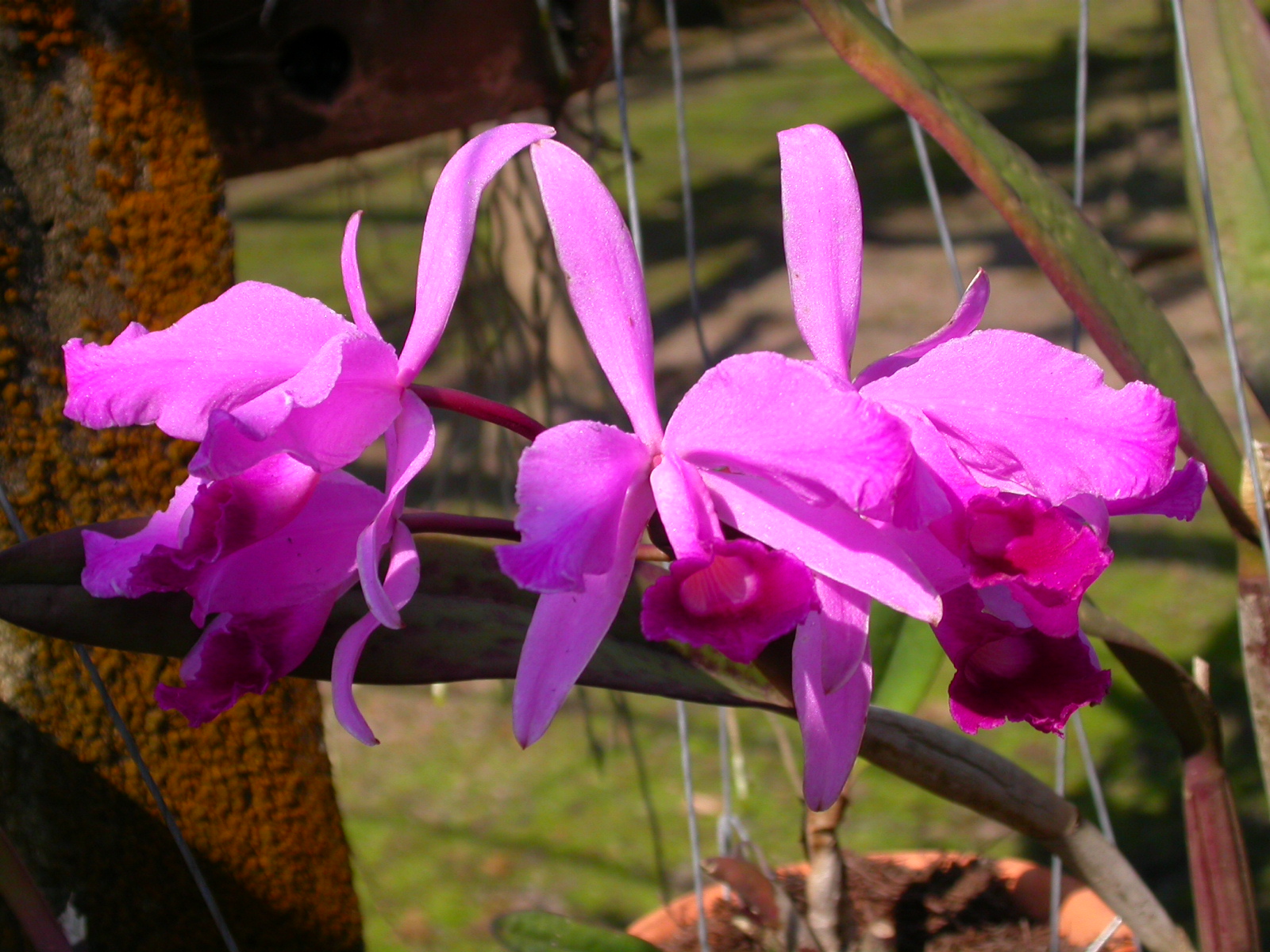
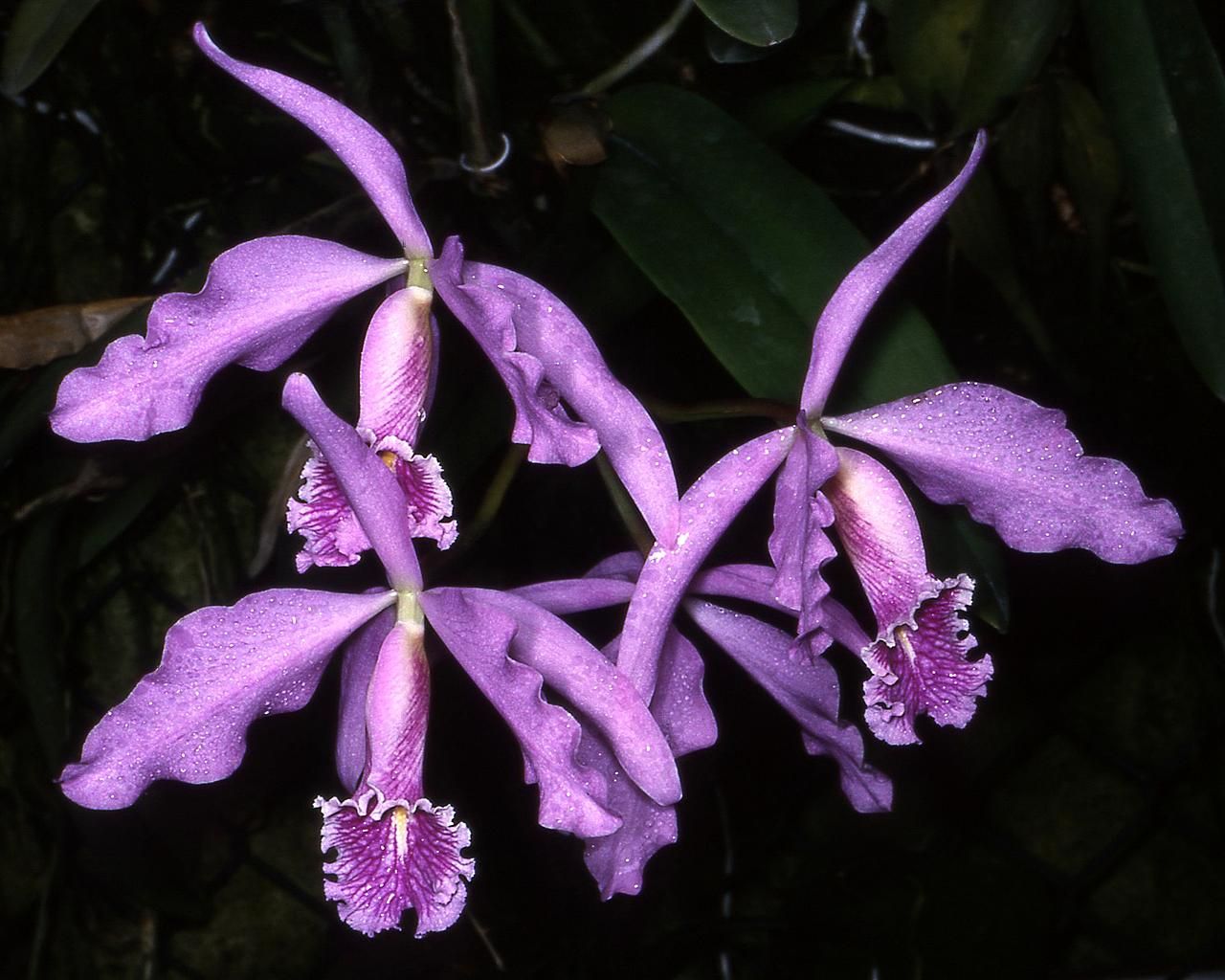
My mother had lots of them in our garden. Humming birds love them. I am talking about orchids. Blogger Miguel is a specialist and you can see some remarkable pictures of them in his blog.
Here you have a couple of the species that grow naturally in Venezuela. These belong to the Cattleya genus.


 at university level, as you can read in Spanish El Nacional. The government is simply saying that universities now are discriminating against pupils coming from state schools and that they should simply accept them all and fix things then. It does not want to debate why those pupils are so badly prepared.